I saw the following news today and felt worried. Fortunately, the little girl was safe and sound. Moms and dads who have "naughty children" at home, are you still losing your temper for your children? Do you know why the child gets angry? How can we help our children? Sometimes it’s not that the children are going to explode, but that we parents are going to explode first. What should we do? Let’s explain it one by one below . I hope that the excellent ones can see the article at the end, which will be helpful to you.
 . The reason why the child gets angry?
. The rational brain is not yet mature (it turns out that it is the emotional brain that is causing trouble).
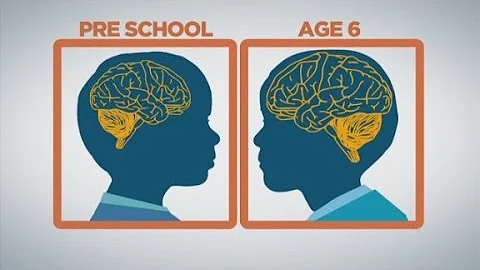
Brain Science research found that brain development in the entire childhood is the fastest development time in a person's life (the two fastest stages in childhood: 0-3 years old and the entire adolescence). In the entire brain development process, the development of our brain region does not develop in a balanced and uniform manner, but the emotional brain grows first, and the emotional brain also develops the fastest. When we understand that children's brain development has such a characteristic, it will better help us understand and accept our children's emotions.
The brain area where the rational brain is located: the prefrontal cortex, the area related to thinking, planning, and problem solving, and the brain area where the brain is located: the amygdala, the area related to emotions, sensations, and awakening, and the animal part
, physical discomfort
children may be due to illness, hunger, sleepiness, etc., which will lead to emotional problems in the children. When a child feels uncomfortable in his body, he cannot express his discomfort through language like an adult, and expresses his discomfort through crying to relieve this discomfort. Especially for young children, the language development is not so perfect and is more likely to occur.
. Development in a specific period cannot be met
. Children will have their own development needs in a specific period of growth. When this development needs are interrupted or when they are not met, children will also express themselves through emotions to relieve inner unhappiness.
For example, have you encountered this when the child is in the order period? We peel the eggs for the child and accidentally peel them a little bit, and the naughty child must cry and ask for a complete ball; or when the adult is in the stubborn period, the adult cannot do what he wants, and your naughty child will lose his temper because of this.
. Want to get attention
When the family changes, the child will deliberately get angry because he wants to get attention and attracts parents' attention, or when the child feels not being paid attention, he will also experience emotional fluctuations and gets angry. For example: When the second baby was born, the adults at home were busy taking care of the baby, and the whole family might have focused on the boss before. Although they might have done enough mental construction before, the boss will actually want to get the same attention as before and get angry.
, family education concepts and methods are not uniform
Both parents need their parents to help take their children to live together due to work and other reasons, and of course there will be inconsistent educational concepts and methods of the two generations. For example: There are elderly people at home who can’t stand the crying of their children. As long as the child cries, they will satisfy the child. When the child is with his parents, he will also meet his requirements by crying. If parents persist at this time, the child will cry harder and feel more wronged, and the parents will have to compromise. Over time, the child will form a behavioral pattern of achieving his goals by crying.
6. The power of "role models" in the family raising environment
Usually, children who like to get angry, except for some specific periods or physical discomforts, most of the problems that may trace the root cause may lie with the parents themselves. For example, parents like to lose their temper when encountering problems, and are prone to emotionality and just get stuck. Usually, children will be adversely affected over time in such a raising environment, which shows that the power of role models is endless.
7, loss of security
is usually when the child is in the school, and when a major event occurs. For example: When a child is just entering the kindergarten and is not familiar with the environment, his mother usually takes care of him more. However, when the mother gives him the grandma, he will feel fear and uneasy because of the loss of security.
8. Cannot express in language
0 Because children's language is still in the development stage, they often cannot express their thoughts, requirements and wishes clearly and completely. If parents do not understand at this time, the children will be anxious and prone to get angry.
9. When encountering setbacks
For example, when the child wakes up in the morning, he encounters zippers while wearing clothes by himself. After trying several times, he still can't pull it up. This sense of frustration will directly lead to the child's emotions and then get angry.
0. Conflict or conflicts with other friends
Parents will find that children like to play with friends, and of course there will often be small conflicts such as snatching a toy together. At this time, children will get angry because of their friends’ incomprehension.
. How can parents help their children?
. Listen to the child wholeheartedly and develop empathy with the child
In order to listen to the child wholeheartedly, we need to first put aside our existing thoughts and judgments and concentrate on understanding the other person. At this time, you need to sit with your child, keep the child opposite or on the side of the child and let the child see the mother's expression, pay attention to the child calmly, let go of himself, listen patiently, say some "um", "right", "oop", and sometimes a few simple words are enough. If we can truly listen to our children, they can easily express the difficulties they face.
When empathizing, we parents should not ask questions, blame or advise children, because this method is difficult to make children have clear ideas and positive attitudes to think about problems. Parents should take a caring attitude to let their children truly feel that they are caring.
. Understand the child's feelings and tell the child's feelings
For example, the little boy fell down while running. Due to heartache and worry, the parents pulled up their mouths and said, "Tell you not to run away, don't listen, you will not die of falling, and you still have the face to cry. Boys are not allowed to cry, they are embarrassed." There are actually quite a few such parents. You will find that the child does not stop crying because of this, but cries louder, because we deny and ignore the child’s current feelings, and the child will only feel sadder and not accepted. Or I really don’t cry anymore, it’s because I’ve heard too much such words and I’ve become numb and I’m unwilling to communicate and express my true feelings in my heart, because it’s useless to say them. The correct way: The same example is the same. We can do this, "Baby, did it hurt? Did you just startle? Mom fell when she was a child, come, get up!" He didn't even need you to pull him, he just got up and continued to play, because he felt that you could understand him completely and accept him. Moreover, Mom also had this experience when she was a child, and it was no big deal.
Just like the above-mentioned parents need to do, they can express their children's feelings, rather than replace or deny their children's feelings. But parents don’t usually do this because they worry that speaking out how their child feels will make the child even more sad. In fact, on the contrary, when children hear these words, they will feel comforted and feel that someone can understand their inner feelings and that we must agree with their current feelings.
. Set an example, parents set a good example for their children
. They all say that children are copies of parents and parents are originals of children. When there is a problem with the copy, we must first find out if there is a problem with the original. So set an example and set a good example for parents to set a good example for their children, and it is a good way to go out of date in any era and anywhere.
For example: When a child gets angry, parents cannot use violence to fight violence, as both sides will suffer losses and will not play a good demonstration role. Invisibly, children will let their children learn this way of handling, which is a vicious cycle. Parents should first stabilize their emotions, not be led by their children's emotions, listen patiently, empathize, understand, and accept their children, stand on the same front with their children, and should not stand opposites, face them together, help their children find problems and guide their children to solve problems together.
. When a child gets angry, he cannot harm himself and others, nor can he destroy items and the environment, and set boundaries.
We found that when children get angry, even if our parents try all kinds of ways, some children still cannot calm down, and even make trouble more fiercely. What's more, there will be behaviors that harm themselves and others, or destroy items and the environment.
For example, when a little boy is getting angry, he will hit his mother. Then at this time, the mother cannot let his child beat him. He cannot think that the child is still young and does not understand. The child does not understand. But if we do not stop at this time, the child will mistakenly think that it is okay to hit someone with a temper. So at this time, the mother should hold the child's hand and stare at him gently and firmly and say, "Mom knows that you are angry, and understands your feelings. When you are angry, tell your mother, mom, I am very angry! But you can't hit your mother, it will hurt. When you stop hitting your mother, mom can let go of your hand!" "If you are angry and feel very distressed, you can cry, mom can hug you!" etc. Remember that the younger the child is, the better the education.
. Sometimes it’s not that the children are going to explode, but that we parents are going to explode first. What should we do?
We understand why children get angry and how to help them, but the problem is that we will also lose our temper and anger. You should think that this is human nature and a difficult point in parent-child communication. Of course, the ideal state is peaceful education. It means that parents can always maintain peace, never get angry or lose their temper when encountering anything, and communicate well with their children. However, this is really difficult to do. We parents are also humans and not gods. Sometimes we really are anxious. Sometimes it is not the child that is about to explode, but our parents that is first. What should we do?
. I share two practical tricks here. I actually use often. I think it is quite practical
. This trick is called the "Go and Escape" method, which is very funny. Of course, this is an emergency move. I am a mother with two children at home, such as "I'm really angry," said Dr. Han Ma Ginot, a child psychologist, who said at this time, you can say this: "I'm very angry, very angry, I want to hit you, so, run! Go and run!" My son ran away as soon as he slid into the cigarette. After a while, the son stretched his head and said, "Mom, can I come back now?" "No, I'm still angry, unless you find a way, don't let my sister cry again!" The son hurried to make his sister happy, played a clown at home, and jumped to make her sister happy. When I saw the two children playing happily together, I naturally didn't get angry.
. What's more, if there is a situation that makes you really explode, or even beat the child, it can make up for the harm to the child. The method of making up for it is the same. Two or three days after and other things, and your mood has also improved, you can say very seriously: "I want to talk to you about the incident that happened in the community downstairs in the last two days." The child may be sensitive and unwilling to talk about it. You can say, "Mom shouldn't be yelling there when she thinks about it now. It's wrong for me to do that." When you start discussing this, the child's emotions soften immediately. At this time, you can say: "Can we think of a way to try to avoid such things in the future? Do you have any suggestions?" By inviting children to discuss and solve problems together to heal their wounds and minimize the harm caused to the child by the wounds. Sometimes, it can help you establish a better connection with your child.
Finally, we should not be afraid of children making mistakes, but we can also let children stay in the mistakes for a while. When children make mistakes, it is an opportunity to build emotions with children; When children do the right thing, we should also see that we should not think that children take it for granted when they do the right thing and are not worth it. Often, when children do the right thing, it is an opportunity to shape children's behavior.
Like the above article, please like and follow. What other good methods do you have? Or what do you think? Welcome to leave a message for discussion!