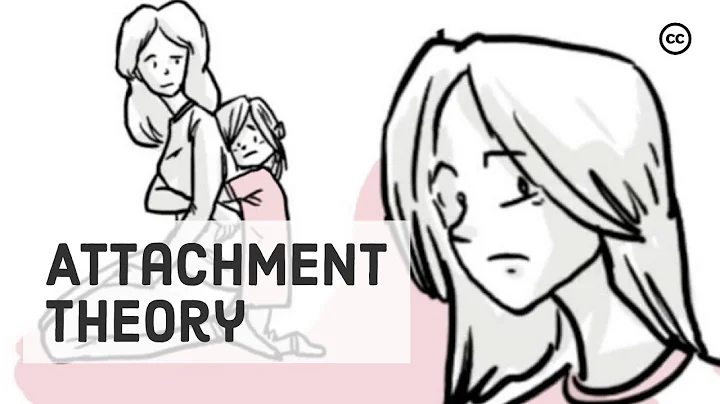
In the eyes of most parents, crying is a sign of weakness, so children who cry easily are easily labeled as "not strong enough", "glass-hearted" and "hypocritical".
In comparison, children who don't like to cry will be more popular with adults. After all, such "strong" children reduce the caregiving pressure and emotional comfort burden of adults . In fact, there is indeed a big growth gap between children who cry and children who don't cry when they grow up. However, at this time, those who are at the advantage of are those "crying little guys" .

Fukuhara Ai is a Japanese table tennis player that is very popular among Chinese netizens, and one of her more obvious characteristics is that "loves to cry" .
In world-class competitions, most people will see athletes calm down in the face of danger and maintaining a calm and calm competition mood from beginning to end. Although Fukuhara Ai is also a strong and experienced athlete, she often "cryes" during competitions.
Of course, the "crying" attribute does not make the audience like Fukuhara Ai's much less . On the contrary, people prefer "Ai-chan" who shows his true feelings.
Actually, "crying" does not equate to "not strong enough". Looking back at Fukuhara Ai's playing videos when she was a child, she always adjusted her mood quickly after crying and continued to practice shot after shot.
So far, people have discovered that "Ai Jiang" has super toughness . No matter how powerful the opponent she faces, she can always make surprising and unexpected performances .
In world-class competitions, this kind of "tenacity" after crying has given her stronger resistance to frustration and frustration , and this is also her confidence to go further and further in the world competition.
In the adult world , the expressions of "crying" and "not crying" have very clear character connotations , but for children , prematurely assigning personality labels to their personalities will inevitably mislead the growth of the little ones. In fact, sometimes crying may not be a bad thing .
Crying children are "worthless" and "not strong"? Why can't parents see their children cry?
For simple-minded children, crying and laughing are the most direct ways to express likes and dislikes , but in life, children's cries can always make parents become emotionally irritable in a short period of time. Therefore, in order to free themselves from the bad emotional experience, as adults, they dislike seeing their children crying more and more. Even impatient parents will blame their children with words and beat them.
In the adult world, tears cannot be shed easily, so parents will easily take it for granted and bring in the understanding that "men don't shed tears easily" . The child's cry was "elevated" by to the level of evaluation of as "not strong enough" and "inwardly fragile" , and was even negatively evaluated as "really worthless" that predicts the future. On the contrary, in the eyes of parents, those children who do not cry are stronger in their hearts, and they are more able to accept and adapt to the environment.
There is a big gap between children who cry and those who don't when they grow up. Crying is actually an "advantage"
In fact, although children who don't cry are more likely to be praised, their "instinct" of suppressing emotions will make them invisibly bear more pressure from negative emotions . Crying itself is a natural behavioral expression that is good or bad. It can be suppressed in the long run and is not conducive to the normal physical and mental development of children.
Crying is also a way of venting emotions. When children are overwhelmed by negative emotions, crying can help them better release stress .Children who love to cry can regain strong inner strength after crying. When facing difficulties and setbacks, children who love to cry are even more tenacious.
In addition, children who love crying are more affinity and infectious in their empathy performance. They are more likely to empathize with the feelings of others, which also gives their emotional intelligence development a solid foundation. Super empathy and empathy make children more self-taught in grasping the boundaries of behavior and controlling the sense of social propriety .
The gap between children who cry and children who don't cry when they grow up is reflected in aspects such as self-emotional soothing, frustration resistance, emotional intelligence development and self-evaluation. Obviously, children with appropriate emotional release channels and a more resilient inner are more likely to show advantages in these aspects. Crying has become a "unique skill " for children to maintain an advantage in the competition.
How should parents respond correctly when their children show a tendency to cry?
. Do not blame children for their crying behavior
When children cry, parents should not judge the child's inner resilience based on the psychological endurance of adults. Try to stand in the child's perspective and look at the problems encountered by the child with empathy. This will make parents' comfort more targeted. Not criticizing or blaming the child's way of releasing emotions is the most gentle way parents should treat their children. Parents should also remember not to be led by their children's cries. Only by controlling their emotions and accepting them can they help their children view the crying behavior correctly.
. Give them more time for emotional output
Children's psychological tolerance threshold is not as good as adults, so their emotional output is more straightforward and easier to be triggered. Children do not restrain and self-groom as easily as adults, which forces them to spend more time completing their emotional output .
Therefore, when parents cry, don't focus on how to stop the child's crying. Try to understand the child's emotional expression , and find the key to the child's emotional breakdown. will be more effective if you give timely suggestions and choose .
. Guide them to make correct expressions after venting their emotions
The ultimate purpose of venting their emotions is to better solve the problem .
Therefore, after the child has cried, parents should also try to review with their child , starting from sorting out the mental process until making the correct expression . When children's ideas and needs are expressed and responded to, they will naturally gain growth experience throughout the process.
Conclusion:
"Crying" is not a negative personality attribute label. Smart parents know better and communicate and guide their children's emotions from a positive perspective. Parents are the closest and most dependent people to their children. If they cannot listen to their children's cries, then the children's family happiness will inevitably be lacking in attributes such as trust and closeness to .
(The picture in this article comes from the Internet, if there is any infringement, please contact us to delete it)