Article by Fulin Mommy
After the age of three, children will go to kindergarten, but many babies have not yet learned to go to the toilet independently. Every day when they go to school, their mothers need to bring an extra pair of pants for them. Sometimes even one pair is not enough, and the teacher has to call to send them.
Xuxu’s mother started teaching her child how to use the toilet. She used to wear diapers for her child until he was almost three years old. Now she takes off the diapers, but the child is unwilling to sit on the children’s toilet every time.
Every time when he wanted to poop, Xuxu frowned, grinned, and asked his mother to hold him.

Mom asked: "Do you want to poop?"
Xiao Ming shook his head and said: "No".
This situation will repeat several times a day, until the mother puts him in diapers, he can relieve his bowel movements.
This situation makes Xuxu’s mother feel a little complicated.
The child has been using disposable diapers (pants) for a long time, and now he has difficulty defecating.
Grandma Xuxu said: Nowadays, they say that children should wear diapers, but they are not allowed to pee. Look, now the children can’t even defecate.
In fact, there have always been voices against diapers around us. In the past, if we used diapers to carry our children, the children would not have the problem of toilet training, and there would be no need for so-called toilet training pants. These training pants are just the previous diapers. Isn’t this a torment for the child?
What he said seems to make sense. Seeing this, mothers may also be confused: "Why do you rely on diapers when defecating? Should children use diapers?"
With the development of society, diapers are becoming more and more soft, comfortable, fitting and convenient. They are deeply loved by parenting parents and have gradually replaced traditional cloth diapers.
Babies (under 1 year old) have immature brain development and cannot control their bladder and bowels. Diapers can absorb urine. When the baby cannot control bowel movements, they can be absorbed at any time, allowing the baby to defecate freely without worrying about the diaper collapsing and soaking the baby's bottom. This is better than traditional diapers.
Moreover, the use of disposable diapers (pants) greatly reduces the time parents spend taking care of their babies. Especially at night, parents and children can have a peaceful sleep.
In addition, psychologist Wu Zhihong once said that a child's consciousness of being controlled by others starts from the excretion behavior in infancy. When a baby is pooped and peed by an adult, it has a profound impact on his subconscious mind.
Excretion is instinctive and voluntary, and the baby will not form a memory. Therefore, the use of diapers during this period is beneficial to both parents and babies.
But for infants and young children aged 2-3, the use of diapers can do more harm than good.
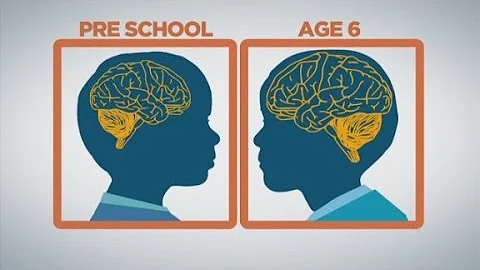
During the infant stage (1-3 years old), the functions of the brain areas related to excretion - the cerebral cortex and spinal cord reflex areas and the physiological organs - bladder and rectum have gradually matured, and they have a certain degree of awareness and control over excretion.
At this time, the child's awareness of the environment is not yet strong and it is easy to adapt to the new environment. This is the best period to train the child to squat or sit on the toilet.
So generally speaking, after one and a half years old, children can take off their diapers and gradually train them to use the toilet independently. On the same day, parents should gradually reduce the frequency of diaper use according to the baby's development level, consciously change the infant's excretion environment, and slowly train the child to squat or sit on the toilet.
Most children around 2 years old can successfully transition to squatting or sitting in the toilet with the help of their parents, and around 3 years old can complete toilet defecation independently.
However, some parents still continue to use disposable diapers for their infants and young children for a long time - especially at night.
With the development of the brain's prefrontal lobe function, children's consciousness increases, and they form a memory of wearing diapers (pants) to defecate. In addition, they have a certain ability to control excretion, thus forming a dependence on diapers (pants) - without diapers, they will hold back and not defecate.
Over time, defecation has become a headache for both parents and children.
How to help children correct their excretion habits?
This is a challenge that both mothers and children need to face.
"Habits become natural", and changes can be a little difficult. Parents and children need to cooperate with each other and do the following:
▲Parents should have a calm mind and don't be nervous.
People's emotions will be unconsciously expressed in language (spoken language, body language), expressions, and behaviors. Only by relaxing and treating children with a gentle attitude can children be willing to cooperate with their parents.
When a child has a desire to defecate, his or her stomach may feel a little painful. At this time, parents can vividly tell the child: "The poop is too naughty. I am trying to push it out. Be brave and let it come out. It will not hurt when it comes out."
Slowly change the habit of some children who are afraid of pain and deliberately control their poop.
▲ Tell the child where the anus is. If there is too much poop, it will be discharged from the anus.
Let children understand the functions of the body and overcome curiosity or fear.
▲ Add an appropriate amount of green leafy vegetables and intestinal-friendly fruits: such as bananas to the diet to prevent dry stools.
▲Conscious training
First prepare a small squatting toilet or spittoon for the child. 15-25 minutes after eating, it is the time for intestinal peristalsis. At this time, the child may want to defecate. Parents can let the child go to the toilet and squat on the squatting toilet for a while. If the child is unwilling, you can accompany him patiently. When you are away from home or your parents are not free, you can let your children squat in the house for a while. Adhere to 2-3 times a day.
It takes time to form a new habit. Parents should remember to be impatient and force their children to quickly meet their expectations. You can gently say to your child: "Baby, let's play a game to see who can squat for the longest time." Parents can end the game early or let the child win based on the child's tolerance, and the child will be interested in squatting.
▲ Allow children to fail
Deep down in their hearts, children are willing to cooperate with their parents. During training, it is normal for children to be unable to poop or to control their bowels, not to take off their pants in time, and for their poop to stain their buttocks or clothes.
When infants and young children are about 2 years old, they have self-awareness when they can recognize themselves in the mirror, and when they are about 3 years old, they learn to be shy. When encountering these embarrassing things, you will feel sad and timid. At this time, parents should remember not to beat or scold their children, but to gently say to their children: "It doesn't matter, I squatted longer this time than last time, and I have made progress." Or: "Just wash it off and it will be fine."
▲ Material rewards
As long as the children practice squatting, they can be given material rewards. The prizes can be candies, small toys, comic books, , etc. that the child likes. The most important thing is persistence. If the child can successfully squat or sit on the toilet, the prizes can be richer.
Hard work pays off. With parents’ patient behavioral guidance and companionship, children will eventually learn to squat or sit in the toilet. The mother has no worries and the child goes to kindergarten happily.