When a child wants to cry, do you let him cry for a while before guiding him to solve the problem? Or will it stop him from crying?
Different approaches, the gap between children educated is not an ordinary big one.
01
Some time ago, when I was playing in the community, I saw a girl who wanted to play rocking car but was scolded by her father. The girl may be only two or three years old, standing there motionless, her eyes filled with tears, her lips kept whispering, and she wanted to cry but didn't dare to cry. It was so pitiful.

Looking at the girl's sad and aggrieved look, her father did not squat down to comfort her, but instead pulled down his face and shouted: cry at all times, and it's hot, and if you want to cry, just stand here and cry enough...
After saying that, the girl's father walked forward without looking back. Seeing this, the girl quickly ran up to chase her father. My daughter asked me in confusion: Why doesn’t her father allow her to cry?
Her father may be in a bad mood, so I answered my daughter in vain. Thinking of the aggrieved little girl, I think of my childhood. Every time I want to cry, my parents always say: You boy, you cry at any time, which is a shame.
With my parents' words, no matter how much grievances I feel in the future, I am used to swallowing my stomach, never mentioning them to others, nor expressing them through tears. Over time, in the eyes of others, I became very cold and serious, and my relationship with classmates was not particularly good.
I remember one time, a classmate in the class had a very serious illness. When the class teacher mentioned it, he was filled with tears. Driven by the class teacher's emotions, many of the students cried, but I was the only one who was uncomfortable, but I didn't cry.
Later, a classmate asked me: classmate is so sick, why don’t you cry?
Crying can’t solve the problem? I asked back, since then, my classmates have said I am cold-blooded. Little do I know that this has something to do with my parents not allowing me to cry since I was a child.
while the younger sister is different. Parents think she is a girl and crying is natural. So every time my sister cries, her parents will comfort her.
With the comfort of my parents, my sister is even more presumptuous. Everything will be solved by crying, and she will cry at all times to the fullest.
When I grew up, my sister and I have completely opposite personalities. She is lively and cheerful and has a good relationship with people. Until now, after encountering sadness, she would choose to cry. After crying, it seemed that the weather would be clear.
Looking at the little girl who wanted to play shaking a car but couldn't cry, Wenwen's father felt very distressed and wanted to tell her father: Let the child cry for a while, don't be ninja, don't force her into an indifferent person!
02
Wenwen's father is also a father. He knows how angry it is for children to cry and lose their temper at any time, and they challenge the limits of adults. Especially in public, parents may really want to find a crack in the ground to drill down.
But even so, Wenwen's father wants to remind his parents that when children are wronged and sad, let them cry for a while, and don't let them hold back and not cry.
After all, I have been holding back my children from childhood and crying at any time. When I grew up, the gap between these two points is very obvious. Wenwen’s father will tell you based on his own experience and the information he has found.
① Different levels of physical health
Studies have found that sad tears are poisonous. If they are not released, they will cause internal injuries. If they endure for a long time, they will commit suicide!
The reason is that psychologists believe that people have very high protein content in their tears when they are sad. , and it is a harmful substance produced by mental depression. If it accumulates in the body for a long time and cannot be released, it will be harmful to health.
Although this is only a study, the credibility is unknown. But in Wenwen's father's opinion, the child is emotional and let him cry when he wants to. Just as my sister often says: after , it will rain and clear after crying. It’s a big deal, just cry.
The sister who cries at any time, although she is often called "heartless", she lives a relaxed, sunny, and has a healthy body. She has never had any illness since she was a child.
. On the other hand, those who have been holding back and not crying for a long time all look like they are worried and are prone to depression .
so, when children want to cry, let them cry! After releasing sadness, it is more conducive to physical and mental health.
②Crying children know how to express emotions better and become smarter in the future
Some researchers have found that children's temperament is related to IQ , especially young infants and young children. They scored the children in three groups according to their good temperament, bad, and bad temperament, and tested their IQ at the age of 4-5 respectively.
The result found that has the "bad" personality and a group with the highest IQ score .
The explanation given by the researchers is that children with "bad temperament" will receive more attention and care from their parents when their parents receive, thus subtly opening up their intelligence.
And those "good-nature" children are ignored by their parents because of "benevolence", which has been a person for a long time and has affected their intellectual backwardness.
Although the accuracy of this study is questionable. But as the saying goes: Children who can cry have candy and eat . "Crying" is not only because the children are communicating with their parents, but also to attract their parents' attention and express their emotions.
The process of children crying is also the process of learning to control emotions, express emotions and cope with emotions. If the child wants to cry, parents will simply and roughly let the child not cry, blocking their emotional outlets, which will hinder the child from learning to express and control emotions.
Those children who have been holding back and not crying for a long time look strong, but most of them do not know how to express emotions, or even feelings, and when getting along with others, various problems are likely to arise.
03
Some people may say: Children cry at any time, should they just let it go?
is not actually like this. When a child wants to cry, what parents need to do is to let the child vent his sadness, but not to let it go.
First of all, use language to describe the child’s emotions
For example, when the child wants to cry, you can squat down and ask the child gently: You are very wronged now, are you?
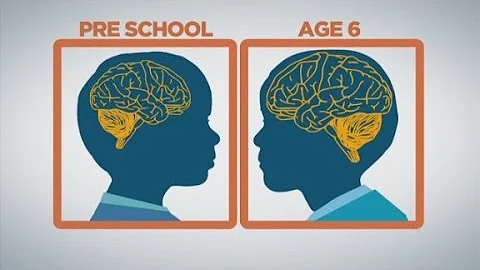
Such a sentence can guide children to describe their emotions through language. Young children are all "emotional brains" and have not yet learned how to control their emotions. Teaching children to describe emotions in words and letting them think rationally can not only reduce anger, but also promote the development of the "rational brain".
Secondly, guide children to analyze their emotions
For example, ask the child why he feels wronged? Did Dad blame you wrongly? Find the source of the child’s grievance.
Then tell the child that if the father is wronged, he will also feel wronged. This sentence can make the child relax his vigilance and be willing to speak his inner words.
Then, apologize to the child to let the child feel that the father understands himself! This analysis process is not only conducive to calming the child's grievances and anger, but also allows the child to learn to control his emotions and stop crying at any time.
Finally, take your child to reflect on your emotions
For example, if you were very wronged just now, if you didn't share it with your father, I wouldn't know the reason for your grievance and would not be able to solve the problem.
Dad is feeling wronged when he sees you feel wronged, but after you share it, dad will know that it was the wrong blame you. After apologizing to you, will you feel less wronged?
This process not only allows children to know that losing their temper cannot solve the problem; it can also guide children to experience and feel other people's emotions and enhance their empathy.
In short, when a child wants to cry, we must allow him to vent his emotions. Only by venting unpleasant emotions can you have an appointment again, what do you think?