Recently, the epidemic has occurred, and the child has started online classes again. This time it lasts about six weeks. For parents, their children’s courses, their own work, teachers’ tasks, and life’s trivialities are exhausted. If the troubles of the second child are added, it will be even more "perfect".
I have always believed that if children’s self-discipline is deliberately cultivated, it should be cultivated. However, judging from this online course under the epidemic, my expectations for children over 10 are still too high. Is this self-reflection whether it is my own problem or my child’s problem, is my own expectations too high or my child’s performance too poor? Let’s review carefully to see if some of the improvements can be made.
Just the first week of online classes, I firmly believe that my child is still able to complete the class, homework and submission by himself like in the previous online classes. Parents are just bystanders and prepare the online class computer and delicious meals for him. Through the observations in the first week, I found that children in their 10s are different from children in their six or seven years old, and the gap is quite large. There are mainly the following aspects:
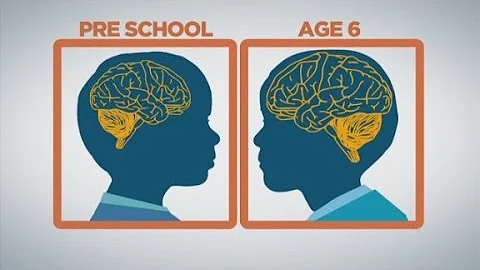
- Children in their six or seven years old have just entered the first and second grades, and are in childhood. They are basically still following their parents. They can basically listen to what their parents say, without so many little thoughts. A ten-year-old child has entered the fifth and sixth grades, and is the front end of adolescence. His inner autonomy has begun to sprout and can break out of the ground at any time.
- Children aged six or seven are generally educated to establish rules. Rules are the development of habits and cannot be broken easily. Children at this period are generally unwilling to try to break through. Ten-year-olds often have to challenge the rules you set. They take pride in challenging them instead of feeling whether the rules themselves are reasonable.
- Children aged six or seven are generally very limited in concentration. Basically, they play for a while, and there is no clear learning purpose. Learning is playing, playing is learning. Playing is learning. Ten-year-old children clearly know the difference between learning and playing. If parents do not guide correctly, it will easily arouse the rebellious mentality of learning, and nagging all day long has the opposite effect.
- Children aged six or seven have limited IQ and development. Entertainment activities are basically watching TV, playing games, playing cards and other clips. Children aged ten usually have their own basic social interactions. The discussion in the children's circle is about escaping boys and Honor of Kings, etc., and they have no self-control. If they rise step by step, it is easy to cause addiction to games.
So for children aged six or seven and those in their teenage years old, we should treat differently, especially for children aged teenagers, we should be more patient than lose our temper.

Regarding whether to play games after completing homework, I searched the Internet but couldn't find a suitable answer. After my personal experiment, I felt that the equation cannot be drawn between completing homework and playing games. Whether it is done well or not, it cannot be used as a reason to play games. Playing games is for entertainment, to relax the tense nerves of learning, not for upgrading and fighting monsters, nor can you get addicted to it. The current game design is a level-to-level upgrade, from black iron to bronze, then gold, diamonds, champions and other rankings. Children seem to be playing games step by step, but they may end up being addicted to upgrading. If they are not satisfied in the later stage, they will lose their temper, causing them to get deeper and deeper. The homework will start playing games from the original serious completion to the rush to play games. They will also take advantage of the adults' attention, and they will also think about upgrading during class, and they will discuss the issue of upgrading and fighting monsters with friends after class.
So when can I play the game? I thought about this question for several days, and finally figured out what I value. I think when a child can play games depends on his emotional management.What is emotional management? We found that when we agreed with our children to play games for half an hour, but when it comes time, the children are often unwilling to turn off the game, because they may not be able to play a game for half an hour, or they may have played a game for half an hour or are still in teams with friends. We don’t know the complete reasons, unless you can form a team with them, but how many parents are there for friends who can play games with their children? Therefore, children's emotional management is very important. When the time is agreed, they will close the game immediately, and they will not be emotional. They will continue to play next time or explain the situation to their teammates without emotions, and get off the computer immediately. Only by being satisfied can they play the game next time. However, most of these children start with laughter and end with a drag. In more serious cases, conflicts will break out, forget the previous agreement, and hold their faces to affect their next study and homework.
After my practice, I think most ten-year-old children do not have the ability to manage their emotions by themselves, and cannot and cannot use games to link their grades and homework. Every child is a special existence. If his emotional management is properly managed, it is understandable to play games. The proper emotional management means to have the joy of playing when playing. It is agreed that you will immediately devote yourself to learning when the game is over, and you will not be bothered and cry because of playing more or playing less minutes. If you reach this state, playing games and studying is also a pleasure. If you can't, you will firmly eliminate online games. The meaning of firmly eliminates them is not linked to study or homework. Over time, you will forget the way the game looks. Children, after all, there are many novel things. I think it should be no big problem.
There is no end to children's education. Everyone has their own different ways. They know their own children best. When the children don't grow up, parents have to worry about them all day long.