There is a folk proverb: "At the age of three, you can see the age of seven."
It means that when a child is three years old, you can basically see the psychology and personality of his growth; when he is seven, you can basically know his life's development status. Although the sentence

has some exaggeration, it still makes sense.
Studies have shown that 87% of a person's brain weight and 80% of his comprehensive abilities are formed in the "first 1,000 days of life". In other words, how high a person's IQ and ability is basically established before the age of 3.
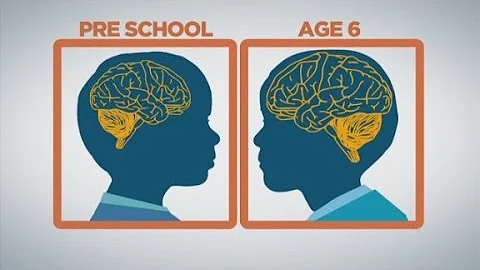
. There are also studies that newborns have brain capacity that is only one-quarter of adults, but by the age of 3, it can reach three-quarters. At the same time, 0 to 3 years old is a critical period for the rapid growth of brain cells in infants and young children and the maturation of nerve fiber sheaths. The speed of brain development during this period directly affects the intellectual development of infants and young children, and the psychological stereotype of children is basically completed at this stage.
After modern scientific research results show that the saying "see the youngest at the age of three, and see the old at the age of seven" is in line with the laws of statistics. 0 to 3 years old is the most critical period for raising children. As long as you grasp these 3 years, you can lay the foundation for your child's lifelong growth and development. Because of this, more and more parents attach great importance to their children's early education.
When it comes to early education, many parents think of "early education classes" at the first time, but in fact, early education is early education, and early education classes are early education classes. Early education ≠ early education classes, and the two are not the same. Early education is the abbreviation of early education, which refers to the early cultivation of infants and young children after they are born. Early education for babies does not necessarily have to be carried out in early education institutions, and parents can also implement early education at home.
and effective companionship is the longest confession to children, and effective companionship is the best education for children. The baby receives early education under the company and care of parents, and the effect of receiving early education is many times better than in early education institutions, and is more conducive to the long-term physical and mental development of children.
What should parents do when they are early education at home?
First, exercise children's physical fitness
0~3 years old for children to practice and learn fine movements and big movements. At this stage, physical exercise for children can exercise their sense of balance and coordination. At the same time, exercise can also stimulate brain development and make children skillful.
Physical exercise can be divided into exercises of large muscle groups and coordination exercises of small muscles. The former corresponds to large movements, which can be practiced through climbing, running and jumping; the latter corresponds to fine movements, which specifically refer to the ability to complete specific tasks with the hand muscles, especially the coordination ability of hands and eyes, which can be achieved by playing with building blocks, puzzles, rattles, color mud, etc.
Second, painting enlightenment
4 years old is a critical period for the development of children's visual image. At this time, children have a particularly keen perception of things around them, which is particularly suitable for children to enlighten their painting. When children focus on painting, they can also exercise their ability in concentration, observation, imagination and other aspects.
At this stage, there is no need to teach children any painting skills and knowledge. They only need to provide children with safe and reliable brushes, paper, drawing boards and other tools, so that children can doodle and experience the color and texture of the paint. Children are born painters. Letting children freely graffiti out what they perceive or imagined is the best painting enlightenment for children.
Third, music enlightenment
Similarly, 0-3 years old is also a critical period for cultivating children's perception of music rhythm. Parents can also teach their children music at home to cultivate their interest in music.
can buy some small instruments for children, such as small harmonica , small drums, play some music and children's songs with obvious rhythm, and do movements or dance with the children to follow the rhythm. This can not only exercise children's perception of music, but also exercise the body's coordination ability, and also spend a warm and happy parent-child time, killing multiple goals at one fell swoop.
Fourth, Parent-child reading
2~3 years old is the first critical period for children to learn oral language. At this stage, the more words parents and children say, the smarter the child is, and the higher the emotional intelligence. Therefore, at the age of 0~3, parents should communicate with their children as much as possible. One of the most important communication channels is parent-child reading.
Parent-child reading is like a "bridge". It can not only effectively enhance high-quality communication between parents and children, but also enable children to cultivate conceptual thinking, learn various knowledge and good behavioral habits during the reading process. At the same time, it also develops the interest and habit of reading, laying the foundation for future learning.
When you are 0 to 3 years old, parent-child reading should focus on picture books, and you don’t need to pursue one step, just read books with pure text.
As long as parents accompany their children to do the above 4 things well at home, they can still give their children professional early education, which can save money and enhance parent-child relationships. Why not do it?