- Don’t always lick your hands when eating. This is unhygienic. Do you know? Can you remember the dirty clothes that you took off from
- throw them into the dirty clothes basket?
- has said it many times. You have to hold this glass gently. What should you do if it breaks? What should I do if I get stuck?
- ...
Why do children always make the same mistakes after they say it many times?
PART1Why do babies always make the same mistakes
There are many reasons for this problem. Today we will discuss two of them.
One is the reason for the child and the other is the reason for the parents.
1. The child's brain is immature
Nobel Prize winner psychologist Connerman once mentioned that [Quick Thought] and [Slow Thought] are two types of thinking systems.
System 1: Quick Thinking - Intuitive Thinking.
System 2: Slow thinking—represents logical thinking.
Let’s use a common psychological experiment to see how these two systems work.
You try it and quickly say the color of each word below:
yellow green blue red
Your first reaction is yellow, green, blue, and red?
or green, blue, red, or yellow?
Most people will be the first answer when they say it quickly.
Calm down and everyone will find that the second one is the exact answer.
This is the two systems of the brain that are competing.
Because of habit, the word that blurted out at the beginning was Kuaishu System.
Because of the task, the text color reflected by it is slow thinking system. The same is true for children's brains, and their thinking is involuntarily controlled by these two systems.
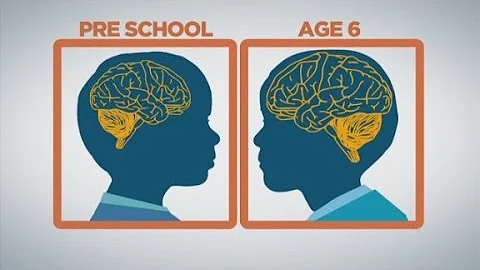
Because slow thinking is controlled by the prefrontal lobe of the brain, the development of the child's prefrontal lobe is not yet mature (it is only fully developed after adulthood), so children make the same mistake repeatedly is generally affected by Kushu.
That is to say, when his brain thinks of something, it habitually does it. The system doesn’t have time to remind you.
Take DD as an example:
DD There was a time when I especially liked to grab other children's toys. No matter who it was, I would repeatedly remind him before taking him out to play every day:
You are not allowed to grab other people's toys today; 5
If you want to play with other people's toys, you need to get the consent of others...
Later, it may have been too much advice. Before going out, DD himself said: "Don't grab the toys, otherwise others won't play with them."
However, as long as you release it, you will be able to grab it!
grab someone else's car, shovel, bubble machine, kite... only those that others didn't bring out, and nothing he couldn't grab.
Didn’t you tell me, don’t steal other people’s toys;
If you want to play, you need to get the consent of others;
You always rob other people’s toys, so why do you play with them together?
Didn’t you say you wouldn’t grab other people’s toys? Why did you rob me just now...
It’s just that I said I wouldn’t grab them, but I still rob them as soon as I went out... It was so angry that my old mother was so angry!
Later, I also read this fast thought and slow thought before I understood: Oh! It turns out that this is the case for children. Knowing it doesn’t mean you can do it!
is like DD's mental journey when he grabbed a toy: This toy is so beautiful, I like it so much! This is mine, it’s okay if I just take it! Well, take it!
At this time, the system cannot keep up with it. In addition, it is because of the explosive self-awareness and thinking that everything is around you. The most direct idea is to take it first.
Who has time to care whether things are their own?
If children often do this, adults will easily lose patience because they mistakenly think that their children "don't change after repeated teaching".
Adults are obedient because they have the ability to think rationally. But the child did not. So, if we want our children to be obedient, the first thing we need to do is to give the children some opportunities to think slowly.
If the child can realize that he is doing something wrong and just doesn’t control himself at the moment, he can remind him not to blame him or not to be labeled.
or to grab the toys:
When I see DD's eyes shining when his eyes shine, I will remind him: "You like your little brother's car very much, right? Then what do you do?" After
reminding me, the child will definitely want to get your usual "sincere teachings" ~
This will give the child a chance to think slowly?
There are many similar examples:
- For example, you have to step on mud/pit for newly worn shoes. You can remind me, if you step on this, how will your favorite new shoes become? ——Dirty.
- For example, if you finish playing the LEGO on the floor, you will go to play plasticine . You can remind me, if you throw LEGO like this, what will happen to these parts? ——Lost, I can’t find it next time I want to play.
Instead of criticizing and stopping immediately, it is better to remind children directly to slow down their thinking and think carefully about what is going on.
figured it out, and naturally it changed!
2. The rules given by parents are not clear enough
When the rules given by you are not clear enough, the child will constantly test the boundary .
This process of testing boundaries falls on the surface, in fact, is a process of repeated mistakes.
Take the matter of packing up toys as an example:
, even if you know that you should put away the toys after playing with them, it is inevitable that you will be lazy.
Anyone who is familiar with Mom C must know that Dad C is a severe patient with obsessive-compulsive disorder +cleanness.
Every time I see the toys all over the table and the floor after playing with the children, I can't help but say a bunch of old father's thoughts:
Haven't you told you that the toys should be put away after playing with them;
Why did you confiscate the toys today? It's messy everywhere;
Don't you know if you put them away after playing with them? The parts will not be found next time;
uttered so many times, why didn't you listen?
…
Then, while muttering, cleaning up the mess that children made.
clearly said that he had to put away the toys himself after playing with them, but the children confiscated them, so Dad C directly did it for him.
Children: Should I accept it? Or, I might as well stop accepting it and see what my dad reacts?
To be honest, if I were a child, I would have a lot of question marks in my head.
people don’t know whether this should be done, so how can they be executed?
So, when it comes to following the rules, let him do what the child should do, and let him bear the consequences he should bear.
Your work can only represent the bottom line of concessions. What children are best at is taking advantage of this kind of loophole.
In addition to this, we must also pay attention to our exemplary role.
htmlBabys under 53 years old come into contact with the most family environment, so we must set a good example and subtly give children a clear and clear environment.
Why does this point necessarily emphasize?
Maybe because we have been adults for too long, when facing our children, we are inevitably always putting ourselves in the most authoritative position in every move.
From the bottom of our hearts, we habitually believe that we are just the rulemaker: What do you know? I just told you to listen, anyway, it’s all for your own good.
In the end, I am not the follower of the rules.
For example:
Let the child wash his hands before eating, but he doesn't wash himself;
tells the child to cross the road by green light, and rides the tram to take the child to run a red light;
tells the child to put things back, but he puts them around...
These are just not understanding the rules when children are young; but when children grow up, they have their own cognition?
won’t the rebellious thought of “Why is it the only one who is like this?”
The next step will be taken: I just want to do this too.
So it becomes a repeated mistake in our eyes.
So, when we set rules for our children and want them to be obedient, we must put aside our image as a lofty elder and be a follower with our children.
This not only provides children with clear rules and environment, but also gives us a chance to become better with our children.
C Mom said: Finally, I will talk a few more words: No matter how many methods, it is not a matter of time to let the child listen to it as soon as he says it. No matter how good the method is, it doesn’t work if you use it once! The most rare thing about raising children is that it is a long-lasting determination. No matter how hard you work to fertilize and irrigate, it takes time for you to bloom and become a timber, and you can't go day and night. so, take your time and don't hurry.