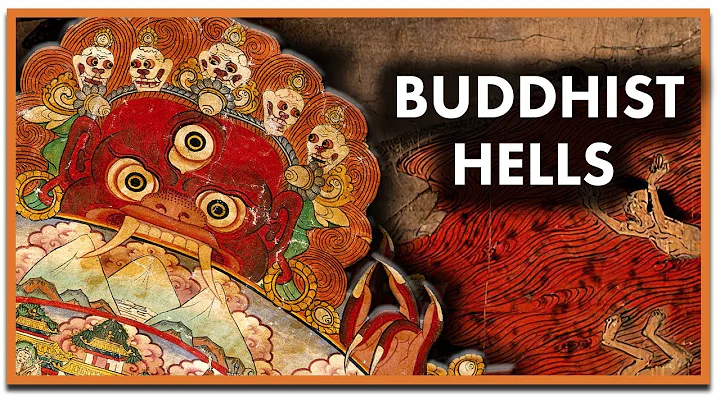
Distant Tibet is as vast, deep, lofty and mysterious as the vast universe.
The reincarnation system of living Buddhas in Tibetan Buddhism existed only in the world around 1580. Among all the Dalai Lamas in the past, there was a very unique and mysterious figure - the 116th Dalai Lama Tsangyang Gyatso.
As the Dalai Lama, Tsangyang Gyatso, although he did not make much achievements in politics and religion, he was a talented poet and was famous for his love poems.
Expressing oneself, expressing one's own personality in the most direct and passionate language, showing one's subjective inner world, and expressing one's inner surging feelings are important characteristics of romantic poets.
It is not surprising that this characteristic is reflected in a poet, but it is really surprising that it occurs in a leader who combines politics and religion.
Tsangyang Gyatso has a supreme status that many people can only dream of, but he is indifferent to power, unwilling to abide by the precepts, and yearns for the secular life of a living person.
He turned his experience and longing for love into a large number of love poems flowing out of his pen, expressing the surging waves of his inner feelings. He uses love poems to express his self as a human being and directly express his emotional experience as a human being.
Possessing the special status of the Dalai Lama and the emotional experience as a mortal, Tsangyang Gyatso's love poems, although simple in text, are very rich in connotation and convey a mysterious atmosphere. Perhaps his poems are related to Tibetan Buddhism and the spiritual experience of practicing Tantra. Some poems appear to be love poems on the surface, but actually contain secrets from Tantric Buddhism.
For example, the beautiful song:
"Ask the white wild goose,
lend me your wings in the sky,
I will not fly far away,
I will come back as soon as I turn around Litang."
The eminent monk who was responsible for searching for the reincarnation of the sixth Dalai Lama had an epiphany: the reincarnation of the sixth Dalai Lama grew up in Litang. Based on this search, they found the seventh Dalai Lama Gesang Gyatso in Litang.
It is not easy for a mortal to become a god, and it is equally difficult for a god to live a mortal life. Tsangyang Gyatso's pursuit of a better life in the world was not as beautiful as his love poems, but ended in tragedy.
After the Tibetan regent Sangye Gyatso was killed by Lhazang Khan, Lhazang Khan reported to the Kangxi Emperor that Tsangyang Gyatso "indulged in drinking and sex and did not abide by clean rules. Please abolish him." Emperor Kangxi deposed Cangyang Gyatso and asked him to "dedicate himself to the capital".
Lhasa is thousands of miles away from Beijing, and is blocked by mountains. When Tsangyang Gyatso and his party trekked hard to reach the shores of Qinghai Lake, this 24-year-old, talented and prosperous god, who shines with the sun and the moon in the hearts of Tibetans, suddenly disappeared without a trace, leaving behind an eternal mystery that gives people unlimited imagination.
In the mysterious and mysterious bend area of the Brahmaputra River that few people have set foot on so far, on the southeast slope of the Himalayas, the Menyu Plain is like a bright pearl embedded in the Himalayan mountains. The southeastern part of the Himalayan mountains is called "Shambhala" by the Tibetan people.
"Shambhala" is the ideal paradise in Tibetan Buddhist legends, with swaying leaves, fragrant rice, luxuriant plants, and evergreen doors all year round. It is the birthplace of the Monba ethnic group. In the Monba language, it means "a beautiful virgin land hidden".
These all mean that Menyu is extraordinary. Menyu is famous because she is called "Ideal Heaven". However, what is more important is that in the embrace of this "ideal heaven", the famous sixth Dalai Lama Tsangyang Gyatso was reincarnated, as well as Tsang Gyatso's love songs that have been passed down through the ages.
On the 16th day of the first lunar month in the 22nd year of Emperor Kangxi’s reign in the Qing Dynasty (AD 1683, the tenth year of the water pig in the Tibetan calendar), a little boy was born in the home of Tashi Duntsen, a poor Red Sect lama who lived in Yusong, Menyu District. He was the future Dalai Lama Tsangyang Gyatso.
The Monba people are a nation that is good at singing and dancing. They use songs and dances to celebrate the birth of a child, celebrate weddings, and express their praise for the sun, moon, stars, rivers, snow-capped mountains, grasslands, and forests.
Distant Tibet is as vast, deep, lofty and mysterious as the vast universe.
The reincarnation system of living Buddhas in Tibetan Buddhism existed only in the world around 1580. Among all the Dalai Lamas in the past, there was a very unique and mysterious figure - the 116th Dalai Lama Tsangyang Gyatso.
As the Dalai Lama, Tsangyang Gyatso, although he did not make much achievements in politics and religion, he was a talented poet and was famous for his love poems.
Expressing oneself, expressing one's own personality in the most direct and passionate language, showing one's subjective inner world, and expressing one's inner surging feelings are important characteristics of romantic poets.
It is not surprising that this characteristic is reflected in a poet, but it is really surprising that it occurs in a leader who combines politics and religion.
Tsangyang Gyatso has a supreme status that many people can only dream of, but he is indifferent to power, unwilling to abide by the precepts, and yearns for the secular life of a living person.
He turned his experience and longing for love into a large number of love poems flowing out of his pen, expressing the surging waves of his inner feelings. He uses love poems to express his self as a human being and directly express his emotional experience as a human being.
Possessing the special status of the Dalai Lama and the emotional experience as a mortal, Tsangyang Gyatso's love poems, although simple in text, are very rich in connotation and convey a mysterious atmosphere. Perhaps his poems are related to Tibetan Buddhism and the spiritual experience of practicing Tantra. Some poems appear to be love poems on the surface, but actually contain secrets from Tantric Buddhism.
For example, the beautiful song:
"Ask the white wild goose,
lend me your wings in the sky,
I will not fly far away,
I will come back as soon as I turn around Litang."
The eminent monk who was responsible for searching for the reincarnation of the sixth Dalai Lama had an epiphany: the reincarnation of the sixth Dalai Lama grew up in Litang. Based on this search, they found the seventh Dalai Lama Gesang Gyatso in Litang.
It is not easy for a mortal to become a god, and it is equally difficult for a god to live a mortal life. Tsangyang Gyatso's pursuit of a better life in the world was not as beautiful as his love poems, but ended in tragedy.
After the Tibetan regent Sangye Gyatso was killed by Lhazang Khan, Lhazang Khan reported to the Kangxi Emperor that Tsangyang Gyatso "indulged in drinking and sex and did not abide by clean rules. Please abolish him." Emperor Kangxi deposed Cangyang Gyatso and asked him to "dedicate himself to the capital".
Lhasa is thousands of miles away from Beijing, and is blocked by mountains. When Tsangyang Gyatso and his party trekked hard to reach the shores of Qinghai Lake, this 24-year-old, talented and prosperous god, who shines with the sun and the moon in the hearts of Tibetans, suddenly disappeared without a trace, leaving behind an eternal mystery that gives people unlimited imagination.
In the mysterious and mysterious bend area of the Brahmaputra River that few people have set foot on so far, on the southeast slope of the Himalayas, the Menyu Plain is like a bright pearl embedded in the Himalayan mountains. The southeastern part of the Himalayan mountains is called "Shambhala" by the Tibetan people.
"Shambhala" is the ideal paradise in Tibetan Buddhist legends, with swaying leaves, fragrant rice, luxuriant plants, and evergreen doors all year round. It is the birthplace of the Monba ethnic group. In the Monba language, it means "a beautiful virgin land hidden".
These all mean that Menyu is extraordinary. Menyu is famous because she is called "Ideal Heaven". However, what is more important is that in the embrace of this "ideal heaven", the famous sixth Dalai Lama Tsangyang Gyatso was reincarnated, as well as Tsang Gyatso's love songs that have been passed down through the ages.
On the 16th day of the first lunar month in the 22nd year of Emperor Kangxi’s reign in the Qing Dynasty (AD 1683, the tenth year of the water pig in the Tibetan calendar), a little boy was born in the home of Tashi Duntsen, a poor Red Sect lama who lived in Yusong, Menyu District. He was the future Dalai Lama Tsangyang Gyatso.
The Monba people are a nation that is good at singing and dancing. They use songs and dances to celebrate the birth of a child, celebrate weddings, and express their praise for the sun, moon, stars, rivers, snow-capped mountains, grasslands, and forests.
Monba folk songs are catchy and can be sung alone or sung with a certain tune. momba people love to sing and dance, and neither sadness nor joy is hidden in their hearts.
Every New Year or festive occasion, in the beautiful Menba Mountain Township, Garu love songs and Sama wine songs gush out like springs and float everywhere. Tsangyang Gyatso grew up carefree in this poor but beautiful mountain village.
According to the customs of the Monba tribe, Cangyang Gyatso, who is good at singing and dancing and is still young, already has a girl he is passionately in love with. Tibetan people believe that gods are everywhere. The traffic is blocked, the breath of the spirit is constantly blowing, and the mountains are towering, unable to block the brilliance of the Holy Spirit.
In the thirty-sixth year of Kangxi (1697), Sangye Gyatso selected the carefree Tsangyang Gyatso as the reincarnation of the fifth Dalai Lama. The Tibetan people believe that the reincarnated soul boy born in the "ideal heaven" is extremely auspicious. He has absorbed the aura of this holy land and will be the auspicious savior of all living beings.
On September 7 of this year, Tsangyang Gyatso was ordained and ordained by the fifth Panchen Lobsang Yeshe in Langgazi. Crossing the mountains of the Himalayas, passing through the rapids of Yarlung Zangbo , and walking through the grassland with green grass, Tsangyang Gyatso was welcomed to the Potala Palace Secretary Xipingcuo Hall to be enthroned, and began his career as the Dalai Lama.
The Dalai Lama, like Potalaguan where he lives, is the Holy Spirit in the hearts of the Tibetan people. Thousands of Tibetan people have traveled across thousands of rivers and mountains and gone through untold hardships. Some even kowtow all the way to Lhasa to worship them. However, the young Tsangyang Gyatso was indifferent to all this. He broods in the divine, wandering between God and man.
He longs for love and misses his beloved girl far away. In order to fight for the freedom of "love", it is said that he once returned his lay ordination to his personal teacher, Panchen Lobsang Yesina, and shouted loudly that it was appropriate for everyone to do so.
What's more, he once told his regent, "Give me freedom or give me death." He often stood in his dormitory at the highest point on the 13th floor of Potala Palace in the east-west sunlight, overlooking the holy city of Lhasa shimmering in the morning sun, and overlooking the golden and crystal-clear Himalayan peaks.
Pilgrimage incense smoke lingers, the chants of Buddhist chants symphony, and accompanied by the rapid twisting of sandalwood beads in his hand, uncontrollable emotions surge up, and soul-stirring love poems often blurt out uncontrollably:
I met the girl,
In the forest at the south gate of Shannan
In addition to the talking parrot,
No one knows.
Please ask the talking parrot,
Don't let the secret leak!
A young man who is as tall as a mountain,
is passionately in love with a girl who is as beautiful as a flower.
After being selected as the reincarnation of the fifth Dalai Lama, Tsangyang Gyatso's pure love came to an abrupt end. The high walls of the palace and strict canons prevented him from meeting the girl. But Cangyang Gyatso's feelings are hard to break, and his six roots are impure. Only love songs can make his endless thoughts easy to express.
On the top of Nadong Mountain, the bright moon rises,
The girl's face,
appears in my heart.
Dujuan comes from Menyu, bringing the atmosphere of hometown, just like meeting a girl, extremely relaxed and happy. The supreme status did not dilute the love of Tsangyang Gyatso. Living in Potalaguan, which was admired by thousands of people, Tsangyang Gyatso missed his boyhood lover all the time. Especially after he reunited with his former lover despite strict religious precepts, the seeds of love sprouted into an open rebellion against religious precepts. In her heart, there is only pure love:
The heart is as white as Hada ,
is pure and flawless;
You If you are sincere,
please write it in your heart!
The willow tree fell in love with the bird
The bird fell in love with the willow tree.
As long as the two are of the same mind, there is no chance for the eagle to take advantage of.
Although he has such a beautiful longing for love, and although Tsangyang Gyatso bravely breaks through the canons that restrict freedom, he always feels that the religious precepts and the asceticism of the Yellow Sect are constraining him.
Love, lovers, Dharma, precepts, and the status of the Dalai Lama. . . ”
These intertwined but irreconcilable contradictions make Tsangyang Gyatso wander arduously between Buddhism and love.
If you follow your lover’s wishes,
your relationship with the Dharma will be cut off in this life;
If you go to the deep mountains to practice,
it will go against the girl’s wish.
With the passionate pursuit of love, with the desire for freedom With endless yearning, and betrayal of the strict religious precepts and Yellow Sect asceticism, Cang Yang Gaozhi mysteriously escaped when he was being deported to Beijing and passing through Qinghai Lake. Admirers say he went to heaven, haters say he went to hell. No matter how people comment on his political achievements as the Dalai Lama, his love songs have been spread throughout the Qinghai-Tibet Plateau and are well-known throughout the ages. Not only can people memorize it, but they can also compose music and sing it widely. Because love is the eternal theme and is always the pursuit and yearning of human beings.
The immortal poetry collection "Tsangyang Gyatso's Love Song Collection " left by Tsangyang Gyatso has been handed down in Tibetan, Chinese and English as early as the 1930s.
Although he has such a beautiful longing for love, and although Tsangyang Gyatso bravely breaks through the canons that restrict freedom, he always feels that the religious precepts and the asceticism of the Yellow Sect are constraining him.
Love, lovers, Dharma, precepts, and the status of the Dalai Lama. . . ”
These intertwined but irreconcilable contradictions make Tsangyang Gyatso wander arduously between Buddhism and love.
If you follow your lover’s wishes,
your relationship with the Dharma will be cut off in this life;
If you go to the deep mountains to practice,
it will go against the girl’s wish.
With the passionate pursuit of love, with the desire for freedom With endless yearning, and betrayal of the strict religious precepts and Yellow Sect asceticism, Cang Yang Gaozhi mysteriously escaped when he was being deported to Beijing and passing through Qinghai Lake. Admirers say he went to heaven, haters say he went to hell. No matter how people comment on his political achievements as the Dalai Lama, his love songs have been spread throughout the Qinghai-Tibet Plateau and are well-known throughout the ages. Not only can people memorize it, but they can also compose music and sing it widely. Because love is the eternal theme and is always the pursuit and yearning of human beings.
The immortal poetry collection "Tsangyang Gyatso's Love Song Collection " left by Tsangyang Gyatso has been handed down in Tibetan, Chinese and English as early as the 1930s.




![[English] Who Am I - Lecture 1 - Ven. Guan Cheng - DayDayNews](https://i.ytimg.com/vi/KU0fUs2It5o/hq720.jpg?sqp=-oaymwEcCNAFEJQDSFXyq4qpAw4IARUAAIhCGAFwAcABBg==&rs=AOn4CLDFpQUN_QwRfC7bmP4sUadq-RcYdg)
![A Moving Masterpiece 清明上河图 [English narration] - DayDayNews](https://i.ytimg.com/vi/kxff-4GktOI/hqdefault.jpg?sqp=-oaymwEcCOADEI4CSFXyq4qpAw4IARUAAIhCGAFwAcABBg==&rs=AOn4CLBtHGLeUpJNCYDJYnZTuISQ1N5Vag)