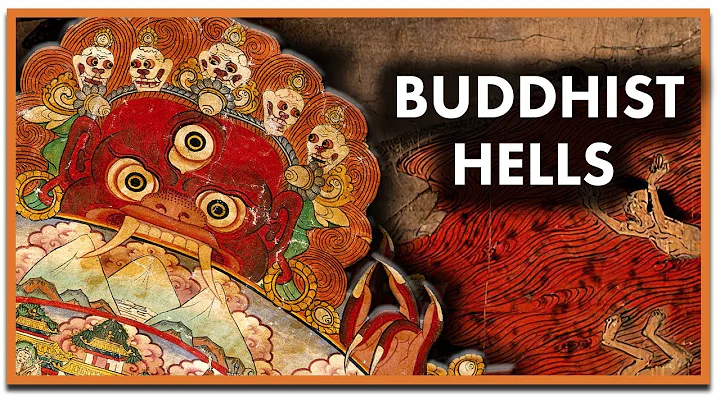
Regarding Buddhist paintings , there are two theories, broad and narrow. Broadly speaking, Buddha, Bodhisattva, King of Heaven, King Kong and many other types belong to the category of Buddhist paintings; narrowly speaking, Buddhist paintings can be understood to only refer to works with Buddha as the main subject.
of the Tang Dynasty, as the pinnacle of the history of Chinese Buddhist statues, it achieved the unity of religiousness and secularity, and achieved a harmonious state of being based on local traditions and absorbing foreign styles. Buddha statues focus on the inner wisdom and power, and the external image generally must follow strict rituals. It still has the sacred features of snail hair, white hair, and bun. However, the face is round and plump, the expression is compassionate and serene, and the posture is graceful and graceful. Compared with the previous generation, it is undoubtedly more humane and close to the world. Among the Buddhist paintings in this article, "The Picture of the Dharma Under the Tree" is the oldest and best-preserved work in the Dunhuang Sutra Cave. Among them, the outlines and colors of the main deity, the accompanying Bodhisattvas, and the female donors are all very delicate. In particular, the expressions of the six monks and disciples are extremely vivid. They are rare masterpieces among Dunhuang paintings. "Amitabha Bodhisattva" and "Avalokitesvara Bodhisattva with Thousand Arms and Thousand Eyes" are both mandala-type works, which are drawn according to certain Buddhist rituals and are used by practitioners to understand the body and practice esoteric methods.
Regarding the entire Dunhuang paintings, let’s briefly talk about the topic of donors. First, the large number of well-preserved offering inscriptions is an excellent way for readers to examine the creative background of Dunhuang paintings. Through the inscriptions, we can see that the main donors of the paintings were not only lay believers, but also mostly middle- and lower-level officials and ordinary believers. This is very different from the identity of the Dunhuang Grottoes statue makers. Only aristocratic families or upper-level officials can support the huge expenses for grotto statues. For ordinary people, less expensive paintings on silk, linen, and paper are undoubtedly more realistic forms of support. Readers may also wish to note that most of the works that both depict donors and inscribe vows are of a higher standard and have better materials. This shows that such works should be handed over to a painter in advance and specially painted according to the wishes of the donor.
As for some works that do not have inscriptions of vows and do not have the image of the donor, the situation is usually as follows: the painter has produced a batch of works in advance to specifically meet the temporary support needs of believers; secondly, interpreting the donation inscription can further confirm the creative intention of the Dunhuang paintings, that is, to seek blessings for the deceased, escape from the three evil realms as soon as possible, and be reborn as a pure saint; or to pray for blessings for the living and eternal peace. Not only that, the inscription also hints at the belief status of the believers at that time, such as the belief in Guanyin and the belief in the Ten Kings of Ksitigarbha, etc. Third, the images of donors in the paintings are mostly portraits, which undoubtedly provides extremely precious image materials for studying the evolution of clothing and aesthetic customs in the Tang Dynasty and Five Dynasties.
——The content is excerpted from "Western Region Painting·1 (Buddha·Bodhisattva)"
8




![[English] Who Am I - Lecture 1 - Ven. Guan Cheng - DayDayNews](https://i.ytimg.com/vi/KU0fUs2It5o/hq720.jpg?sqp=-oaymwEcCNAFEJQDSFXyq4qpAw4IARUAAIhCGAFwAcABBg==&rs=AOn4CLDFpQUN_QwRfC7bmP4sUadq-RcYdg)
![A Moving Masterpiece 清明上河图 [English narration] - DayDayNews](https://i.ytimg.com/vi/kxff-4GktOI/hqdefault.jpg?sqp=-oaymwEcCOADEI4CSFXyq4qpAw4IARUAAIhCGAFwAcABBg==&rs=AOn4CLBtHGLeUpJNCYDJYnZTuISQ1N5Vag)