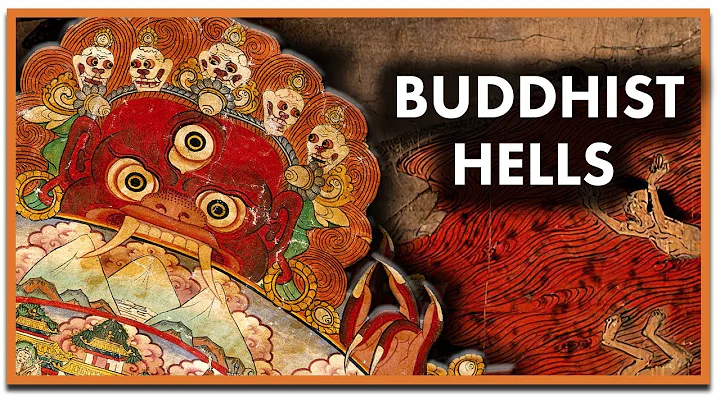
People have leaders, and dragons naturally have leaders. The leader of the dragon is the Dragon King. All dragon kings have great power, so they can become the protectors of Buddhism.
The eight dragon kings are often mentioned in Buddhist scriptures. They are often described as being the mounts of certain angry deities or protectors, being trampled under their feet, or becoming their ornaments. These eight dragon kings are all diligent in cultivation, relatively wise and less angry; their relatives are also relatively weak in anger, and can remember their merits and obediently listen to the teachings of Buddhism. Because of their good deeds, the eight dragon kings are not subject to sufferings such as being wrapped in hot sand, and they can protect the world with a kind heart. They make clouds and rain according to the seasons and timing of the world, so that the world has smooth weather and good harvests. Therefore, they are worshiped by people.
Nanda Dragon King, Sanskrit Nanda, transliterated as Nantu Dragon King, Nantou Dragon King, etc., free translation as "Happy Dragon King" or "Happy Dragon King", and Upa Nanda Dragon King are brothers. " Lotus Sutra Xuanzan" records that this dragon king is good at complying with the wishes of all living beings, can satisfy all living beings' requests and wishes, and can control wind and rain, so he is deeply loved by the world, hence the title "Happy Dragon King". The image of the Nanda Dragon King in Tantric Buddhism is generally flesh-colored with seven dragon heads behind it.

Upananda Dragon King, Sanskrit Upananda, also known as Upananda Dragon King and Bananda Dragon King, is translated as Yanxi Dragon King and Dashi Dragon King. Upananda Dragon King is also one of the Buddhist protector dragon gods. He often appears in Dharma assemblies where the Buddha preaches.
In Tantra, this dragon king has seven dragon heads, holding a knife in his right hand and a rope in his left hand, which symbolizes that he can control the dragon for a year and make his heart rest on the dharma. The sword held in the right hand is called the "Water Wave Blade" in Buddhism. The blade is usually painted in iron-like dark blue, symbolizing cutting off the cycle of life and death.
Anavatapta in Sanskrit means "Anavadado Dragon King" and "Anavadado Dragon King" in Sanskrit. It means "no troublesome heat" or "coolness". Among the eight dragon kings, the Anuta Dragon King has the most extraordinary virtues and blessings. He is inspired by his blessings, so he lives in the Anuta Pond and can stay away from the three evils that other dragons often fear.
It is recorded in the Chang Agama Sutra that Jambudvipa All the dragon kings in Jambudvipa, except Anuttar, will have the following three faults: 1. All dragons will be caught by hot wind and hot sand, burning their skin, flesh and bone marrow, causing extreme distress; 2. All dragon palaces and evil winds When there was a sudden blow in the palace, all the treasures and clothes were lost and the dragon's body was exposed. It was extremely distressing. 3. When all the dragon kings were entertaining in their respective palaces, the golden-winged bird would often enter the palace to harass and hunt for food, so the dragons would be very frightened and annoyed, but the Anuta dragon did not have such worries, so this dragon was named "Anuta Dragon King".
Sagara-Nagaraja, Sanskrit Sagara-nagaraja, transliterated as Sajie Dragon King, Shajie Dragon King, free translation as Sea Dragon King. Sagara is the name of the sea, so the dragon king is the most special in this sea, so he is called the Sagara Dragon King. He is one of the eight dragon kings and one of the twenty-eight tribes of Guanyin Bodhisattva.
It is recorded in the Buddhist scriptures that the Dragon King of Sakara is the dragon king in charge of rainfall. In ancient times, when praying for rain, he was often worshiped and sacrificed as the deity. At the same time, the Dragon King of Sakara is also the protector and benevolent god of Buddhism. In our country, he is generally regarded as the god of rain. The image of this dragon king is usually red and white, holding a red dragon in his left hand and a sword in his right hand.
About the scriptures about this Dragon King, there are Sutras of the Sea Dragon King, "Buddha's Dharma and Seal Sutra for the Dragon King of the Sea", "Mahayana Sutra Spoken by the Buddha for the Dragon King Sakara" and "Sutra of the Ten Good Karma Sutras", etc. These are all scriptures Buddha preached specifically for this Dragon King.
Gopaia Dragon King in Sanskrit, transliterated as Gopaia, free translation as cattle herder, earth protector, Pali name is the same as Sanskrit, generally refers to the Dragon King who lives in the Dragon Cave of Nagaraja in North India.
Buddhist scriptures say that in the previous life of this dragon king, he was a cattle herder and offered cheese to the king. Later, he neglected his duties and was condemned by the king. He became angry and vowed to be reborn as an evil dragon in the next life to persecute the king and his country. In the next life, this man was really reincarnated as the Great Dragon King, living in the Dragon Cave, and wanted to take the opportunity to harm the king and the people.
After the Buddha learned the cause and effect of this incident, out of compassion and love for the king and his people, he was afraid that they would be harmed by the dragon king, so he used his supernatural power to go to this country and prepare to save the dragon king. After the Dragon King saw the Buddha with his majestic Dharma, his poisonous heart ceased immediately and he vowed to protect the righteous Dharma forever. Before the Buddha passed away, he left his shadow on the wall of the cave. The purpose was to allow the Dragon King to see the Buddha's figure and stop his poisonous thoughts when he had a poisonous mind. He also sent five holy monks who had attained the status of Arhat to be supported by the Dragon King and often teach him the Dharma. Later, the place where the Dragon King lived was called the Kupala Dragon Cave. There were many stone chambers near this cave, which were the places where the Buddha attained sage and became his disciples.
Elabaduo Dragon King, Sanskrit Elapattra, transliterated as Inabhaluo, Yiluobo, free translation as fragrant leaf , Agastache leaf.
Buddhist scriptures say that the Dragon King was a monk in his previous life and lived in the Iluo forest to practice. After breaking the two precepts of "damaging Iluo leaves" and "begging for food in the afternoon", karma caused him to be reincarnated as a dragon in the next life. He has seven heads, and Elo trees will grow on each head, so he often suffers from the exchange of pus and blood and the pain of maggot chewing. Later, the Buddha saved this dragon in the city of Parana and told him that only when he saw Maitreya Buddha was born, he could receive the retribution and escape from the dragon body, and warned him not to do violent evil things to avoid incurring bad consequences again.
Manas Dragon King, Manasvati in Sanskrit, transliterated as Manasupodi Dragon, free translation as Big Body Dragon King, Compassionate Dragon King or Powerful Dragon King, etc.
The scriptures say that the body of this Dragon King is very long and can go around Mount Sumeru seven times, so it is called the "big body". In addition, this Dragon King is in charge of rainfall. Before the rainfall, clouds will rise first. After seven days, everything will be ready, and then it will rain. Because the rise of clouds and rain all originate from his compassion, it is also called "compassion."
Kulikaluo Dragon King, Sanskrit Kulika, transliteration also includes Kulikaluo Dragon, Gulijia Dragon King, Kalika and other names. According to the records in the Dharani Collection, Kulika has the meaning of "having a species". In addition to the meaning of "having a species", it also has the meanings of good clan, leader of a race, etc. in free translation.
In Tantric Buddhism, this Dragon King is sometimes regarded as the transformed body of the Immovable King. As long as you practice the "Immortal Dharma" of this deity, wine will have the effect of eliminating diseases and demonic obstacles. It is said in "Secret Method of the Immovable Messenger Dharani" that the way to practice this deity is to first draw a sword on the wall, with the dragon king wrapped around the sword. The dragon is shaped like a snake, and the Sanskrit word "A" is written in the middle of the sword;





![[English] Who Am I - Lecture 1 - Ven. Guan Cheng - DayDayNews](https://i.ytimg.com/vi/KU0fUs2It5o/hq720.jpg?sqp=-oaymwEcCNAFEJQDSFXyq4qpAw4IARUAAIhCGAFwAcABBg==&rs=AOn4CLDFpQUN_QwRfC7bmP4sUadq-RcYdg)
![A Moving Masterpiece 清明上河图 [English narration] - DayDayNews](https://i.ytimg.com/vi/kxff-4GktOI/hqdefault.jpg?sqp=-oaymwEcCOADEI4CSFXyq4qpAw4IARUAAIhCGAFwAcABBg==&rs=AOn4CLBtHGLeUpJNCYDJYnZTuISQ1N5Vag)