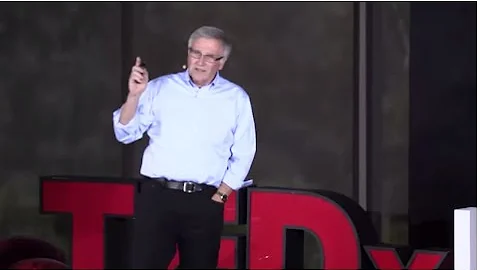
Zhang Jun: Associate Professor of Nanjing Normal University , director of Nanjing Heqin Kindergarten
The most basic professional ability of a kindergarten teacher is that he has the ability to emit light and heat. He can see the children in his eyes, he can discover the unique highlights of each child, and he can communicate with his children in a heart-to-heart manner.
01/
Two basic abilities of kindergarten teachers:
Observation and evaluation, practical reflection
Early childhood education is to follow the nature of children and then guide them to develop. Let the child do what he likes, of course it is not just about letting him do it. We should think about how to make him develop by letting him do what he likes.
Education does not need to be upright, nor does it need to have one or another feature or another model. Education is about living and growing up with children. Who can’t do this? Therefore, the whole truth of early childhood education may be in those seemingly ordinary lives and seemingly simple principles.
Therefore, it is not that difficult to be a kindergarten teacher. If our teachers want to follow the child's nature and promote their development, then I think we must see the child's needs and interests, and at the same time you can also discover the value of education from it. This is a kind of ability to observe and evaluate.
You can see the child’s interests, needs, and problems, you can evaluate the child’s current situation and level, you understand him, and then let’s think about how to support him. All this may happen unknowingly in life. Of course, we need to reflect on whether the child has achieved development and whether I have promoted the child’s development.
evaluation does not increase the burden on your work, it helps you reduce the burden. Why?
Because through evaluation, you can better understand it, and the more you understand and familiarize yourself with the objects you educate, the easier it will be for you to communicate. You have to educate him and influence him, the premise is that you have to understand him, and this understanding is to observe and evaluate through .
02/
How to become a more professional kindergarten teacher?
♦ Master PCK
I talked about observing and understanding children before. It is an instinct. Of course, this is just a bottom line. To become a more professional teacher, then this PCK (PCK is the abbreviation of subject teaching knowledge or teaching content knowledge (Pedagogical Content Knowledge).) is really important. You need to know the learning and development of children in the five major fields and various fields, what is the development process, and where is the child currently in this development process? This requires a professional framework to help you position it. So what did we do during our kindergarten work? What is the PCK in our preschool field? It is our "html Guide to Learning and Development for Children aged 33-6". We streamlined the 32 goals in the five major areas of the guide to 25 development concerns, and then we stringed the points into lines.
To give an example, the first concern in the development of the health field is the ability to identify and regulate emotions. What does teachers need most? He needs to know how the emotional recognition and regulation ability of kindergarten children develop from the junior class to the senior class. We describe this development process to the teacher, such as from passively responding to the situation, to realizing the causes of emotions, being able to gradually express emotions in language or in a non-stimulating way, to being able to self-regulate the causes of emotions, and the experience of emotions is becoming more and more complex and refined. This is a line that the teacher must be clear in his heart.After you have this line, you will be very clear about the development stage of a child who is crying, what stage is the child who is crying but knows the reasons, and what stage is the child who is good at regulating his emotions.
Based on this development process, we give teachers a step forward for children. This is not what experts say, it is done by experts and teachers. We do not go from top to bottom, but are connected from top to bottom. In other words, the following behavior is recorded by teachers in their daily observation process. It verifies this theoretical framework and helps us better modify and improve this theoretical framework. Our evaluation guide is also dynamic , which is constantly changing. This is the work we have done in helping teachers do observation and evaluation.
♦ Cultivate practical reflection ability
Thinking is a human instinct, but to make this thinking become a professional thinking, the premise is that you must give the teacher professional autonomy. This professional autonomy is not only a right, but also a responsibility . So in our kindergarten, two sentences have become catchphrases, one is "What you do, you have the final say." Experts are not shields, they do whatever they say they should do. The other is "Don't ask whether it's right or wrong, just ask about thinking." It doesn't matter if
makes a mistake, but what kind of thinking this error can give you and what you can gain from it, which is what we care more about. To be honest, there is a lot of teaching and research in our kindergarten, and these are opportunities for everyone to share their ideas. At the same time, our kindergarten courses are also class-based courses. Each class has the right to make course decisions, but the premise is also to be able to think. Every week’s teaching plan requires thinking about how to determine the focus of this week’s course based on the behavioral performance and existing problems of the child last week. So all the documents we asked the teacher to write were all practical information, not copied, but were all thought out.
We have two sentences: can see children and find courses. In fact, this is a delaying strategy for our teachers to doubt their professional confidence. When they cannot control their own classrooms.
It doesn’t matter if you don’t have a good class, life is a course. You don’t have teaching skills, it doesn’t matter. We start by developing the teacher’s ability to observe and evaluate. So when you see the child, sees the child's interests and needs, and sees the child's problems, you will find the possibility of education, and this is the course.
In each course story, I have to ask everyone "Three Questions of Soul": Where are the children, where are they learning, and where are the courses. includes our Teacher Tian’s wedding, and I didn’t let her go, so I asked her where the child is.
One day our teacher sent me a message saying, "Teacher Zhang, you always ask these three questions, but I don't know why you ask these three questions. Is there any difference?" I think this teacher is very cute, knowing it, not knowing it, and actually I haven't thought about this question seriously. I said let me think about it, and then I thought about it all night and I answered it like this to him.
I said that actually I asked these three questions in three different directions and three different angles. We need to think about where children are, that is, we must respect children's interests and needs. Have you seen children in your course? What kind of role does children have? Is he the initiator of the course? Is he an agent of the course?
At the same time, we need to see the child’s learning, his experience, and his growth. This is what we need to think about where to learn.
And where is the course, it is actually to reflect on what we do for our children, and how our support and influence it is.
03/
333 What else do preschool teachers need in addition to their professional abilities?
I have finished talking about teachers' professional abilities. Next is the content outside the test question: what is beyond the ability.
The teachers who visit our kindergarten or participate in our teaching and research will have such questions, that is, why your teachers dare to speak so hard, why they think so much, why they can speak so much, and why your teachers are so active in writing observation records. What I am particularly proud of is that until now, our kindergarten still has not required that we have to write a few observation diaries every month. Therefore, where is the secret of teachers' diligent observation and active thinking, and where does the teacher's enthusiasm for work come from?
To be honest, kindergarten teachers work is a very low-paid and hard work, but what exactly attracts us to stay in this position, or even work for the rest of our lives? The most common answer I might see is our love for our children, but I don’t think so.
In fact, there is something that can attract our teachers to teach for life more than love. What is that? It is curiosity about children, and it is a developmental change in children that allows us to see the power of life.
So, in this sense, I think if you choose the job of a kindergarten teacher, your life will be bound to the life of your child, and your life and work will not be separated. I often tell my teacher this: What kind of life do you live in , what kind of growth environment your children will be, what attitudes and dreams you have towards life will also be transmitted to your children.
If I were asked to answer where the teachers' enthusiasm for work comes from, I would say, come from the children. It’s so fun to be with your children, and it’s so interesting to see your children’s growth. Although many of our teachers do not have children yet, we can draw a lot of positive power from these children.
Maybe the management of our kindergarten is a relatively Buddhist management. There is no reward for teachers publishing papers, no reward for winning projects, and no reward for any class to be held. Where does our reward come from? From children. So what is the significance of teacher work and the secret of our teacher’s growth?
I will answer this sentence today: "The secret of is that our teachers share life and grow together with their children. "
Teachers are also children. They have just started working and are growing up. How can they gain the power to grow? It’s not that the principal gives them chicken soup, but that the children allow them to find such a direction and motivation for growth.
Teacher Tian’s lawn wedding is very popular online. I really don’t want her to be too popular because there will be many misunderstandings. We really don’t want to be innovative and unique. So, I hope everyone can see from this case what is behind it. is the teacher and children growing together in a shared life.
Why do their class do this cultural theme? The child noticed that the teacher took wedding photos and was about to get married. Some children said, "I want to watch Teacher Tian get married." This sentence touched the softest part of our teacher's heart. She was willing to unfold her private life to the children. What is behind this? It is our teacher-student relationship and the shared life of our teachers and children.
I went to their class to see the very exquisite wedding photos, and the children turned them dirty, but I believe the teacher's heart is still very sweet, because most people's wedding photos are treasured in their own drawers, and few people will pay attention to and are willing to see them. Therefore, the teacher is willing to share his life with his children, and the child is willing to participate in the teacher's life. Isn't this what we most want to see?
A wall into the door of our kindergarten small class is a family photo. This is the biggest comfort for children in the early stages of entering the kindergarten.But the teacher took a family photo of the whole class on the day when the whole class came, and hung it on the wall. let the child know that "home" is not only your family of three, but also our second class, it is also a home. teacher sports meeting was finished. The teacher also printed out the photos of the teachers' family photos participating in the sports meeting and posted them next to the family photos of this class. It told us that this is our home in Heqin Kindergarten.
The teachers who have been to our kindergarten know that our environment is very simple because we do not advocate that teachers work overtime to do these things. We should spend all the teacher’s time observing children, living with them and sharing life with them. But we are not saying that we don’t do environmental creation. Our philosophy is to create environments with children as the center. If the environment you create cannot interact with it, no matter how hard you work, it will be in vain. We do not do anything that children are not interested in, have nothing to do with their lives, and are just for adults to see. children really pay attention to the environment because it is their own environment.
What is the professional growth of teachers? It is both simple and complex. Three years ago, I visited a kindergarten in Japan. At that time, I was the new principal and didn’t know where the road ahead was, so I asked them, how do you train teachers? He said that we did not train teachers, and teachers grew up slowly at work. I felt that he was perfunctory at that time.
Three years later, many kindergarten teachers come to visit us and will ask me the same question, saying how you train teachers. Then I said from the bottom of my heart that we did not train teachers. Teachers achieved such unconscious growth through the shared life with their children.
All we do is give teachers space and rights, so that teachers can discover their own strength and see their future. The basis of all this is because he is with his children every day. He sees the children, he sees the children, and he can use his own thinking to cultivate and promote their growth.
I really like this sentence: " Lucky people are cured by childhood all their lives, and unfortunate people are cured by childhood all their lives. "So, are we doing the happiest job?
kindergarten teacher communication service platform provides professional information services for Chinese preschool educators, and is committed to helping the professional improvement of kindergarten principals and teachers of childcare kindergartens and kindergartens, and providing professional services for childcare kindergartens and kindergartens.
* Statement : Most of the text and pictures in this article are from the Internet. Articles reproduced or selected by the editor of the principal and kindergarten teacher service platform for teaching and research needs. The focus is on sharing excellent educational concepts. The copyright belongs to the original author. If there is any infringement, please leave a message in the background to contact us to delete it.