The growth of a child is essentially a process of constantly making mistakes and constantly correcting mistakes.
As parents, what we need to do is to abandon the attitude of being arrogant and accompany the child to experience, reflect and correct, and finally see him mature little by little.
Author | Cola Mom
Recently, I saw a story online:
A mother took her daughter to a store she often went to buy naan. Because it was inconvenient to get off the car, she handed her phone to her daughter and asked her to pay.
As a result, after getting the phone, my daughter mistakenly thought that she had lost the password, but in fact, she lost the amount.
In the blink of an eye, 30,000 yuan was transferred out.
After the daughter realized that she had paid the wrong money, she was instantly scared to tears.
Although the mother was also very anxious, she did not get angry with her daughter. Instead, she thought about how to do it so that she could not scare the child and gain something from it.
So, my mother contacted the boss through the clerk and roughly communicated the solution.
The boss was a little impatient, but he still asked her to come to the store to refund the money in two hours.
Then, the mother first calmed her daughter's emotions:
"I know you didn't mean it.
Don't worry, everyone has made mistakes. If it makes mistakes, learn from the lessons and solve this problem."
Then tell my daughter the idea of solving the problem little by little.
After returning home, I saw my daughter still crying, and the mother joked with her daughter again:
"Come on, half of each person, golden pancake, the first time I have eaten such an expensive pancake."
After hearing this, my daughter finally burst into tears and smiled, and ate several big bites as if she had a grudge against the pancake.
Two hours later, the mother took her daughter to the store, apologized to the boss together, and ordered extra mutton skewers, thinking about doing more business and compensating for the inconvenience caused to the boss.
At this moment, my daughter realized:
It turns out that being careful is not just about organizing schoolbags in daily life. After entering society, many places need to be careful.
Otherwise, the loss will be more than just money.
And this mother is also reviewing her handling methods this time, such as emotions, language, communication, etc., and reflecting on her risk prevention awareness.
At this point, this misunderstanding finally came to an end.
Mom couldn't help but sigh:
"Fortunately, the 30,000 yuan pie adds only a story to life, not an accident."
In fact, it is not scary for children to make mistakes.
What I am afraid of is that parents are out of control and furious, and put their children in an isolated and helpless situation with an aggressive attitude.
As there is a saying:
"Stand by the side with the child to defeat the problem, not defeat the child with the problem."
Treat the child who made a mistake with a kind, firm and respectful attitude, and accompany him to face and bear it.
error can also become an opportunity for children to grow up.
Making mistakes
is actually a good thing
Director of the Family Development Research Center of Fudan University Shen Yifei once said: "Children's growth is spiral. You have to keep trying and making mistakes on your own before you know how to move forward." Do you still remember the "genius boy" Cao Yuan ? He was admitted to the junior class of the University of Science and Technology of China at the age of 14. After graduation, he went to the Massachusetts Institute of Technology to study for his doctorate degree. 22 years old, he ranked first among the top ten scientific figures in the world released by Nature. However, few people know that such an excellent child was a "king of trouble" when he was a child: " In order to see the structure of tables and chairs in the classroom, he broke them apart without saying a word; often run to Shenzhen Huaqiangbei alone, staying for an afternoon, and still doing it Buy a lot of electronic components and go home for research; In order to satisfy his curiosity, he secretly stole his mother's silver bracelet and ran to the school laboratory to try to synthesize silver nitrate ..." If an ordinary parent encounters such a naughty child, he will probably get angry and even beat him up. But Cao Yuan's parents did not do this. They thought it was a good thing for their children to be curious, and they specially purchased a lot of experimental instruments and built a small laboratory for their son at home. It is precisely because of the tolerance and support of parents that Cao Yuan can realize his potential and eventually soar to the sky. Not only that, it is the best time for parents to educate. A friend shared with me a past story: When she was in elementary school, she really hoped to have a pencil case in the shape of a car. So while she was working on duty during the break, she secretly hid her deskmate’s pencil case in her schoolbag. Unexpectedly, this incident was noticed by my classmates. The teacher called her to the office and asked her to call her parents. While waiting for my mother to come to school, my friend was trembling. What is surprising is that my mother, who has always been strict, did not have an attack on the spot, but took her to apologize to her deskmate, and then bought the pencil case she had always dreamed of on the way home. did not scold or make a big mistake, but my friend never made a similar mistake again. There is a concept in education called "teachable moment" . refers to the moment that appears naturally in daily life and can instill correct ideas and knowledge into children. When children make mistakes, they are such a valuable "teachable moment".
Wisdom parents will not regard mistakes as a disaster. On the contrary, they know how to take advantage of this opportunity to make their children remember their mistakes and make changes.
The child who made a mistake
More need you to stand with him
Before, I saw a post online:
There is a convenience store near the home of a netizen, and a mother opened the store.
One day, my mother was going to go to the next room to cook, so she asked her daughter who was in elementary school to help her check out the store.
When a girl was looking at the store, someone came to buy cigarettes.
But when my mother came back and asked, she found out that the man was taking a soft-shell cigarette from a certain brand, but the money he gave was the price of the hard-shell cigarette, and he gave ten yuan less.
Mom became popular immediately and scolded her daughter angrily:
"Who told you to take your own initiative? You can't even see a store!"
Then, my mother thought of checking surveillance again.
But the man happened to be wearing a hard hat when buying cigarettes, and he couldn't see clearly at all.
The mother was so angry that she came out. She turned around and slapped her daughter who was crying, and scolded her while slapping her, which attracted everyone in the community to gather around to watch.
The mother's scolding grew louder and louder, but the girl kept her head down, staring at the ground, crying silently.
Later, when netizens saw the girl again, they obviously felt that she was much silent and timid.
It is said that girls are often bullied for their weak personality when they are in school.
Every child feels panic when he makes a mistake, especially those young children.
At this time, if parents just criticize and scold, it will only destroy the child's sense of security and make the child feel isolated and abandoned.
On the contrary, if you can let your child know:
Even if you make a mistake, your parents' love for you will not change.
Then, children will have more courage to face errors.
There was a very popular surveillance video on the Internet:
A mother finally prepared the meal she wanted to bring the next day. She was about to go back to the bedroom to rest, but she heard a sound from the living room.
walked over and saw that it turned out that his 2-year-old daughter accidentally knocked over the lunch box.
Although she was very angry, she was still patient and asked her daughter softly:
"Are you accidentally? Tell me to my mother."
Seeing that her daughter was still a little scared, her mother did not continue to ask her.
Later, the mother looked at the surveillance camera and found out that
It turned out that the child was kind enough to help the mother put the lunch box into the bag, but the lunch box was too heavy and fell to the ground without holding it firmly.
This mother was very glad that she did not criticize her daughter as soon as she came up, so she had the chance to see her daughter’s love for her.
And my daughter also knows how to help adults.
Psychologist Winnicott believes that when a child does something wrong, he should provide the child with an "sexual environment".
That is to say, we should build a loving, supportive and inclusive environment for our children.
This does not mean that if a child makes a mistake, parents must also protect him unconditionally, but let the child know:
Even if he makes a mistake, there are still people who are willing to support him and support him.
When a child makes a mistake
What tests parents' wisdom
writer Share Keweizhi once said:
"If every child can have a gentle hand guiding him forward instead of kicking his chest with his feet, education can better fulfill his mission."
So, what should parents do when a child makes a mistake?
- Step 3: First soothe the child's "emotional brain", then solve the problem
The mother mentioned at the beginning of the article said this when posting: "I used the 'emotional brain' to soothe her, and then used the 'logical brain' to tell her the idea of solving the problem."
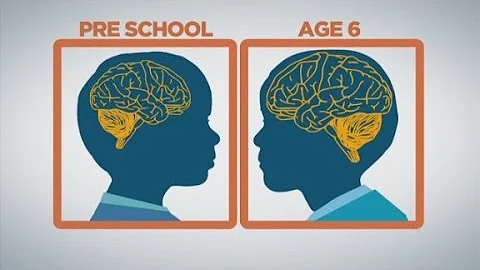
In fact, the "emotional brain" is our brain limbic system, which makes us feel emotions such as happiness, fear, and sadness.
"logical brain" refers to our cerebral cortex, allowing us to plan, adjust, test, etc.
When encountering emergencies , the "emotional brain" is always in front of the "logical brain".
So, when a child makes a mistake, we can only solve the problem by dealing with their emotions first:
can wipe the child's tears and tell him "don't be afraid"; he can hold the child in his arms and listen to his explanation; he can also make a harmless little joke with him.
In short, it is to calm the child down as much as possible.
- Step 2: Protect the child's self-esteem and give the child a "exit"
After the child makes a mistake, some parents will immediately criticize and correct the child, regardless of whether there are people around him or not, and whether the child will hurt his self-esteem because of this.
But this will only make the already confused and frightened child even more ashamed and angry, lonely and helpless, and even go to extremes.
Just as a psychologist said:
"No matter what, let the child have a way out.
If something happens outside, you will face more severe blame after returning home. At home, the child has no way out at either end and has no way out, and will go to a dead end."
Therefore, for those non-principle, which does not affect the safety of children, and does not hinder others, we can give the child a chance to discover and correct the mistakes by themselves.
For those principled mistakes, we must also communicate patiently while ensuring the safety and privacy of children.
- Step 3: Encourage children to reason attribution , find a new direction from the error
If the child really makes a mistake, parents should encourage their children to admit their mistakes with a kind and firm attitude.
In this process, no matter how angry or annoyed parents are, they should not label their children randomly, such as "bad kids" and "chaosing trouble".
Otherwise, it will only make the child feel that he has made a mistake because of his nature, so he will give up on himself.
- Finally, we must also understand that standing with the children who make mistakes does not mean covering up or condoning children's mistakes.
Instead, we should guide children to distinguish right from wrong and bear responsibility and consequences:
For example:
If the public property is damaged, compensation will be paid at the original price; if the students are beaten and scolded, they must come to the door to apologize; if the rights of others are hindered, they must be stopped in time...
In short, don't worry or pursue the matter because the child is still young.
In his speech, Rita Pearson, a famous American educator, asked this question:
"If your child does 20 questions and makes mistakes, what will your reaction be like?"
The audience talked a lot, feeling that it was mostly disappointed or blamed.
However, Rita smiled and said her answer:
"I will write a '+2' and a big smile on his test paper, and then say to the child:
You are not all wrong, and you have done two questions correctly, indicating that you are getting better."
At this moment, thunderous applause sounded at the scene.
bad education is "-18", which makes children feel helpless;
good education is like "+2", which makes children know that they will do better next time.
If you love your child, you must give him the opportunity to make mistakes and correct them.
Next time, when our children make mistakes, I hope we can all bend down, listen patiently, stay by my child with him to make rules and fix mistakes, and thus move towards a new life.