Hello everyone, I am Cuckoo’s mother~
As a mother, from the moment I gave birth to my child, my biggest wish is that the child can live a happy life, which is not worth a thousand dollars.
But do you know what affects a person's happiness and who lives the happiest life?
Harvard spent 75 years tracking the lives of 724 people. Among these people, there are elite students studying at Harvard University, as well as children from the poorest families in Boston.

interviewed more than 2,000 people including their family members, friends, and colleagues. We have studied these people from their teenage years to their 90s, just to find out what is it that most affects a person’s happiness?
The final conclusion of this study is that it is not money and fame that determines happiness throughout a person's life, but good interpersonal relationships.
These interpersonal relationships are not limited to friends and colleagues, but also include many aspects.
Children who grow up to live happily often have these three characteristics.
1: Be able to handle the relationships around you
Maslow 's " Hierarchy of Needs Theory " points out that the third level of needs after survival and safety is the need to belong.
As a social animal, we naturally want to be close to others and be accepted and recognized by the group.
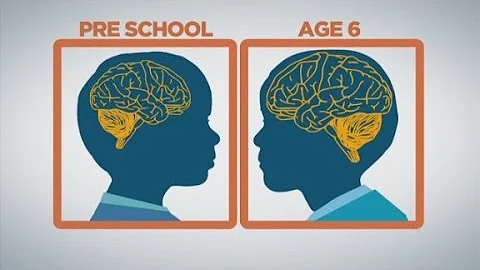
When a child is born, his brain develops to prepare for integration into the group. He learns to speak, is eager to play with other children, empathy begins to develop, etc. These are all sufficient preparations to integrate into a group of his own.
So why do many people actively seek to play with their friends when they are children, but when they grow up, they increasingly prefer to be alone and avoid social interaction?
The book "Praise and Blame" may give the answer: When we feel threatened, our brains will instinctively choose fight or flight.
These threats are not that others point at your nose and say: "If you do what you do, I will do the same."
But when getting along with others, others' contemptuous eyes, slightly wrinkled eyebrows, and slightly negative words may make our self-esteem feel threatened.
In order to avoid this feeling of being excluded, we chose to "escape" - actively stay away from the crowd and close ourselves off.
Although many people think that social distancing is good and comfortable.
But loneliness is indeed harmful to health.
A study by the University of California found that people who feel lonely for a long time are particularly vulnerable to germs , have a higher chance of getting sick, and are less likely to live longer.
You may say: "Oh, my child is so sensitive. What should I do if others can't say a word and he is very afraid of getting hurt?"
Except for a few who are really highly sensitive, most children close themselves off. In fact, it is mainly from us - blame.
Blame will make children feel self-blame and shame. Long-term, repeated blaming will change the child's brain structure so that he is particularly sensitive to even mild negative information.
This resulted in that when he was judged at home, he chose to "fight", talk back, and rebel; when he felt rejected outside, he chose to run away.
Of course, this does not mean that we cannot blame our children for doing something wrong. It's our words of blame. We should consider the situation and do not criticize the child's personality and completely deny him as a person.
For example, if a child throws garbage on the ground, we only need to point it out: "I saw you threw the cookie bag on the ground, and I hope it goes into the trash can."
Don't rise to the point of personal attack in general: "You are always so selfish and don't care about other people's feelings. No one will like you in the future."
Blaming is too general and will cause people to have an extreme reaction. Blame too much, and you may face a child who is always ready to "fight" or "flight."
2: Have comfortable friends
Some people still feel lonely when they are in a crowd; some people feel that their quality of life is very high even if they only have a few close partners.
This is because it is not the quantity of interpersonal relationships that determines a person's happiness, but the quality.
Then you want to know, will your children make "hustling friends" or good teachers and helpful friends in the future?
You can tell by looking at his state when he was 4-6 years old.
The book "Capturing Children's Sensitive Period" mentions that children will enter the "sensitive period of interpersonal relationships" when they are 4-6 years old. The way he makes friends at this stage will lay the foundation for making friends in the future.
When children are 4 or 5 years old, they will choose friends because of the same interests and hobbies. Maybe it's because you also like Snow White or Ultraman Tiga, so you are my friend.
However, at this stage, they will have a state of "controlling" and "being controlled" by - you have to listen to me, otherwise I won't play with you.
Some parents will, for the sake of face, see a friend's child coming over but the child ignores it, and the parent will persuade them: "Why don't you play with him? Be polite."
Little do you know, you may be destroying the principle of your child making friends by himself, causing him to compromise in an uncomfortable relationship.
In order to get rid of the "being controlled" relationship, by the age of 5 or 6, children will be highly interested in rules: Since I don't want to listen to you, and you don't want to obey me, let's establish a rule, and everyone can play by following it.
When a child encounters problems making friends before he is 6 years old, we should not rush in to "help" him solve the problem. Instead, we can listen more and let him discover and solve the problem on his own.
If a child can successfully get through such a sensitive period , he will find friends who make him feel comfortable when making friends in the future, and he will know how to maintain a comfortable intimate relationship.
Three: The ability to maintain a happy marriage
In this Harvard study, those who were satisfied with their marriages at the age of 50 felt happier and healthier when they were 80-90 years old. Moreover, a good marital relationship can alleviate the damage caused by aging.
And those who are in unhappy marriages will experience more physical discomfort in their later years, because bad emotions amplify physical pain.
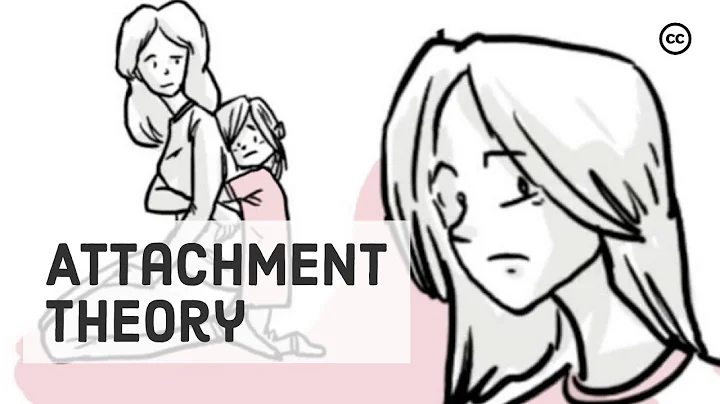
Whether a person can establish an intimate relationship in his marriage is largely affected by his attachment relationship with his parents.
If a child has established a secure attachment relationship with his parents since he was a child, he knows that when his heart is hurt, his parents will be his gentle harbor and can accept and tolerate him.
Then when he grows up, he will have greater psychological flexibility in dealing with emotional problems, and his ability to recover will also be relatively strong.
But if the relationship between a child and his parents is avoidant and contradictory, his heart is hurt and wronged, and he cannot get response and comfort from his parents, it will be difficult for him to cope with various problems that arise in intimate relationships when he grows up in the future.
Especially when conflicts arise with a partner, his ability to solve problems is poor, and he will encounter more hostility and conflicts.
This requires us to respond to children's emotions in a timely manner. When he encounters difficulties, we can squat down, move our gaze from the mobile phone to his eyes, and ask seriously: "What happened?"
Listening, not rushing to refute, and empathizing with the child's emotions are actually providing a space for the child's emotional development, so that he can feel his own and other people's emotions, and have the ability to deal with various emotions in interpersonal relationships.
Interpersonal relationships include all kinds of relationships we have with our parents, friends, partners and people around us.
A person who can make himself comfortable in interpersonal relationships and can get timely help and care from others will be the happiest person in his life!
is so simple, but there is still a long way to go!
[Pictures from the Internet, will be deleted if infringed]
About the author: Cuckoo’s mother is a mother who is good at observing, loving to think, and having solutions.Focus on children's psychology , understand children and raise them easily, follow it if you like it ~
More exciting recommendations: