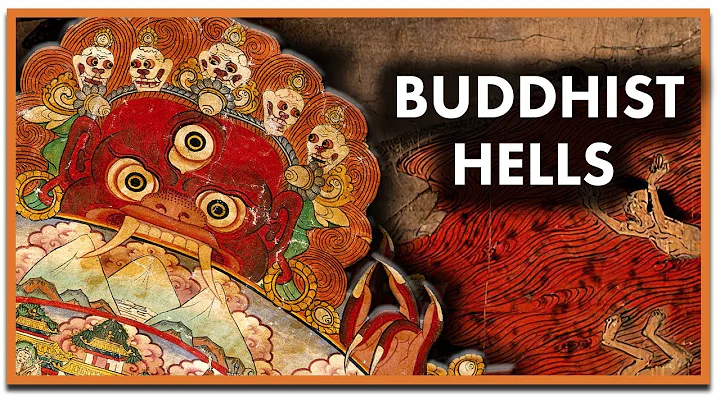
Intersecting sadness and joy
1942, the 63-year-old Master Hongyi completed his entire journey in the world. Three days before his death, he supported the writing of the last ink trace of "Sorrow and joy, see the Sutra of Contemplation".

is the last legacy, until today, people still hold their own opinions on the "intersperity of sorrow and joy" and are arguing.
Qian Renkang Professor Hongyi said that Hongyi’s “compassion” is compassion for all living beings, and “happiness” is to be happy to be liberated. The implication is that the four words "sadness and joy" are not Hongyi's summary of his life, nor are they aimed at the secular world, but look at all sentient beings and life and death from the perspective of Buddha: compassion for all sentient beings and are pleased to be liberated after death.
"Buddha's angle"? I can’t help but ask:
How should Buddha face death?
Is death terrible for Buddhists?
Buddhists' attitude towards death changes with his practice.
For beginners who have not yet reached the level of maturity in their practice, death is terrible. Facing death is no different from ordinary people. They will feel like deer in a trap, trying to escape by any means.
As the practice progresses, they no longer think meaninglessly about how to escape death. Since they began to understand death a little bit, they would understand how to survive the period of death calmly and confidently.
Then, practice goes further, they will feel that life and death are like a field, and they are like a farmer, plowing the fields and taking good care of all crops. No matter what the climate is, they will not worry, because he has tried his best. Those who spend their whole life transforming themselves will not feel regret in their hearts.
Finally, the highest level of practitioners will feel joy in their hearts when they think of death. They would think "What's there to be afraid of?" All attachment to property, attachment to personal self-concept, and even attachment to any real and concrete existence to phenomena has disappeared. Death has become a friend. It is just a stage of life, a simple turning point.
Therefore, Buddhists should always think of death. This is by no means a sad or pessimistic idea. This idea inspires Buddhists to use every moment of their lives to transform their inner self and not waste their precious life. If you don't think about death and impermanence carefully, it's easy to say to yourself: "I'll deal with what I should do now, let me do everything I need to do now. When I finish, I can see more clearly and turn myself to spiritual affairs."
If we live and think that there is infinite time before it, rather than living like only a few minutes of life, this is the fatal trap, because death may come at any time, without warning, the moment of death and the situation that causes death are completely unpredictable, and all the states in general life - walking, eating, and sleeping - can be turned into the cause of death at any time.
A practitioner must remember this at all times. When a hermit starts up early and starts his fire, he will think about whether he is still there the next day? Can you light the fire again? After he took a breath, he thought he was very lucky when he inhaled. Therefore, thinking about impermanence and death is always an incentive to spiritual practice.
Philosophy does not believe that there is life after death
Montaigne "Essays" There is a chapter titled: "As a philosopher, you must get used to death." There is a concept in the "Meditation" of Pascal : We will never know when the Lord will click our name - ten years later, or five minutes later? Even if philosophy is separated from religious meaning, it often claims to be preparing for death.
So Buddhism does not have more creativity or greater innovation in its view on death. Philosophy is full of various views on death like Buddhism (religion), so that it is easier for people to accept death.
Broadly speaking, the perspectives on death can be divided into two categories.
The first category is to believe that we will continue to exist.Once we believe that there will be life and the soul will be immortal after death, this is enough to allow us to live according to certain specific norms. From a religious point of view, this is to avoid all human sins so that we can be sure that we can continue to be in a state of comfort after death. So death becomes a life experience, leading us from one world to another. This type of principle means that death does not actually exist, the only worrying thing is whether I will be saved or punished. Although Buddhism is not a religion of theism , the spiritual skills in Buddhism make death easy to accept is this metaphysical system that does not regard death as
The second broad logic is purely philosophical, and I do not believe that there is still life after death. This logic depends on the cultivation of some kind of conviction and wisdom. Let us tell ourselves that the biological fact we call "I" is nothing more than another animal in the animal and will inevitably be destroyed and disappeared. Our only choice is to learn to accept this.
On this topic, philosophers show quite creativity, providing some moving debates that make death more acceptable. For example, Epicurus uses a famous logic statement: we don't need to fear death, because we will never encounter it. As long as we are still here, it will not happen; when it happens, we are not here, so there is no point in fear of death.
What Epicurus is most concerned about is that he hopes to liberate human beings from unnecessary fears - fear of ghosts and gods, fear of death, fear of lightning, earthquakes and other natural disasters - so he tries to explain these phenomena in a very modern way, explaining that they have reasons and follow specific laws.
So whether it is Buddhism or philosophy, it is not difficult to see that their ultimate goal is to seek to eliminate the fear of death and accept death with a calm and even optimistic mind.




![[English] Who Am I - Lecture 1 - Ven. Guan Cheng - DayDayNews](https://i.ytimg.com/vi/KU0fUs2It5o/hq720.jpg?sqp=-oaymwEcCNAFEJQDSFXyq4qpAw4IARUAAIhCGAFwAcABBg==&rs=AOn4CLDFpQUN_QwRfC7bmP4sUadq-RcYdg)
![A Moving Masterpiece 清明上河图 [English narration] - DayDayNews](https://i.ytimg.com/vi/kxff-4GktOI/hqdefault.jpg?sqp=-oaymwEcCOADEI4CSFXyq4qpAw4IARUAAIhCGAFwAcABBg==&rs=AOn4CLBtHGLeUpJNCYDJYnZTuISQ1N5Vag)