自打莫迪上台之後,印度一直就鉚足了勁兒想要發展製造業,以工業強國。如今發展製造業差不多是印度的基本國策,印度政府的大部分動作都是為這個目標服務的。
在發展製造業這件事情上,印度的壓力非常大,可說是迫在眉睫——印度社會的許多問題,早已積重難返,靠著溫和的手段收效有限,只有大力發展製造業,才能提供足夠的工作機會,來實現農業到工業的轉型,印度才有可能在現代化改革中翻盤;可製造業這個事情需要時間積累,絕非一朝一夕能成,起步得越晚,成功的機會就越小。印度網友問:印度能否在製造業領域對中國實現彎道超車?這引起各國網友的關注和熱議,我們看看他們的觀點。

問題:印度能不能在製造業領域對中國實現彎道超車?
英國網友安德魯•羅伯茨的回答
I believe that most people in China will be very grateful for the development of low-cost manufacturing industry, because it may retain millions of employees and help improve their living standards. Some answers seem to think that it is easy to establish a low-cost manufacturing industry. Believe me, this is not the case. Let me tell you a story from the perspective of China to explain why China is in a unique position to develop and benefit from successful manufacturing.
我相信中國大多數人都會對低成本製造業的發展非常感激,因為它有可能留住了數以百萬計的就業人員,幫助提高他們的生活水平。一些答案似乎認為建立低成本製造業是一件容易的事情,相信我,事實並非如此。下面我從中國的角度給你講一個故事,解釋為什麼中國能夠處於發展成功製造業並從中受益的獨特地位。
Before the reform and opening up, China pursued an economic model similar to that of the Soviet Union, focusing on heavy industry. However, due to inherent problems such as low efficiency, some state-owned factories did not do very well after the economic reform. The wages of workers and engineers cannot match the quotations of market-oriented private enterprises at all. Many of these skilled engineers and workers either quit, were fired from state-owned factories, or worked for small private enterprises.
在改革開放之前,中國追求一種類似於蘇聯的經濟模式,重點突出重工業。但由於效率低下等固有問題,經濟改革後,有些國營工廠做得不太好。工人和工程師的工資根本無法與市場化的私營企業的報價相匹配,這些熟練工程師和工人中的許多人要麼退出,要麼被國有工廠解僱,要麼去為小型私營企業工作。
What I want to say is that even before these low-cost manufacturing industries began in the 1980s, China already had a considerable number of skilled workers and engineers, who played an important role in developing the next generation of workers.
我想說的是,即使在80年代這些低成本製造業開始之前,中國已經擁有相當數量的技術工人和工程師,這些人在發展下一代工人方面發揮了重要作用。
The low-cost manufacturing industry has rapidly flourished, providing a large number of employment opportunities, enabling low skilled Chinese people to participate in the global manufacturing industry in combination with the traditional rural economy. This is often overlooked, but in fact it is an incredible thing, because this way of participation has changed the way a person sees the world.
低成本製造業很快蓬勃發展,提供了大量就業機會,使具有低技能的中國人能夠與傳統農村經濟相結合參與全球製造業。這往往被忽視,但事實上是一件令人難以置信的事情,因為這種參與方式改變了一個人看待世界的方式。
Imagine that a person born and raised in a rural community with the lowest education or skills has the opportunity to work in a low-cost manufacturing facility and earn more than he gets from a household farmer. This gives him a chance to get rid of the traditional rural community and realize that he can also be an important part of economic globalization, because putting the wrong screw on the iPhone may cause trouble for Australian consumers for weeks.
想像一下,一個在農村社區出生和長大的教育或技能最低的人有機會在低成本製造設施中工作,獲得比他在家務農得到的報酬還要高,這讓他有機會擺脫傳統的農村社區,了解到他也可以是經濟全球化得重要一環,因為在iPhone上放錯螺絲可能會給澳大利亞消費者帶來數周的煩惱。
What this worker can also learn is that, unlike his father, who is bound by the land he lives in, he is free to do whatever he wants. This fundamental change in the attitude of young people in rural China may be more important than the money they earn. I believe that the catalytic effect of this change on attitudes has also played an important role in the rise of many small enterprises and new entrepreneurs in China.
這個工人還可以學到的是,與被他居住的土地束縛的父親不同,他有自由做任何他想做的事。中國農村年輕人態度的這種根本變化可能比他們賺的錢更重要。我相信,這種轉變對態度的催化影響也在中國許多小企業和新企業家的崛起中發揮了重要作用。
In the past 20-30 years, low-cost manufacturing has developed from a single workshop to what the government likes to call an industrial cluster. This means that a commercial ecosystem has basically been formed in this place. For example, an assembly plant with a radius of 20 kilometers, combined with good infrastructure, has significantly reduced commercial costs.
在過去20-30年中,低成本製造業已經從單個車間發展成為政府喜歡稱之為工業集群的地方。這意味著這個地方基本上形成了一個商業生態系統,例如,一個半徑為20公里的裝配式工廠,與良好的基礎設施相結合,顯著降低了商業成本。
Although it may be easy to move a plant overseas, it may take more than a few years to move the entire industrial cluster overseas, which is why I think most low-cost manufacturing industries in China cannot be replicated overnight in another low-cost country. In addition, more complex manufacturing processes involving more levels of upstream/downstream partners are even more difficult to be completely transferred overseas. Therefore, despite the rising labor costs, China's low-cost manufacturing industry may still have a cost advantage.
雖然將一種植物移居海外可能很容易,但將整個工業集群移居海外可能需要幾年以上的時間,這就是為什麼我認為中國大部分低成本製造業不能在另一個低成本國家一夜之間複製得原因。此外,涉及上游/下游合作夥伴更多層次的更複雜的製造過程甚至更難完全轉移到海外。因此,儘管勞動力成本上升,中國的低成本製造業可能仍然具有成本優勢。
Finally, I just want to say that I think low-cost manufacturing is also beneficial to India. Some answers suggest that India should pursue the same high-tech manufacturing economy as Germany. But I don't think this is suitable for India. To become a high-tech manufacturing base like Germany, you need a small but highly educated workforce. Well, India has some of the greatest engineering schools, producing a highly educated workforce roughly the same size as Germany's population, but again, how many billion uneducated people are there? Like China, India has a large population of low skilled people.
最後,我只想說,我認為低成本製造業也有利於印度。一些答案表明,印度應該追求與德國相同的高科技製造經濟。但我認為這一點不適合印度。要成為像德國這樣的高科技製造基地,你需要擁有規模小但受過高等教育的勞動力。好吧,印度擁有一些最偉大的工程學校,生產的受過高等教育的勞動力與德國人口的規模大致相同,但同樣,還有幾十億沒有受過教育的人呢?與曾經的中國一樣,印度也有大量低技能人口。
Although well-to-do children with good education in India can become programmers in Silicon Valley, what can a large number of people with the least education and skills there do? Although programming is a very good skill, it is too difficult for most people. But I fell in love with it after four years of college study. However, people from rural society have limited opportunities to obtain appropriate education or technology.
雖然印度受過良好教育的富裕兒童可以成為矽谷的程序員,但那裡受過最少教育和最低技能的大量人可以做些什麼?雖然編程是一項很好的技能,但它對大多數人來說都太難了,但我在大學學習了4年後就愛上了它,可來自農村社會的人,他們獲得適當教育或技術的機會有限。
On the other hand, low-cost manufacturing requires less skills. Any able-bodied person with normal IQ can receive training in manufacturing. As I said earlier, the most important thing is to let people leave their ancestral rural communities and enter industrialized cities. In this way, you can also industrialize the ideas of young people, so that they and their children have the potential to do greater things.
另一方面,低成本製造需要更少的技能,任何智商正常的身體能人都可以接受製造業工作的培訓。正如我早些時候所說,最重要的事情是讓人們離開祖先農村社區,進入工業化城市,這樣,你還將年輕人的思想工業化,讓他們和他們的孩子有潛力去做更偉大的事情。
印度網友S.K.瑪尼的回答
I will not use the word "competition" because it is too bold for a country like India at this stage, because China is the manufacturing center of the world, and 90% of India's household products come from China.
我不會使用「競爭」這個詞,因為它在這個階段對印度這樣的國家來說會過於大膽,因為中國是世界的製造中心,印度也有90%的家居產品來自中國。
棉簽
It is not a highly technical product and does not require too many technical specifications to manufacture it.
它不是技術性很強的產品,製造它不需要太多的技術規範。
Therefore, India can start from small things, which are easy to manufacture. It does not need large capital, but can start from small things.
因此,印度可以從小事做起,製造起來容易,不需要大資本,可以從小事做起。
We only need a small machine like the one below to make cotton swabs. It is very practical in China and needs to be imported from China because it is cheap there.
我們只需要像下面這樣的小機器來製造棉簽,它在中國很實用,需要從中國進口,因為那裡便宜。
Or take socks as an example. 80% of India's socks are imported from Datong, China. Now if we make them in India, local consumption will be satisfied.
或者以襪子為例,印度80%的襪子從中國大同市進口,現在如果我們在印度製造,那麼當地消費將得到滿足。
The above is just a small example. I can list thousands of products. These products are not technical and do not require too much capital, but they need machines. They can be imported from China. The government needs to make such imports not affected by the customs. Because we cannot manufacture such machines, if we only import machines for small products, we can establish a low-cost manufacturing industry in India.
以上只是小例子,我可以列出上千種產品,這些產品不是技術性的,不需要太多資本,但需要機器,可以從中國進口,政府需要使這種進口不受海關的影響,因為我們製造不出這種機器,所以如果我們只進口製造小產品的機器,我們可以在印度建立低成本製造業。
All business licenses, including shop behavior registration, are prohibited, because this is the place where corruption starts and enters the enterprise. If you need to start a business, it should not be bound by all licenses, so that one can focus on the enterprise, rather than avoid relationships to obtain business licenses.
禁止所有創業許可證,包括商店行為註冊等,因為這是腐敗開始和進入企業的地方,如果需要創業,那麼它應該不受所有許可證的約束,這樣一個人就可以專註於企業,而不是躲跑關係來獲得創業許可。
China has achieved prosperity in just 40 years, not because of God's gifts, but because of the planning efforts of the government and the people. Up to now, there are four economic and trade centers in China that are particularly active. China is the pioneer of special economic zones, and the Shenzhen World Trade Center is the most eye-catching World Trade Center.
中國在短短40年內實現了繁榮,不是靠上帝得恩賜,而是靠政府和人民的規劃努力。截至目前,在中國,有4個經貿中心特別活躍,中國是經濟特區的先驅,深圳世貿中心是最引人注目的世貿中心。
All these economic development zones are located along the coast of China. The advantage in this respect is that sea transportation can reduce the transportation cost by 15%, and the export based manufacturing industry is based on the cost line, so it can save the time for transportation to ports and the world market.
所有這些經濟開發區都位於中國沿海。這方面的優勢是,海運可以將交通運輸成本降低15%,以出口為基礎的製造業以成本線為基礎,因此可以節省交通運輸到港口和世界市場的時間。
India is dwarfed by India. There are 235 economic development zones in India, none of which is fully functional, economically active and without systematic planning.
印度一比相形見絀,印度有235個經濟開發區,沒有是一個功能齊全、經濟活躍得,而且沒有系統性規劃。
Some economic development zones have no planned production and industry, so if you plan to let Nokia factories purchase raw materials from Chennai or the south, most of your costs and time will be wasted on transportation and material procurement.
有些經濟開發區沒有計劃生產和工業,因此如果您計劃讓諾基亞的工廠採購來自欽奈或南部的原始材料,那麼您的大部分成本和時間將浪費在運輸和材料採購上。
Therefore, we need to plan the manufacturing base to the 7500km coastline of India, which will benefit us from simple inland transport by sea, because our infrastructure is poor, which will help us export to nearby countries.
因此,我們需要將製造基地規划到印度7500公里得海岸線上,這將使我們受益於簡單的海運內陸運輸,因為我們的基礎設施不好,這將幫助我們出口到附近國家。
• Electricity controlled by the government in most states should be open to the private sector, so competition will lower prices and enable the production of cheap and affordable products.
•大多數州由政府控制的電力應向私營部門開放,因此競爭將降低價格,從而能夠生產廉價和消費者負擔得起的產品。
The planning for the next 25 years should be carried out in the context of the reform of the education system. In the education system, degrees in product design, product manufacturing, consumption and small product packaging should be launched. China plans to launch Made in China 2025 in 2013, focusing on high-tech products and working on them.
未來25年的規劃應在教育系統變革的背景下進行,在教育系統中,應啟動產品設計、產品製造、消費和小產品包裝的學位。中國計劃在2013年推出2025年中國製造,將重點轉向高科技產品並在其上開展工作。
Another thing India needs to learn is the construction of sales points:
還有一個需要印度學習的是銷售點的建設:
China has developed its business through indoor and outdoor exhibitions. The largest exhibition in China is the Canton Fair, which is held twice every May and April. Every year, the Chinese government holds an exhibition in Guangzhou and most Chinese suppliers display their products here. This exhibition alone has won 5% to 7% of China's total export orders. This exhibition is attended by the world's largest importer. China has exhibitions every day.
中國通過室內展覽和室外展覽發展了業務,中國最大的展覽是廣交會,每年5月和4月舉辦兩次。每年,中國政府在廣州市舉辦的展覽和大部分中國供應商在這裡展示產品。僅本次展覽就獲得了中國總出口訂單的5%至7%,本次展覽由世界最大的進口商參加,中國每天都有展覽。
The permanent and planned wholesale market is located in Yiwu City, China. Zhejiang Province, China was once the largest wholesale market for small commodities in the world. Toys, household goods and other things came from Yiwu. The market started in 1978 and is located on the shoulder of the road. Now it is a permanent exhibition place for this product. There are 80000 stores selling Chinese goods to the world. This market is a one-stop solution for small commodity importers:
永久性和計劃中的批發市場位於中國義烏市,中國浙江省曾經是世界上最大的小商品批發市場,玩具和家居用品等所有東西都來自義烏。該市場始於1978年,位於路肩上,現在是該產品的永久展示地,有80000家商店向世界銷售中國商品。這個市場是小商品進口商的一站式解決方案:
At the same time, China also holds exhibitions of Chinese products around the world to promote Chinese enterprises and products, while Mumbai only holds exhibitions about 4 times a year
與此同時,中國還在世界各地舉辦中國產品展覽,推廣中國企業和產品,而孟買每年僅舉辦4次左右的展覽
The Indian government needs to plan a permanent business center, which can be used as a one-stop contact or only representative for Indian small product manufacturers, because the Mumbai wholesale market is currently located in the fortress area of Ar Street, Crawford Market, Sutar chawl and other crowded areas.
印度政府需要規劃永久性商業中心,該中心可以作為印度小產品製造商的一站式接觸或僅具有代表性,因為目前孟買批發市場位於Ar街、克羅福德市場、sutar chawl等擁擠地區的堡壘地區。
We only need to start the manufacturing industry in the right direction, and we can only achieve this goal with the help of China, because they have the technology we need and focus on small products.
我們只需要像現在這樣的正確方向來開始製造業,我們只能在中國的幫助下實現這一目標,因為他們擁有我們所需要的技術,專註於小型產品。
We need to plan and strive to enter the manufacturing industry. We do not need to compete with China, because in this case, we will not succeed in the manufacturing industry, but we need China's help to complete the customization task of small machines, which will promote the manufacturing of small commodities. Without a license, the ease of availability of small warehouses and manufacturing will help small manufacturers develop.
我們需要計劃努力向製造業進軍,我們不必與中國競爭,因為在這種情況下,我們不會在製造業取得成功,但我們需要得到中國的幫助,完成小機器的定製任務,這將促進小型商品的製造。在沒有許可證的情況下,小型倉庫和製造業的輕鬆可用性將有助於小型製造商得發展。
At this stage, just peddling "Made in India" and the backward silicon chip or mobile phone manufacturing industry will not help us. We need to plan our work in improving the manufacturing industry, and then work according to the government's plan.
在這一階段,僅僅兜售「印度製造」和落後的硅晶元或手機製造業對我們沒有幫助。我們需要規劃我們在提升製造業方面的工作,然後根據政府的計劃開展工作。
海外網友丹尼爾•柯呼爾特的回答
There are many reasons why this is unlikely:
不太可能的原因有很多:
Water industrialization requires a large amount of fresh water, and the current population does not have enough capacity (peak water shortage).
水-工業化需要大量的淡水,而目前人口沒有足夠的容量(峰值水資源短缺)。
Electricity - Industrialization needs electricity, and there is not enough capacity. One quarter of the population is still outside the grid, and power failure is more common.
電力-工業化需要電力,而且沒有足夠的產能,四分之一的人口仍在電網外,停電更是較常便飯。
Transport infrastructure does not match the growing population. At present, land transportation is underdeveloped, and the capacity of railways and ports reaches the peak, which affects the flow of materials, personnel and products.
運輸-基礎設施與不斷增長的人口不匹配,目前陸路交通不發達,鐵路和港口容量達到峰值,這影響了材料、人員和產品的流動。
• Culture - With a conservative population and low risk aversion, it is safer to hoard gold than investing in tractors (which may be stolen), company stocks (which may be appropriately/divested in corrupt transactions) or lending cash (which may not be rebated). Therefore, despite the gold reserves of 3 trillion US dollars, the Indian government must travel around the world to seek foreign investment as the local people hope.
•文化-人口保守且風險規避能力低,囤積黃金比投資拖拉機(可能被盜)、公司股票(可能在腐敗交易中被適當/資產剝離)或借出現金(可能不會回扣)更安全。因此,儘管有3萬億美元的黃金儲備,但印度政府必須像當地人所希望的那樣,走遍世界尋求外國投資。
Caste/Conservative/Apartheid - The workforce depends on birth accidents, not capabilities.
種姓/保守/種族隔離-勞動力取決於出生事故,而不是能力。
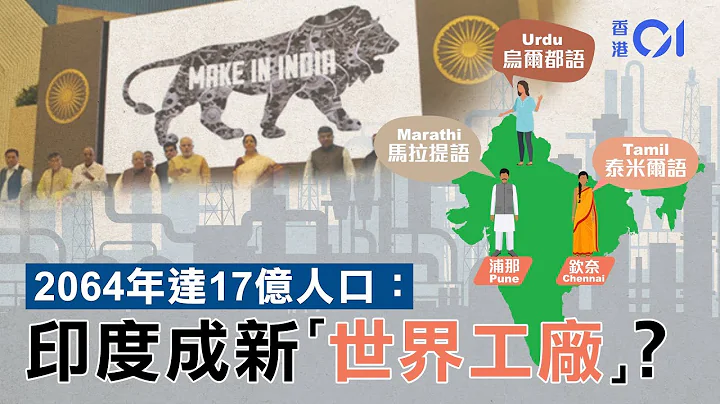
Language - Different from China's single writing system, India has 66 major local languages, which makes communication more complex, increases communication costs, and hinders the creation of a true single/national market.
語言——與中國的單一書寫系統不同,印度有66個主要地方邦語言,使通信更加複雜,增加了溝通成本,並阻礙創建真正的單一/國家市場。
Talent - Unlike China, India's top 1% of engineering talents work in western countries. The best choice is to flee this country. Many people have little loyalty to their country of birth.
人才——與中國不同,印度前1%的工程人才在西方國家部門工作,最好的選擇是逃離這個國家,許多人對自己的出生國幾乎沒有忠誠度。