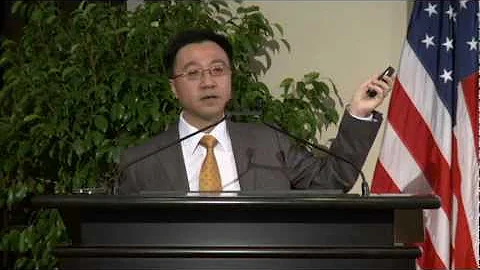
On December 22, 2022, from 14:00 to 16:00 in the afternoon, the 7th issue of the Mental Computing Forum "Exploring Theory of Mind from the Perspective of Interdisciplinary Science", hosted by China Artificial Intelligence Society (CAAI) and co-organized by the Mental Computing Committee of the Chinese Society of Artificial Intelligence and Neuroreality, was successfully held online. The forum focused on Theory of Mind to discuss its connotation and its inspiration and significance for artificial intelligence from the perspectives of psychology, cognitive science , artificial intelligence , and neuroscience. The total number of views on each platform is 2,000+.

"The Mind Computation Forum (The Mind Computation Forum)" is a series of forums organized by the Mental Computation Committee of the Chinese Society for Artificial Intelligence. Scholars from mental computing related disciplines are invited to give lectures and discussions on mental computing research to promote disciplinary development and interdisciplinary academic exchanges and cooperation. This mental computing forum was chaired by Zeng Yi, director of the Mental Computing Committee of the Chinese Society of Artificial Intelligence and researcher Zeng Yi from the Institute of Automation, Chinese Academy of Sciences. Professor Su Yanjie from Peking University was invited as a speaker, Professor Qin Yulin from Shanghai Jiao Tong University was a special guest, and Zhao Yuxuan, associate researcher at the Institute of Automation, Chinese Academy of Sciences, Lu Enmeng, a doctoral student, and Liu Boyi, a doctoral student from the Institute of Neuroscience, Chinese Academy of Sciences, were young interactive guests, discussing Theory from an interdisciplinary perspective. of Mind.
On the afternoon of December 22, Researcher Zeng Yi, director of the CAAI Mental Computing Committee, hosted the opening ceremony of this Mental Computing Forum. Researcher Zeng Yi said in his speech that the CAAI Mental Computing Committee integrates the research methods and contributions of scholars from artificial intelligence, cognitive science, brain and neuroscience, evolutionary biology, anthropology and other disciplines in a multidisciplinary way, and has a profound impact on biological intelligence and mental activity. We will systematically explore the mechanisms of movement from multiple perspectives and at multiple scales, focusing on scientific principles and key technologies such as the computational theoretical system of the mind, mental modeling, biological and artificial consciousness, learning and memory mechanisms, common sense construction and understanding, and social cognition, and develop artificial intelligence inspired by the brain and mind.
Researcher Zeng Yi introduced that the theme of this mental computing forum is "Exploring Theory of Mind from the perspective of cross-science". Mental computing has been widely studied in the fields of psychology, cognitive science, and artificial intelligence. Although different disciplines have different research perspectives on mental computing, the purpose is to explore the natural mechanism and essence of the mind, and to explore the inspiring computing mechanism. This forum brings together senior researchers and young scholars in multiple fields to discuss Theory of Mind from multiple disciplinary perspectives. Researcher Zeng Yi hopes that in this forum, scholars from multiple disciplinary perspectives such as psychology, cognitive science, artificial intelligence, and neuroscience will discuss Theory of Mind, discuss its connotation and its inspiration and significance for artificial intelligence, collide ideas, and inspire and learn from each other.
Researcher Zeng Yi served as the opening host
Professor Su Yanjie of Peking University gave an academic report titled "Looking at Psychological Theory from the Perspective of Evolution and Development". Professor Su Yanjie believed that Theory of Mind should be translated as "theory of mind". He first introduced the conceptual origin of theory of mind, shared the research on the psychological theory ability of animals from an evolutionary perspective, shared the research on children's theory of mind from a developmental perspective, and outlined many classic experimental paradigms for theory of mind research. Professor Su Yanjie believes that theory of mind explains and predicts individual behavior through the understanding of mental states, and this ability is very common in life. The ability of theory of mind is different at different ages. Experimental paradigms at different stages can measure the ability of theory of mind and detect the development level of children's theory of mind ability. Professor Su Yanjie also shared relevant research at home and abroad on the timing of children’s acquisition and development of theory of mind abilities, revealing the potential impact of social interaction environment and cultural exchanges on the development of children’s theory of mind abilities. The development process of children’s theory of mind abilities in different countries has both human commonalities and cultural specificities.
Professor Su Yanjie gave a speech
Associate researcher Zhao Yuxuan and doctoral student Zhao Zhuoya of the Brain-like Cognitive Intelligence Research Group of the Institute of Automation, Chinese Academy of Sciences shared the Theory of Mind research on brain-like artificial intelligence modeling from the perspective of artificial intelligence. Their research believes that Theory of Mind should be translated as "psychological speculation", mainly because the core of Theory of Mind is speculation on other people's psychological activities based on one's own experience. Associate Researcher Zhao Yuxuan first summarized the psychological speculation calculation model based on Bayesian, deep learning, and brain-inspired, and then introduced the brain-like self-perception model with biological rationality, and the brain-like psychological speculation pulse neural network model further developed on its basis. These two sets of models are inspired by the neural circuits of brain self-perception and psychological speculation. They model brain-like impulse neural network models with multi-brain areas and multi-circuit collaboration, and are applied to the classic psychological speculation experimental paradigm. Both studies are based on the full-impulse neural network model implemented by the brain-like cognitive intelligence engine ("BrainCog"), integrating multi-scale neuroplasticity implementation structures, mechanism brain-like self-perception and psychological speculation models. Finally, Associate Researcher Zhao Yuxuan also summarized his thoughts on future research in psychological speculation, including the exploration of the neural and computational mechanisms of psychological speculation, the exploration of the application and significance of psychological speculation, and the continuous enrichment and optimization of the psychological speculation model with the brain-like cognitive intelligence engine BrainCog as the core.
Associate researcher Zhao Yuxuan gave a speech
PhD student Zhao Zhuoya of the Institute of Automation, Chinese Academy of Sciences shared his research on using brain-like psychological speculation models to help others or other intelligent agents avoid security risks. The psychological speculation impulse neural network model based on multi-brain area collaboration can infer the differences between itself and others or other intelligent agents, and then predict the potential risks that others or other agents may have in the future. When necessary, will suspend the execution of 's own behavior and take action to help others or other agents avoid security risks.
PhD student Zhao Zhuoya gave a speech
Professor Qin Yulin of Shanghai Jiao Tong University shared his thoughts on psychological speculation from the perspective of cognitive science. He first expressed warm congratulations on the official establishment of the CAAI Mental Computing Committee, and reviewed the history of mind research in cognitive science, psychology and artificial intelligence, especially the development of cognitive architecture, to express the necessity of contemporary artificial intelligence research to attach importance to the development of mental computing. Professor Qin Yulin then gave an in-depth introduction to the definition of Theory of Mind and common Chinese translations. Through in-depth research on the meaning and connotation of Theory, he and his collaborators pointed out that "Theory" not only means "theory", but also has the deep meaning of "guessing, speculating". He specifically listed some details of his discussion on this issue with his long-term collaborator John Anderson, academician of the National Academy of Sciences and director of the Department of Psychology at Carnegie Mellon University, pointing out that Theory of Mind in psychology Mind is speculation about other people's mental activities, while their joint research An Integrated Theory of the Mind is an overall information processing theory proposed for the mind. There is a clear difference between the two. Therefore, "Theory of Mind" should be translated as "psychological speculation".
Professor Qin Yulin gave a speech
During the interactive discussion session, Liu Boyi, a doctoral student at the Institute of Neuroscience, Chinese Academy of Sciences, stressed that he believed that social animals all have the ability of Theory of Mind. For example, the cooperative behavior of rats shows a rich Theory of Mind, including empathy, learning to cooperate, and mutually beneficial behaviors. In addition, Liu Boyi believes that the existing computational modeling of Theory of Mind is biased toward cognition (such as the brain-like psychological speculation model built by Associate Researcher Zhao Yuxuan), and suggests integrating cognitive and emotional Theory of Mind, and developing computational modeling of Theory of Mind based on cognitive logic based on the ability to perceive ontology and other people's emotions.
PhD student Liu Boyi gave a speech
Associate researcher Zhao Yuxuan expressed his views and thoughts on the questions and suggestions of doctoral student Liu Boyi.Associate researcher Zhao Yuxuan introduced that the brain-like psychological speculation model is based on a full-impulse neural network, not through deep learning. Compared with the deep learning model, it is more biologically reasonable. It uses brain-like impulse timing to rely on plasticity for learning and optimization, which helps to reveal the neural mechanism of psychological speculation. It is generally believed that Theory of Mind corresponds to Cognitive Empathy, while Emotional Empathy is a part of empathy, but not a part of Theory of Mind. Researcher Zeng Yi introduced that future mental computing forums will specifically focus on emotional empathy.
Research engineer Lu Enmeng from the Institute of Automation, Chinese Academy of Sciences, raised his own confusion about how to evaluate whether an agent has a mind from the perspective of artificial intelligence. That is, what abilities does an intelligent agent have that can be said to have a mind? Is there a complete category of mind to help artificial intelligence scholars develop intelligent robots with mind?
Research engineer Lu Enmeng gave a speech
Professor Su Yanjie answered the questions raised by Teacher Lu Enmeng. Professor Su Yanjie believes that the levels of mind are different in different situations. Mind is usually considered to be internal psychology, and invisible and non-explicit behaviors can be called mind. The commonly considered mind includes beliefs, intentions, etc., and in a broad sense, knowledge states, emotions, wishes, and attitudes can also represent mind.
Lu Enmeng asked an in-depth question. If the robot has certain psychological speculation functions, such as being able to guess the goals of others, but through training it has some skills that seem to belong to Theory of Mind, can it mean that the intelligent agent really has the ability of Theory of Mind?
Professor Su Yanjie believes that from a psychological perspective, showing a certain ability does not mean that the essence and mechanism are the same. For example, rats that pass the mirror test cannot be said to have self-awareness. Even if their performance is consistent, the mechanism and process are very different from the principles of true self-awareness. Professor Su Yanjie also said that the research on artificial intelligence simulation Theory of Mind should be treated with a more inclusive attitude. If the intelligent agent can show human-like Theory of Mind capabilities, this will also be a great progress in the development of intelligent agents with Theory of Mind.
Professor Qin Yulin expressed his conceptual understanding of mind from the perspective of cognitive science. He first reviewed the early thinking that mind is the processing and processing of information. With the development of neuroscience, it is gradually discovered that the mind of the human brain has the characteristics of human brain thinking. The current information processing process of computers is still very different from that of the human brain. The discussion session also answered questions raised by the audience:
Q1: What is the difference between Theory of Mind and IQ and reasoning?
A1: Professor Su Yanjie answered that IQ is a measurement of intelligence, which is definitely different from theory of mind ability. Theory of mind can broadly be classified as a part of intelligence, an ability to process the social world. In general, reasoning ability will definitely be applied to the theory of mind ability in recursive reasoning, but unlike pure logical reasoning, Theory of Mind is not necessarily logically calculable, but an understanding and prediction ability that naturally develops in life. Researcher Zeng Yi shared his opinions on whether Theory of Mind can be calculated.
Researcher Zeng Yi draws on the ideas of Herbert Simon and believes that most psychological activities can be calculated and are all processes of information processing. In addition, he specifically quoted Cornell University psychology professor Shimon Edelman's view on "Computing the Mind" "I am my mind, and I live in my Brain." Researcher Zeng Yi pointed out that whether Mind can be calculated is an open question. We should continue to explore which parts of Mind can be calculated, and which parts are unknown or even incomputable.
Q2: In the mental model, bystanders will definitely answer the correct answer? Will it produce lies or non-global aspects of the bystander's perspective to interfere with other robots?
A2: Researcher Zeng Yi believes that it is entirely possible to interfere with others through psychological speculation, but the perception of others' speculation may not be correct. Subjective speculation and judgment will produce errors or inappropriate behaviors that will affect other intelligent agents.
Professor Su Yanjie believes that if a robot can generate lies to interfere with others, it is too human-like, which is equivalent to using the ability of psychological speculation to do bad things.
Researcher Zeng Yi expressed his views on the malicious psychological speculation capabilities of robots. For example, artificial intelligence has recently been used to deceive and form gangs in diplomatic games. Just as many philosophers are concerned about the danger of artificial intelligence learning the evil side of humans, these are ethical and moral issues that must be considered in the development of artificial intelligence.
Lu Enmeng’s research engineer expressed his in-depth opinions on whether robots should be given psychological speculation capabilities, and to what extent should machines be given psychological speculation capabilities? Psychological speculation can help eliminate misunderstandings in social interactions and form a bridge of communication. Psychological speculation between humans and machines can help machines better understand human needs, form value alignment, and construct trustworthy machine intelligence. But if machines are given too strong psychological speculation capabilities, will it be more difficult for humans to understand and control machines? Machines will also be able to conceal, lie, deceive, and manipulate humans. The rapid development of artificial intelligence cannot avoid these problems.
Professor Su Yanjie believes that the field of artificial intelligence studies intelligent agents that simulate human psychological theory, and can add constraints to inhibit their evil development. The ability of theory of mind can be developed and used for good or evil. It can also be coordinated with other cognitive function modules and can be developed towards morality and goodwill through artificial constraints.
Professor Qin Yulin believes that it is very important to adopt artificial intelligence ethics and governance to limit artificial intelligence from moving in the wrong direction. It is necessary to develop benevolent agents that understand humans and help humans. He expressed positive appreciation for the research carried out by researcher Zeng Yi's team on the moral model of brain-like artificial intelligence and on helping other agents avoid risks based on mental speculation. The ethical governance of artificial intelligence should be involved at an earlier stage to ensure development on a safe path.
PhD student Liu Boyi suggested using emotions to limit ethics and using emotions to help understand others. Emotions are automatically calculated instinctive reactions, and emotions can help understand the other person's thoughts. Researcher Zeng Yi quoted the opinion of Marvin Minsky, winner of the Turing Award and , "The question is not whether artificial intelligence can have emotions, but if it does not have emotions, how can it be called a true artificial intelligence?" and expressed approval and affirmation of doctoral student Liu Boyi's understanding of emotions and its role in artificial intelligence.
Finally, researcher Zeng Yi summarized the mental computing forum. The multi-disciplinary discussion made the concept and connotation of Theory of Mind clearer. Experts and scholars have shared novel perspectives and relevant developments in their own fields. Discussions between scholars have shown that different disciplines have begun to learn from each other to varying degrees. This is very valuable and very inspiring for the development of the interdisciplinary Theory of Mind. In this forum, many senior scholars, young researchers and the audience carried out rich exchanges of ideas, in-depth interactive discussions, and discussion of substantive issues, creating a good atmosphere for academic exchanges.
This article is contributed by the CAAI Mental Computing Committee