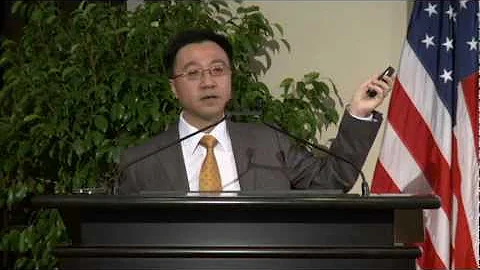
Li Meng
is currently the deputy general manager of the operating system product department of China Mobile Internet of Things Co., Ltd., mainly responsible for technology research and development. Since 2008, he has been mainly engaged in the research and development of communication products at Huawei and Ruijie Networks . From July 2015 to now, he has been engaged in the research and development of IoT products at China Mobile IoT, and has successively served as R&D Director and Department Deputy General Manager.
In the era of the Internet of Everything, opportunities and challenges for the Internet of Things operating system coexist
In September 2021, eight ministries and commissions including the Ministry of Industry and Information Technology jointly issued the "Three-Year Action Plan for the Construction of New Infrastructure for the Internet of Things (2021-2023)" (hereinafter referred to as the "Plan"), proposing that by the end of 2023, new infrastructure for the Internet of Things will be initially built in major domestic cities, and the number of Internet of Things connections will exceed 2 billion. In October this year, the number of China Mobile's IoT users reached 1 billion, fully realizing that the number of IoT users exceeded the number of IoT customers, officially entering the era of "Superman of Things".
The era of Internet of Everything is accelerating. The traditional embedded operating system can no longer cope with these challenges. The industry needs a more suitable dedicated IoT operating system to reduce development difficulty and improve development efficiency, so that industry developers can focus more on business development and form an IoT application ecosystem. Li Meng analyzed that from the perspective of the characteristics of the Internet of Things industry, the market needs overall solutions, and there are natural professional barriers in vertical industries in various fields. It is impossible for one operating system to monopolize all subdivided industries, and there is a large market space for cultivating in the subdivided areas that it is good at. There are many companies participating in the IoT operating system industry, but they all operate independently, the industry development is fragmented, and each company's market share is relatively low. It is far from forming a monopoly giant. Industry convergence is a long-term process, and each operating system has the opportunity to become the mainstream of the market.
China Mobile OneOS is a lightweight operating system specially designed for the Internet of Things field. It has the characteristics of tailorability, cross-platform, low power consumption, and high security. In terms of underlying chip adaptation, supports mainstream CPU architectures such as ARM Cortex-M/R/A, MIPS, RISC-V, LoongArch, and Xtensa. It is compatible with standard interfaces such as POSIX and CMSIS. It also supports the development of the popular Micropython language and provides graphical development tools, which can effectively improve development efficiency and reduce development costs, helping customers develop stable, reliable, safe and easy-to-use Internet of Things applications.
China Mobile IoT launched the OneOS operating system to realize independent controllability of core technologies
OneOS was officially launched in 2019. At that time, the market environment at home and abroad was complex and changeable, technology was controlled by others, and core problems often occurred, and technological independence and self-reliance were imminent. As a wholly-owned subsidiary of China Mobile Group, China Mobile IoT has accumulated profound experience in IoT construction and terminal and platform R&D capabilities over the years. It timely launches an open source neutral IoT operating system that serves the industry. This is not only in response to national independent and controllable policies, but also to serve the needs of the IoT industry.
OneOS operating system adopts a layered architecture design, and its main body consists of drivers, kernels, components, and security frameworks. modularizes the design of through the code . The system has extremely high scalability and can be flexibly tailored according to vertical industry applications. The OneOS kernel adopts a minimalist design idea, has excellent real-time response characteristics while reducing resource overhead, supports multi-task management and scheduling, provides rich IPC strategies, such as semaphores, mutexes, message queues, mailboxes, etc., and provides efficient and reliable RTOS kernel support.
Li Meng introduced that as a lightweight operating system launched in the field of Internet of Things, China Mobile OneOS has the characteristics of high real-time, high security, and high reliability, and realizes independent control of the underlying key core technologies. It is of great significance to make up for the shortcomings of my country's industrial development and ensure the security and stability of the industrial chain .We use OneOS as the product base, combined with rich application components such as graphic interactive GUI, location service LBS, industrial cloud PLC, real-time call RTC, remote upgrade OTA, etc., to deeply explore consumer electronics , smart city , industrial control and other industry fields.
TERRITORY.01
In the field of consumer electronics, we have established close cooperation with enterprises such as Changhong, Konka, Jimi, Diwo, and the National High-end Intelligent Home Appliances Innovation Center. Taking the smart student card as an example, OneOS is adapted to the Jimmy IoT 4G Cat.1 chip student card, shielding chip hardware differences and achieving large-scale shipments; the Konka Afia air fryer is equipped with the OneOS WiFi module, providing OTA and other capabilities, and has been launched on the China Mobile IoT Mall.
There are really a lot of things to learn about the embedded Internet of Things. Don’t learn the wrong route and content, which will cause your salary to go up!
shares an information package with everyone for free, which is almost 150 gigabytes. The learning content, interviews, and projects are relatively new and comprehensive! It is estimated that buying a certain fish online will cost at least dozens of dollars.
Click here to find an assistant and get it for 0 yuan: 
TERRITORY.02
In the field of smart city construction, OneOS and Dahua, Jinka, Avantgarde, Jinglong Ruixin and other companies have achieved large-scale installation of many products such as security, energy meters, door locks and door magnets. For example, it established a joint laboratory with Zhejiang Dahua to create software-defined security standards, and OneOS was loaded on smart door sensors to achieve mass production; it also cooperated with Hangzhou Naoyun to mass-produce and ship smart smoke sensors based on OneOS's low-power, remote OTA and other capable components.
TERRITORY.03
In the field of industrial control, we cooperate closely with Codesys, WIKA, Zhongkong, Dafang, Xinchi, Feiling, Yanzhi Technology, Xugong Group , Sany Heavy Industry , etc. Together with Suzhou Dafang develops localized special vehicle ECU products based on OneOS to replace the existing foreign chip + OS solution; in Ningbo central control micro-industrial chip native system, OneOS is fully applied in its PLC products and related projects.
China Mobile OneOS has taken one step at a time since its launch. In 2020, version 1.0 of the minimalist kernel was released; in 2021, version 2.0 that met functional safety and information security requirements was released. The security and reliability of the system achieved key breakthroughs; during this period, it passed IEC 61508, EAL 4+ multiple authoritative certifications, won the Innovation Award at the World Internet of Things Expo, was selected into the world's leading Internet scientific and technological achievements and the Internet of Things Demonstration Project of the Ministry of Industry and Information Technology. This year, it was also selected into the recommended catalog of scientific and technological innovation achievements of central enterprises and the top ten technological innovation projects of the Internet of Things. The recently released OneOS 3.0 is a long-term support version. As an LTS version, it has undergone extensive and in-depth testing and contains a large number of security accumulation and stability improvements. Li Meng said that it will maintain long-term maintenance and technical support.
OneOS 3.0 kernel upgrade, greatly improving security and reliability
For the operating system, the kernel is the core and most important part.
Compared with previous versions, what improvements have been made in the kernel functions and performance of OneOS 3.0?
Li Meng shared with us the core idea of OneOS iterative upgrade: OneOS uses a preemptible real-time lightweight kernel. In version 2.0, has implemented efficient task management and scheduling, and achieved task synchronization and communication. Supports multiple memory allocation algorithms to adapt to different application scenarios. By version 3.0, the kernel functions will be further enriched.First of all, it supports symmetric multi-processor platforms to help advanced applications improve operating efficiency; it supports the CPU affinity model to improve task execution efficiency and avoid CPU context switching, which wastes unnecessary performance; it supports MPU isolation protection to realize the isolation of kernel-mode access space and user-mode access space. Key data areas are prohibited from tampering and code segment protection improves the security and reliability of the system; it also adds scalable and testable functions, such as IPC tracking, interrupt detection, task trajectory tracking, partner monitoring, etc., to help developers detect system status and quickly analyze problems.
At the same time, the core performance of has also been further improved. On the Cortex-M4 platform, has task switching less than 3us, maximum interrupt response delay less than 6us, task synchronization less than 2.4us, and task communication less than 6.3us. On the multi-core Cortex-A9 platform, inter-core task synchronization is less than 1.3us, and inter-core task communication is less than 2.0us. The time complexity of task scheduling ranks among the best among mainstream RTOS systems.
Security and reliability are the cornerstones of realizing the Internet of Everything. The security and protection capabilities of the operating system are also crucial to users.
What new breakthroughs has OneOS made in ensuring security and reliability❓
Li Meng said that the Internet of Things is a new critical infrastructure of the country, and most of the data in the system is real-time sensing data in specific application scenarios, including sensitive data of important national industries. Data security in the Internet of Things system is an important foundation for the healthy development of the Internet of Things. In terms of data collection and data transmission security, perception layer node devices usually have simple structures and very limited resources, and are unable to support traditional complex security functions. Therefore, OneOS has developed smaller and faster encryption suites and secure transmission protocol stacks in response to the new features and requirements of IoT data security to provide comprehensive data security protection methods for IoT terminals.
- First of all, In terms of terminal data protection, OneOS security team independently developed a lightweight domestic commercial cryptographic SM series algorithm suite. The national secret SM series algorithm is independently designed by my country and is a universal algorithm certified by the National Cryptozoology Bureau. At the same time, a specially optimized design has been carried out based on the characteristics of small resources of IoT terminals, which greatly reduces the occupation of terminal resources by the suite itself. Under the same hardware environment, the resource occupation of the OneOS national secret algorithm suite can be reduced by 34%, while the encryption efficiency can be increased by 30%, which greatly reduces the pressure on terminal equipment resources and can provide data protection for a wider range of devices.
- Secondly, OneOS kernel security and system security were evaluated by China Cybersecurity Review Technology and Certification Center and obtained the first IT product information security classification EAL4+ certification in the field of domestic IoT operating systems, filling the gap in domestic IoT real-time operating system security technical standards.
- Again, In terms of reliability, OneOS has passed the IEC 61508 SIL3 certification. This standard certification is an authoritative sign to determine whether the Internet of Things operating system has a "highly reliable RTOS", marking that OneOS has the necessary foundation to enter industries such as manufacturing and industrial control. At the same time, when enterprises and developers use OneOS to develop software products, they not only have a strong guarantee on the reliability of the basic system, but also can pass security certifications in related fields more quickly, accelerating the pace of product industry entry and market sales.
Adhere to open source technology and create a whole-industry ecosystem
Currently, OneOS provides developers with comprehensive technical support services in terms of system source code, open source community , development tools, etc., and helps partners open up multiple channels such as China Mobile's IoT product library and IoT mall. China Mobile IoT joins hands with its partners to build an ecosystem through various forms such as technical salons, alliance promotions, industry exhibitions, and media promotions.At the same time, through close cooperation with universities, we provide comprehensive and multi-dimensional services to corporate developers and individual developers through various methods such as joint laboratories, college student special competitions, and university open courses. OneOS has served 350+ partners and achieved 30 million application installations.
At present, "independent and controllable" has become one of the main themes of my country's scientific and technological development. As my country’s exploration and practice of a domestically produced IoT operating system, OneOS is of great significance to the entire IoT industry. From embedded operating systems to IoT operating systems, foreign countries have developed for more than 40 years, accumulated profound technical capabilities and industrial ecology, and occupied the vast majority of the market share of in my country's operating systems. The core technology is controlled by others, which not only costs a lot of money economically, but also poses a serious risk of "stuck". The OneOS kernel code autonomy rate has reached 100%, and the independent controllability of the core software is of great significance. has made up for my country's technical shortcomings in the field of IoT operating systems and made a positive contribution to ensuring the security of the domestic IoT industry chain.
However, my country's IoT operating system still faces development bottlenecks such as lack of overall design in top-level design, insufficient accumulation of key core capabilities, and weak system establishment. Li Meng said that in the future, OneOS will continue to increase investment in the research and development of IoT operating systems, work with the industry to promote the formulation of standards, and unite the upstream and downstream of the industry chain to jointly build technology and ecological systems, open up the "last mile" between technology and applications, increase the market share of domestic operating systems, and create a full industry ecosystem based on domestic IoT operating systems.
On the tenth anniversary of China Mobile Global Partner Conference , Li Meng imagined the future development direction of domestic IoT operating systems: It is the general trend in the future for IoT operating systems to create a full-scenario ecosystem, and the scenarios we will face will be more complex and there will be more types of devices. Therefore, domestic IoT operating systems also need stronger collaborative capabilities; technically, the development of IoT operating systems will tend to rely on smart hardware, based on embedded, microkernel , to create a people-centered system. Different smart terminals will be built into a super terminal through an operating system according to scenarios, bringing different experiences to all smart scenarios while collecting and processing massive amounts of data. In the future, we will continue to uphold the principles of open source, openness, and neutrality, adhere to open source technology, and ecological collaboration, and work with our partners to build industrial ecological prosperity.
Original link: https://mp.weixin.qq.com/s/DCRszIDEN-T2F8QM083-Lg
Reprinted from: loT Internet of Things Technology
Original link: In the era of the Internet of Everything, how do IoT companies choose IoT device-side operating systems?
This article comes from the Internet and conveys knowledge for free. The copyright belongs to the original author. If there is any copyright issue with the work, please contact me for deletion.