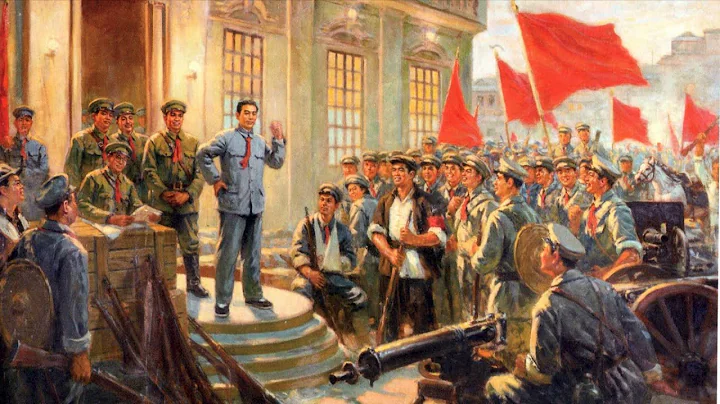
In the hit drama "Dawn in the East", Chen Yun's image as the "Red Shopkeeper of New China" is impressive. During his 70-year revolutionary career, he went through various periods of revolution, construction and reform, and made significant contributions to the development of the cause of the party and the people. How much do you know about the deeds of this older generation of proletarian revolutionaries? On January 3, the Chen Yun Memorial Hall will launch the "Witness of Faith - A Short Story Series of Chen Yun's Cultural Relics", which will vividly tell his deep feelings about his family and country through 12 revolutionary cultural relics that are engraved with traces of time, attached with emotions and memories, including a photo, a felt hat, a brown suitcase, and a document.
1. A photo

This is a group photo of members of the first committee of the Commercial Press Union in August 1926. Third from left in the front row is Chen Yun. There are a total of 14 people in the photo, 12 of them are wearing Commercial Press summer work clothes, and 2 are wearing casual clothes.
In the summer of 2002, the Chen Yun Memorial Museum collected this photo, which takes people into Chen Yun’s years at the Commercial Press.
After graduating from high school in December 1919, Chen Yun worked as an apprentice in the stationery cabinet of the Commercial Press Publishing House on Qipan Street.
In June 1925, Chen Yun moved to the stationery cabinet of Hongkou Branch on North Sichuan Road as a clerk. In August, Chen Yun, who was only 20 years old, was appointed as the chairman of the strike committee of the Commercial Press Publishing House. He participated in the leadership of the general strike of the Commercial Press and achieved victory. In August and September, Chen Yun joined the Communist Party of China under the introduction of Dong Yixiang and Yun Yutang . In September, the staff of the Commercial Press Publishing House held a plenary meeting and formally established a trade union. Chen Yun was elected chairman of the first trade union.
This photo was taken in August 1926 after a meeting to commemorate the 30th anniversary of the founding of the Commercial Press. These people in the photo are all members of the first session of the Publishing House Employees Union of the Commercial Press. They are also leading members of the first executive committee of the Publishing House Employees Union, including members, alternate members, and supervisory committee members.
This photo witnesses Chen Yun’s transformation from an ordinary apprentice in the Commercial Press to a professional revolutionary.
2. A felt hat
This is a gray felt hat, produced by Shengxifu Hat Factory and donated to the Chen Yun Memorial Hall by relatives of Chen Yun. It witnessed the thrilling, fierce and cruel past events that Chen Yun experienced.
In May 1931, Chen Yun served as secretary of the Central Special Section. At that time, Shanghai was experiencing severe white terror and mixed society. Chen Yun wore this fedora hat to conceal his identity as an underground party member when performing tasks. Zhao Tianyuan, a staff member next to Chen Yun, recalled: One day in the 1980s, the chief asked me to find a fedora hat and tell us the story of Shanghai Beach. He put the hat on his head. He said that usually we wear the hat very low, above the eyebrows, so as not to be looked at by others, because there are too many spies in Shanghai. Then he performed again. He put the hat on the left side a little to the left. He put his feet on his pedals and said it was called Zuo Qinglong. Then he put the hat on the right side and said it was called Right White Tiger.
It is with his extraordinary courage and wisdom, and his daring loyalty to the party and the cause of the proletariat, that Chen Yun dealt with the enemy tenaciously and skillfully, loyally safeguarding the security of the Central Committee of the Communist Party of China, and made the dagger inserted by the Central Committee of the Communist Party of China in the heart of the enemy sharper in the bloody storm.
3. A brown leather suitcase
This is a suitcase that Chen Yun often uses every time he goes out for work or research. The suitcase is brown, 80 centimeters long and 40 centimeters wide. When filled with clothes, the lid can be raised to a height of less than 30 centimeters. There is an automatic lock on the front and a metal handle linked to a belt. There are also two belts, one on the left and one on the right, that surround the entire suitcase, mainly for stabilizing the case. This suitcase is very old, the surface is worn, and the color is very uneven. The two belts surrounding the suitcase have also been broken, and many traces of repairs can be seen.
In January 1933, due to the increasingly serious white terror in Shanghai, the Provisional Political Bureau meeting of the CPC Central Committee decided to move the central organs to the Central Soviet Area based on the opinions of the Communist International. In order to protect his identity during the transfer, Chen Yun bought the brown suitcase.Since then, this suitcase has been accompanying him everywhere, from Shanghai to Jiangxi, from Zunyi to the Soviet Union, from Yan'an to Northeast China, from Northeast China to Beijing, and then from Beijing to all parts of the country.
This suitcase has been with Chen Yun for 62 years. It witnessed Chen Yun's life of strategizing and making outstanding contributions in China's revolution, construction, and reform, and it also reflected Chen Yun's excellent qualities of frugality, simplicity, and hard work.
4. A document
Chen Yun describes how to be a qualified Communist Party member in this document. On May 30, 1939, this document was published in the 72nd issue of " liberate ", a publication of the Communist Party of China. In 1943, it was compiled into the "Rectification Documents" and became one of the 22 must-read documents during the Yan'an Rectification Movement.
On November 29, 1937, Chen Yun flew to Yan'an from Dihua, Xinjiang. At the Politburo meeting from December 9 to 14, he was added as secretary of the Secretariat of the Central Committee and served as minister of the Central Organization Department. In the process of leading the party's organizational work, he devoted a lot of effort to branch building and party member team building. In March 1939, he drafted the outline of "Branch Work" and "Party Members" for lectures at the Central Party School, and made an in-depth and systematic discussion of the Party's organizational work during the War of Resistance Against Japan. Song Pingping has said many times: "What impressed me most was listening to Comrade Chen Yun talk about how to be a Communist Party member.
In this document, Chen Yun put forward the "six standards" for Communist Party members in a relatively complete manner: 1) Life-long struggle for communism; 2) Revolutionary spirit interests above all else; 3) abide by party discipline and strictly guard the party's secrets; 4) implement resolutions with perseverance; 5) be a model for the masses; 6) study. These "six standards" are the first and most complete standards for party members in the history of the Communist Party of China. The most comprehensive and accurate expression laid an important theoretical foundation for the construction of party members and played a vital role in improving the quality of party members and strengthening the construction of party members at that time.
5. A military certificate
This is a military certificate that has been baptized by wars and years, but is still well preserved. It reads: Comrade Chen Yun, the political commissar of the headquarters, major general, went from the headquarters of the North China Liberated Area to Manchuria on official business. The military and police checkpoints along the way were verified and released. Commander-in-Chief Zhu De
In early 2015, Chen Yuan, the eldest son of Comrade Chen Yun and vice chairman of the 12th National Committee of the Chinese People's Political Consultative Conference, donated it to the Chen Yun Memorial Hall for collection and displayed it in the cultural relics museum. So why did Zhu De issue this certificate? This starts with Chen Yun's trip to the Northeast after the victory of the Anti-Japanese War.
After the victory of the Anti-Japanese War , the strategic position of Northeast China was extremely important and became a battleground between the Kuomintang and the Communist Party. Chen Yun took the initiative to volunteer, and on September 15, 1945, as a member of the Northeast Bureau of the Central Committee of the Communist Party of China, he went to the Northeast War. field. In order to facilitate Chen Yun's business trip to Manchuria and considering that the Soviet Red Army implemented a military rank system at that time to facilitate dealings with the Soviet Red Army, Chen Yun was awarded the rank of Major General in the name of Chairman of the Central Military Commission Mao Zedong before leaving.
Chen Yun arrived at Shanhaiguan by plane with this military certificate, passed Jinzhou , and arrived in Shenyang. He began his unusual three-year and eight-month journey of galloping on the Northeast battlefield. 5 The Northeast Democratic Coalition's shift to offensive operations created favorable conditions and laid the foundation for the victory of the 5 Liaoshen Campaign.
6. A coal mine distribution map
This is a "Coal Mine Distribution Map Directly Under the Central Government" marked by Chen Yun in the 1960s.
From 1960 to 1961, coal production declined sharply, but the reasons for the decline were not immediately clear. Zhou Enlai proposed that Chen Yun convene a special coal meeting The carbon industry symposium will truly clarify the situation in order to study countermeasures. Chen Yun marked this map to fully understand the distribution of coal across the country.
In 1961, Chen Yun attended nine coal work conferences held in Xiyi Hotel to study issues such as coal indicators, corporate management and ideological and political work within coal enterprises, and the lives of coal mine workers. From October 14th to November 3rd, he hosted a coal industry symposium in Xiangshan, Beijing. The symposium held in Xiangshan was Chen Yun's systematic investigation and research on the coal industry.The Xiangshan symposium was held in a very practical manner, identifying the crux of the existing problems in the coal industry one by one and pertinently, giving a clear direction and a good start for the adjustment of the entire industry. The insights Chen Yun formed during the investigation and research of the Xiangshan Symposium not only played an important guiding role in the adjustment of the coal industry, but also had an important impact on the overall adjustment of the entire national economy.
7. A handbag
This handbag is 28cm long, 5cm wide and 42.5cm high (including the length of the strap). On the front are words such as "Quotations from Chairman Mao" and "The core force that leads our cause is the Communist Party of China, and the theoretical basis that guides our thinking is Marxism-Leninism". It was dubbed by Deng Xiaoping as "a bag that can buy groceries".
In Chen Yun's eyes, the texture and shape of the briefcase are trivial matters. The key is that it can solve "important issues for the people and the country." In 1978, Chen Yun took this briefcase that could hold both vegetables and rice to attend the Central Work Conference and the Third Plenary Session of the 11th CPC Central Committee, which was a historic turning point. At the Central Work Conference, Chen Yun took out the speech outline from his briefcase and fired the first shot at the "left" mistakes, which played a key role in reversing the direction of the meeting. At the closing meeting of the Third Plenary Session of the 11th Central Committee of the Communist Party of China, Chen Yun took out his speech from his briefcase and said: The Third Plenary Session of the 11th Central Committee of the Communist Party of China and the previous Central Working Conference were very successful. On the basis of Marxism-Leninism and Mao Zedong Thought, everyone emancipated their minds, spoke freely, and fully restored and carried forward intra-party democracy and the party's fine style of work.
An ordinary briefcase reflects a proletarian revolutionist's high responsibility to the party and the people, and demonstrates the noble demeanor of a great man.
8. A pipa
This is a pipa that Chen Yun used when he was learning to sing and play in the 1960s. The pipa has simplified music written on it. Why are simplified musical notations written backwards?
At that time, while Chen Yun was recuperating, in order to study Pingtan in depth and master the rules of lyrics and music, and as a form of exercise, he began to learn to play the pipa, and invited Zhu Jiesheng and Zhou Yunrui of the Shanghai Pingtan Troupe to be teachers. Chen Yun is very serious about everything he does, including learning to play the pipa. In order to play the pipa well, Chen Yun asked people in the pingtan industry to help him purchase a professional pipa at his own expense, and made reasonable arrangements for the learning progress and time. He first concentrated on practicing rolling for 300 hours and tried to apply it in the tunes; then he learned the practice method of "clipping" and paid attention to step by step. In order to facilitate practice, Chen Yun marked the musical notation on the pipa backwards, and practiced by himself in front of the mirror without the guidance of a teacher, so that the musical notation in the mirror would be correct. Chen Weihua, Chen Yun's second daughter, recalled: I once remembered that when I met him in Hangzhou, he told me that he was learning to play the pipa. Then I saw him facing the mirror and played it for me. He held the pipa and played it to me while facing the scores 1, 2, 3, 4, and 5 on the mirror.
In addition to purchasing the pipa at his own expense, Chen Yun also borne the transportation fares, food, accommodation and other related expenses for Zhu Jiesheng and Zhou Yunrui to and from Chen Yun's residence. Chen Yun has repeatedly told people in the Pingtan industry: "Zhou Yunrui is the teacher who taught me how to play the pipa. I am very grateful to him."
9. A set of shirts and underpants
This is a set of shirts and underpants that Chen Yun has worn for many years. Chen Yun's set of shirts and underwear are mostly made of white plain cloth and other fabrics. Yu Ruomu used to sew them, and later he asked Meng Tingzhen from the Security Bureau to help make a few pieces. The legs of the underpants are slit on one side and sewn with two straps. When wearing, pull up the straps to tie the straps, and then use socks to cover the trouser legs.
Chen Yun's body has always been weak and he sweats easily. When he sweats too much, his clothes wear out quickly, so his wife always mends them again and sews them again and again. In the era of material scarcity, in order to ensure the basic supply of daily necessities, invoice certificates were used for supplies that were in short supply. Chen Yun has five children in his family, so he is nervous about distributing tickets. In order to save cloth money, Yu Ruomu took apart the old mask and used the removed gauze to mend it when his shirt and underpants were worn out. After having to mend it too many times, his family advised Chen Yun to make a new one. What he often said to his family: "This is worn inside and cannot be seen by outsiders. Being able to wear it for one more day is also a saving."Wearing old clothes is the interest of wearing them." ”
For Chen Yun, he was born in a poor family and experienced the hardships of the long revolutionary years. After the founding of New China, he took charge of the Central Finance Commission and was known as the “Shopkeeper of the Republic”. He still lives such a simple life. Su.
10. A piece of handwriting
"Not only the superior, not just the book, only the reality, exchange, comparison and repetition", this is Chen Yun and Zhejiang Province on January 24, 1990 It was presented to Li Zemin, then secretary of the Zhejiang Provincial Committee of the Communist Party of China, by leaders of the party, government and military during their talks.
Li Zemin recalled: On January 24, 1990, Tieying, Li Fengping, myself, and responsible comrades such as the Zhejiang Provincial Advisory Committee and the Provincial Commission for Discipline Inspection went to Building 2 of Wangzhuang to congratulate Chen Yun on the New Year. After taking a group photo, Chen Yun had a long cordial conversation with everyone. At the beginning of the conversation, Chen Yun gave me a banner he had inscribed in advance, which read: "Not only the superior, not only the book, but only the reality, exchange, compare, and repeat. I took the banner and said, these 15 words from Comrade Chen Yun are not only given to me, but also to all members of the Standing Committee of our Provincial Party Committee. This is what Comrade Chen Yun expects of us. Our provincial party committee is required to persist in seeking truth from facts, grasp the overall situation, and do a good job no matter now or in the future.
Chen Yun explained these 15 words: Not only is it superior, it does not mean that you should not listen to what the superiors say, but it means that you creatively implement the decisions and instructions of your superiors according to local conditions. It’s not just about books, nor does it mean that you shouldn’t read documents and books. But to oppose dogmatism . Being pragmatic means proceeding from reality and dealing with problems realistically. Exchange means exchanging opinions with each other in order to fully understand the actual situation. Comparison means comparing up and down, left and right, in order to identify the nature, essence and key points of things. Iteration means not to decide a problem too hastily, but to allow time for repeated consideration.
Chen Yun's "Fifteen-Character Formula" shines with the brilliance of dialectical materialism and is an eternal treasure in the treasure house of our party's ideological theory.
11. A donation receipt
This is a donation receipt issued by China Youth Development Foundation to Comrade Chen Yun. It has "Donation number: 119401017985; Donor: Comrade Chen Yun; Donation 5,000 yuan; Date: April 7, 1994."
On April 6, 1994, Chen Yun, who was recuperating in Shanghai, heard from the news broadcast that the central government had donated money to Project Hope. He asked his staff to withdraw 5,000 yuan from his savings and sent it to the China Youth Development Foundation to donate to the children of Project Hope. Along with the donation was a sentence: "This money must be donated to the old revolutionary areas and to out-of-school children in poor areas, and it must be kept confidential."
In the end, this donation was implemented to 25 poor out-of-school children in Lushi County, Henan Province. Lushi County is not only a poor mountainous area, but also an old revolutionary area. With Chen Yun's support, the children not only regained the opportunity to go to school, but it also illuminated their hearts and became a warm memory in their lives.
"A century-old plan, education is the foundation." Chen Yun once said: "We are a socialist country . Children must not be allowed to drop out of school. The whole society should be mobilized to solve this problem." This is what he said, and he took the lead in doing so.
12. A receipt for party dues
This is a receipt for the party dues paid by Chen Yun at the last moment of his life. It read: Party dues for March and April, stamped with the seal of “Organizational Department of the General Office of the CPC Central Committee, Organization Committee,” the date of receipt was “April 10, 1995,” and the amount was 112.4 yuan.
On May 25, 1994, Chen Yun was admitted to Beijing Hospital of due to pneumonia. On April 10, 1995, he suddenly became critically ill, and rescue efforts failed. He left us forever at 2:04 in the afternoon at the age of 90. Bo Yibo recalled: At noon on April 10, 1995, I rushed to Beijing Hospital to visit him. I saw that he was extremely conscious and worried that this was a comeback. Sure enough, this meeting turned into a farewell forever. That morning, even though Chen Yun's physical condition was relatively good, he paid the last party dues in his life to the organization. The party organization issued a receipt. This precious receipt is now kept in the Chen Yun Memorial Hall.
After Chen Yun passed away, in accordance with his last wish, his internal organs were donated to the medical cause of the motherland. After his body was cremated in Beijing, his ashes were buried under a lush cedar in the Babaoshan Revolutionary Cemetery.
Although great men pass away, their style remains forever. See things and think about people, keep your spirit evergreen. This receipt for Chen Yun’s party dues paid at the last moment of his life bears witness to the fact that he remained true to his original aspiration despite all the wind and rain in his life.
Author: Ruyan
Editor: Guo Chaohao