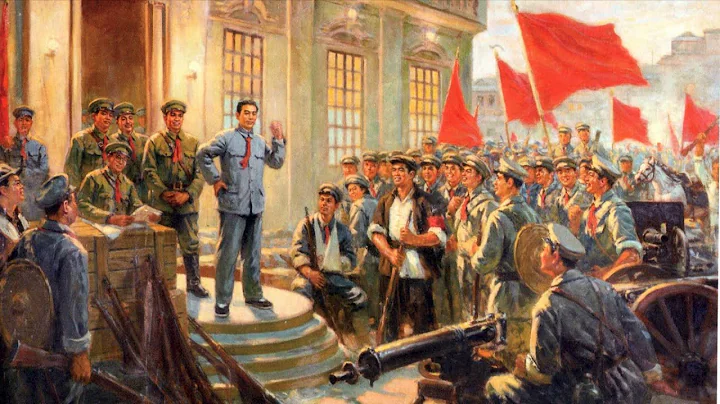
above picture_ The Battle of Aduva took place on March 1, 1896. It was the final battle of the first Italian Ethiopian War
first. Ethiopia took advantage of the contradictions between major powers to win the support of the international community.
France and Italy have a grudge over the Mediterranean region of North Africa. At that time, France was very worried that its sphere of influence in East Africa would be replaced by Italy. This contradiction has put France on Ethiopia's side in the conflict between Ethiopia and Italy.
When the Italian authorities declared Ethiopia as Italy's protector, France supported Ethiopia to a certain extent. At the Brussels international conference, France hopes that Italy can tell Ethiopia all the situations that should be discussed after the meeting. In the future, similar international conferences will be held. Italy must negotiate with Ethiopia with relevant issues, rather than unilaterally declaring Ethiopia about relevant issues involving Ethiopia itself.
France's various international efforts objectively alleviated Italy's pressure on Ethiopia. In order to win the support of France, the Ethiopian Emperor Menelic II agreed to France to mint currency and set up telegram lines in Ethiopia. Ethiopia also invited French instructors to Ethiopia to teach advanced military ideas and tactics to the Ethiopian army.
above_ The nominal border of Ethiopia before the Battle of Aduwa
Ethiopia also received support from Russia.
In 1892, Russia and Ethiopia signed an agreement to sell arms to Ethiopia. In 1895, Ethiopia sent envoys to St. Petersburg . In 1896, the envoys of Tsarist Russian established a consulate in the capital of Ethiopia. The Russian military advisory group immediately arrived in the capital of Ethiopia. Colonel Artamonov of the Russian army and Russian officers of Lieutenant Bratovic worked in the General Staff of Ethiopia and participated in the decisions on several battles in Ethiopia against Italian invasion from 1896 to 1898.
above picture_Menelic II (August 17, 1844 - December 12, 1913)
Second,Menelic II led Ethiopia to begin modernization reform and establish a modern Ethiopian army.
Menelic II is an enlightened monarch in Ethiopia's history. He himself loves mechanical science and is very interested in Western industrialized machinery. In 1874, Menelic II wrote a letter to Madiwei, who was from , Egypt, hoping to introduce technicians to Ethiopia to help Ethiopia develop its military industry. In 1877, technicians from Swiss came to Ethiopia to help Ethiopia produce the rifle they made. Ethiopia also imported weapons from , , such as France and Russia. According to relevant records, Ethiopia imported more than 25,000 rifles and more than 20 rifled guns from abroad, improving the combat capabilities of the Ethiopia army.
In addition to enhancing weapon performance, the Ethiopian army has started a comprehensive modernization transformation with the support of Western countries. French instructors taught modern military knowledge to the Ethiopian army. Tsarist Russian officers worked directly in the Ethiopian General Staff, and objectively helped the Ethiopian army transform from the traditional feudal army to the modern army.
This modern army became the core force in Ethiopia's defeat of the Italian invasion.
above picture_ Ethiopian army in the Battle of Aduwa
Third, the reform of the political system implemented by Mennilic has had a significant effect, and the centralized system directly helped Ethiopia achieve the national war of resistance.
18 to the 19th century Ethiopia was a country with long-term feudal separatism. The emperor had nothing but a false reputation, and the feudal lords from various regions ruled themselves.
However, the long-term feudal separatism brought great disaster to Ethelbia's resistance to foreign invasion. Italy began to annex Ethelbia in 1882. After 1885, the Italian army advanced rapidly into the territory of Ethiopia.
Faced with the Italian invasion and at the critical moment of the national crisis, Menelic II bravely assumed the important historical responsibility. From 1889 to 1897, Menelic II continued to use troops to feudal separatist forces, achieving domestic unification. After years of fierce fighting, Menelik II expanded his territory to the west to the White Nile River, south to the north of Ludorf Lake, east to the Somalia territory, establishing the foundation for the current territory of Ethiopia. In 1886, Ethelbia moved its capital to Addis Ababa .
Menelic II unified the country and established a centralized rule in the country. The previous Ethiopian emperor was just a monarch with less power in the country, while Menelic II achieved a comprehensive grasp of state power. The emperor is the head of state administration and the supreme commander of the army. The emperor directly appointed the provincial governor of all provinces across Ethiopia. The provincial governor is not only the administrative head and judge of a province, but also the commander of the local garrison. In this way, Ethiopian Emperor Menelik II achieved full control of the domestic situation.
above_ Italian infantry in the Battle of Aduwa
Although Ethiopia had not completely eliminated the feudal princes during this period, the feudal princes no longer dared to resist the central government. Feudal princes such as Himanot of Gojam and Mangasha of Tigore expressed their loyalty to the emperor and the central government. Mangacha personally knelt beside Menelik II with a stone slab on his back, begging the emperor to forgive his crime of competing with the emperor two years ago with the support of Italy.
The establishment of a centralized system has allowed Ethiopia to fight the Italian invasion with its whole nation. In September 1895, Menelik II issued an edict to the people, calling on the people to "no one can stay at home, because everyone has the responsibility to participate in this war and defend their country."
Ethiopia achieved national mobilization under the centralized system, and the country raised funds and raised military funds, and all regions responded. The general public joined the army enthusiastically. After mobilization, Menelik II had a powerful army with a total force of more than 100,000 people and more than 400 cannons and . This army will give Italians a head-on blow at the Battle of Aduva.
above picture_ The Battle of Aduva written by the Ethiopians
Fourth, the Ethiopian army's actions towards the Aduva region caused strategic misjudgment to the Italian army, and further confused the Italian army by spreading false intelligence.
At the end of February 1896, Menelik II personally directed the 120,000 troops with 80,000 rifles to march towards Aduwa. General Baratiry, the Italian governor of Eritrea, mistakenly believed that the Ethiopian army was going to attack Eritrea, an important territory in East Africa. General Balathiri quickly led the Italian army to advance towards Aduwa, preparing to fight decisively in Aduwa and the Ethiopian army, in an attempt to wipe out the main force of the Ethiopian army.
Balathiri's strategic misjudgment caused the Italian army to temporarily change the combat plan, causing logistical difficulties for the Italian army. Menelic sent a small group of troops to continuously attack the Italian army's logistics supply line, increasing the difficulty of the Italian army's combat, which forced the Italian army commanded by Balathiri to adopt the tactics of quick battle and decisiveness to defeat the Ethiopian army.
In this very complex battle situation, Mennilic can be said to be very in place in command. On the one hand, Menelik feinted the attack on the coastal port, which continued to create the illusion that the Italian army would attack Eritrea. On the other hand, Mennilik asked the masses to spread false information to the Italian army, saying that the Virgin Mary Festival was coming soon and the Ethiopian army barracks were empty, and many Ethiopian officers and soldiers went to the ancient city of Aksum to make a pilgrimage.
Above picture_ Italian officer in the Battle of Aduva
General Baratili couldn't touch whether the Ethiopian army attacked Eritrea monk, and learned about the information that "the Ethiopian army camp was empty." Balathiri believes that this is a great opportunity for the Italian army to annihilate the Ethiopian army. Balathiri asked three Italian officers to command the Italian army with a total strength of 17,000, and divided into three groups to seize the commanding heights around Aduwa and fight the Ethiopian army.
Italian troops were divided into three groups to fight, and Ethelbia was also ready to fight against the Italian troops. The Ethiopian army arranged troops and arranged troops in a very organized manner: several princes commanded the main troops of the Ethiopian army to be divided into three combat corpses, and arranged troops in the left, center and right positions. The three-way Ethiopian army faced the Italian army, which was also divided into three groups.
, and Menelik II personally commanded the 25,000 Royal Guards as a reserve in the rear, and the Third Corps, which was ready to support the Ethiopian army, fought against the Italian army at any time.
At this time, the Italian army was still unclear because of the wrong information. The Ethiopian army had already arranged troops and prepared to fight against the Italian army's attack.
above_Menelic II ranked fifth in the Battle of Aduwa, an "god assist" of an Ethiopian farmer.
Here we have to mention an Ethiopian farmer whose name is Avalom. At that time, the Italian Albertone Column captured Alrom and hoped that he would lead the Italian army as a guide. Avalom led the Italian army to wander around the mountains of Aduwa, leaving the Italian Albertone Column unknown why.
The Italian Albertone Column was led by Avalom and was unable to reach the planned combat area until the early morning of March 1.
At dawn on March 1, the Italian Albertone Column was surrounded by Ethiopian troops 4 miles from the combat destination. After fierce fighting, the Ethiopian army defeated the Albertunian column by tactics of frontal attack and deep siege, and Albertunian himself was captured by the Ethiopian army.
Menelic ordered the cavalry to attack quickly and cooperate with the main force to annihilate the Italian Arimund Column. Arimund led a company of Italian troops to launch a Jedi counterattack, and was finally shot dead by the Ethiopian spear.
The Italian Dabomida column, which was resisting stubbornly on a hill in the eastern part of Aduwa, was defeated by the Ethiopian army, Dabomida himself died in a bad life, and the Italian commander-in-chief Balatiri himself escaped by chance.
above_ Africa map, marked as Ethiopia
After fierce battle, the Italian army lost more than 11,000 troops, and 4,000 people became prisoners. The Ethiopian army lost more than 16,000 people. Italy was forced to recognize Ethiopian independence and compensated Ethiopian 10 million lira . Western newspapers were forced to admit that the army of a civilized country would suffer such a severe disaster at the hands of African chiefs and soldiers.
Author: Sun Yi Editor: Lilith
Reference materials:
[1] "A Brief History of the Great Powers' Division of the African Continent" Zhang Hongwei Democracy and Construction Press
[2] "On the Role of Menelix II in the War of Resistance against Italy and Patriotic Patriotic" Xianning Normal College Chen Congyang Liao Jianlin Journal of Xianning Normal College February 2000
text was created by the team of the History University Hall, and the picture is from the Internet copyright belongs to the original author