On May 25, 1984, after the Second Session of the Sixth National People's Congress, Vice Chairman Geng Biao went to Wanshou Hotel to meet foreign guests as planned.
After the dinner, a staff member hurried over, claiming that Chairman Peng Zhen told him to rush to the Great Hall immediately.
Geng Biao was very puzzled about this, but the staff stressed that the matter was urgent and there was no delay.

After seeing Peng Zhen, he looked very solemn, then lowered his voice and said to Geng Biao hastily: "Comrade Xiaoping is angry, you have to be careful!"
I really handed him an article from a Hong Kong newspaper, which published exactly what he said about the garrison in an interview ten days ago...
Geng Biao couldn't help breaking out in a cold sweat, he felt that he had said the wrong thing. There is no doubt that this "mistake" by Geng Biao almost made our party's achievements in the Sino-British negotiation fall short.
Then, What did Geng Biao, who was the vice chairman of the National People's Congress at the time, say to make Comrade Xiaoping, who doesn't get angry easily, get angry?
Geng Biao wrote a review in shame
After saying goodbye to Peng Zhen, Geng Biao got on his bus.
After getting on the bus, the driver asked carefully: "Sir, where are we going next? Do you want to continue driving towards Wanshou Hotel?"
The driver knew that Vice Chairman Geng Biao would meet with the foreign delegation and have a meal together.
However, Geng Biao said in a low voice: "Go home, Comrade Peng Zhen told me not to go anywhere these days."
After returning home, Geng Biao began to remark on his remarks reflection,He did not think that his untimely remarks would have such a large negative impact, and even affected the process of Hong Kong's return to .
Two days later, he wrote a heavy review letter and mentioned:
"I thought about it carefully, and I did say that 'the People's Liberation Army does not need to be stationed in Hong Kong, and the people of Hong Kong do not need to pay for the military'. Unfounded remarks are also remarks without considering the consequences, and it is a serious gaffe...
I will study from scratch, improve my political level, work diligently, and never make similar mistakes."
This review The book does not mean to shirk responsibility and use objective factors as an excuse. Geng Biao's self-criticism reflects the excellent quality of Communists who know their mistakes and correct them.
So what's the story behind this?
Deng Xiaoping quelled inappropriate public opinion with a high profile
Since May 15, 1984, Vice Chairman Geng Biao attended the second session of the Sixth National People's Congress. The proposal also formulates recommendations.
During the meeting, the Hong Kong side, which was still a British colony at the time, sent a number of reporters to Beijing from various newspapers. These reporters received professional training and often took the opportunity to ask some tricky questions, thereby creating problems for the motherland.
At that time, a reporter asked Geng Biao: "Vice Chairman Geng, ordinary people in Hong Kong are afraid of garrisoning troops, do you have to garrison troops in Hong Kong?"
Geng Biao gave an ambiguous answer: "We may not necessarily have to garrison troops!"
However, is this simple answer, which was seized by the ulterior motives of the Hong Kong media, who took it out of context and exaggerated it.
The next day, the major newspapers in Hong Kong were saying "Hong Kong does not need to garrison troops, this is the opinion of the CCP", "The former defense minister of the CCP said that the People's Liberation Army will not be stationed in Hong Kong"...
similar The news spread all over the place for a while.
In contrast to Geng Biao's resume, he is not a politically insensitive person...
Geng Biao and his wife
Geng Biao was born in a rural family in Liling, Hunan in 1909, when he was 7 years old He went to work with his parents when he was 13 years old, and experienced hardships at a young age...
Later, he actively responded to the Shuikoushan workers' strike led by the CCP, and led hundreds of child laborers to confront the mine police.
In 1928, he successfully joined the party, and in September 1930, he led the guerrillas to join the chemical industry, and thus began a new revolutionary career.
Since then, for decades, he has been born and died, fought in the north and south, and established immortal achievements for the country and the people's army.
After liberation, he was appointed by Chairman Mao, from the military career to the diplomatic career, and became the first batch of ambassadors abroad.
In his decades-long diplomatic career, he successively served as ambassador to six countries, and later served as vice minister of foreign affairs, minister of the Liaison Department of the CPC Central Committee, director of the Foreign Affairs Committee of the Standing Committee of the National People's Congress, and secretary of the Central Military Commission. Minister of Defense, Minister of Defense...
Geng Biao and his comrades-in-arms
It can be said that he is a military strategist and a diplomat in both civil and military affairs, so he is called "General Ambassador".
As for why he "made a big mistake" in the "Hong Kong Garrison Incident" in 1984, was actually because of his poor mental state at that time.
Before this, Geng Biao has participated in many conferences such as the National People's Congress, the Chinese People's Political Consultative Conference, and the UN General Assembly.And after the meeting, he was either meeting foreign delegations or answering questions from reporters. After returning home, he not only had to prepare for the next event, but also wrote today's work report until late at night.
During that time, Geng Biao was busy with many things every day, so he didn't have much time to rest.
When Duke Deng learned about Geng Biao's wrong answer, he suddenly felt "hate iron is not steel", "Hong Kong Garrison Incident" brewing public opinion is not conducive to our party, let alone the return of Hong Kong.
Therefore, After the Second Session of the Sixth National People's Congress on May 25th, Duke Deng met with the representatives and members of Hong Kong and Macao who attended the meeting, and arranged reporters on the spot.
After the people arrived, Deng Gong waved his hand: "The Hong Kong newspaper said that Comrade Geng Biao told reporters that the People's Liberation Army would not be stationed in Hong Kong. Comrade Huang Hua said that Hong Kong can send representatives to join the Chinese station in the United Nations The delegation, what basis do they have to say these words?"
Deng Gongyue became angrier and shouted later: "What qualifications does he have to say these words to reporters?"
"In the future, I will have the final say on Hong Kong issues. The Hong Kong and Macau Affairs Office led by Ji Pengfei will have the final say. What other people say does not represent the position of the CCP!" ,serious.
Five minutes later, as usual, the guards let the standing reporters leave the stage. Deng Gong suddenly said to the reporter: "You guys come back, wait a minute, I have something to say."
Deng Gong said: "While At this opportunity, I would like to ask everyone to refute a rumor. After you go out, publish a message saying that Geng Biao’s statement about this (the Hong Kong garrison incident) is nonsense.”
Then,He added: "After our country regains its sovereignty over Hong Kong, it must have the right to garrison troops. This is only natural, and it is also a symbol of safeguarding our territory and national sovereignty." "Hong Kong is China's inherent territory, why do people still struggle with the issue of whether to station troops? Can it be called Chinese territory without power?" Said: "Our approach and position on the Hong Kong issue are reasonable and reasonable. If we follow our policies, the Hong Kong issue will definitely have a satisfactory answer. Those who truly love the country and Hong Kong will not be disappointed."
The whole venue was silent, only Deng Gong's firm and domineering voice lingered in everyone's ears and hearts.
Duke Deng wanted to continue talking, but was persuaded by Fei Yimin, the vice chairman of China Journalists Association next to him: "Five minutes, enough talking, enough, enough!"
That's it, Hong Kong and Macao reporters left, and Deng Gong continued to talk to representatives and members of Hong Kong and Macao about the significance and importance of the garrison.
He said: "We are clear that the People's Liberation Army will definitely be stationed in Hong Kong. However, what Comrade Geng Biao said is correct, garrison does not require Hong Kong to pay military expenses, and the military expenses are borne by the central government.
In the future, Hong Kong will Implementing the most extensive self-government system, while the garrison symbolizes China's territory and sovereignty, this is a matter of principle."
A representative of Hong Kong people asked: "Those mercenaries in Hong Kong , less than 1,000 people, can they What about staying in Hong Kong?"
Deng Gong shook his head: "This is impossible,In the future, the mainland will send the People's Liberation Army, and there is no need for mercenaries.
On the same day, CCTV broadcast Deng Gong's remarks on the issue of "whether or not to station troops in Hong Kong", and expounded the position and principles of the Chinese government.
On May 26, "Deng Gong announced the garrison of troops in Hong Kong", which became one of the most important news in Hong Kong. The headlines of the big newspapers attracted widespread international attention. The British were shocked after reading it. They knew that Hong Kong was definitely going to garrison troops.
I laughed after watching it.
Hard Negotiation Process
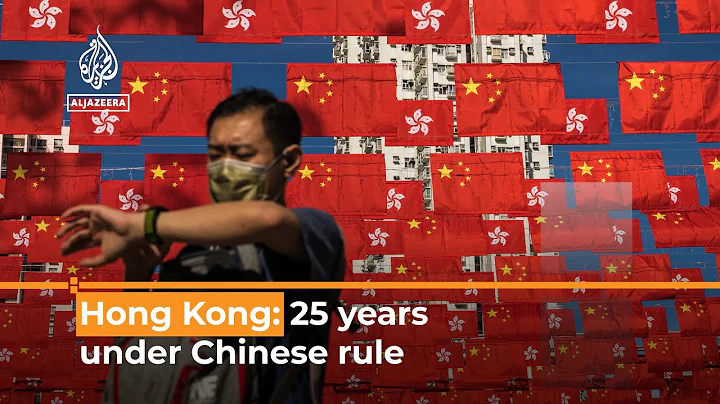
On July 1, 1997, the Chinese flag was raised in Hong Kong, which ended 155 years of colonial rule and returned to the embrace of the motherland.
Of course, this Witnessing the scene of history, Duke Deng will never see it again. But on the issue of the return of Hong Kong and the formulation of the great concept of ", one country, two systems", this small old man deservedly carried the historical gift during his lifetime. Heavy duty!
The return of Hong Kong is not easy. In negotiation after negotiation, the Chinese delegation has never been humble or arrogant in the face of the arrogance and rudeness of the British...
After the new China, before the Chinese government announced the abolition All the unequal treaties signed with imperialism , which naturally include the 3 unequal treaties related to Hong Kong.
However, since the founding of New China, our country has suffered from the United States and the Soviet Union for a long time. The blockade of a superpower, considering Hong Kong's special geographical location and prosperous economic level, our country decided to carry out entrepot trade through Hong Kong.
At that time, Hong Kong became a channel for China to introduce capital and technology from abroad, and it was also a window for foreign trade. Therefore, in 1959, Chairman Mao said: "It is better for Hong Kong not to come back for the time being.We are not in a hurry, it is very useful to us at this stage!
The time has come to after the reform and opening up , peaceful development has become the mainstream of the world.
In this friendly international environment, the Chinese government proposed to complete the task of reunification of the motherland, and China's attitude also attracted the British side
Hong Kong Governor MacLehose
On March 26, 1979, the British sent Hong Kong Governor MacLehose to visit Beijing. The governor of the central government.
At that time, MacLehose asked how to reassure Hong Kong investors after the CCP took back Hong Kong?
Obviously, the British side was trying to ask for directions. After all, the lease term of the New Territories has been less than 20 years. They want to renew the contract with the Chinese side, and using the prosperity of Hong Kong as an excuse, they want to kidnap the Chinese government and get the Chinese side to agree to its request to renew the contract when the lease expires in 1997.
In this regard, Deng Gong said that Hong Kong belongs to China Part of it, even in 1997, we will respect its special status, but it cannot be managed by the UK.
Regarding the worries of Hong Kong people, Deng Gong even said that no matter what, the interests of investors will not be harmed , investors, please rest assured, this is a long-term policy...
This talk is actually the prototype of "one country, two systems", and the Hong Kong issue has become a major issue in Sino-British diplomacy.
On April 3, 1981, when Deng Gong met with British Ambassador Carrington, he reiterated China's attitude towards the Hong Kong issue: "Their way of life and political system remain unchanged, this is our long-term policy, not expedient. Therefore, the position of the Chinese government is credible.
In fact, the policy of "one country, two systems" was originally aimed at the Taiwan issue. Ye Shuai once stated: "After the reunification of the country, Taiwan can enjoy a high degree of autonomy.The central government does not interfere in its local affairs...”
It should never be Li Hongzhang
In the Mrs Thatcher, who was the prime minister of the United Kingdom at the time, Hong Kong brought great benefits to the United Kingdom. On the Hong Kong issue, she will naturally not compromise with China.
It is worth mentioning that between April and June 1982, the United Kingdom had just regained the long-controversial Falkland Islands from the hands of Argentina .This World War I greatly increased Margaret Thatcher's international influence.
Therefore, on September 23, 1982, when Thatcher was visiting China, she was proud and tough. The gesture said to Deng Gong:
The prosperity of Hong Kong is based on the 140-year management system of the United Kingdom, which is different from the financial, legal and political system of the Chinese side.
Before solving the Hong Kong issue, we must ensure that Hong Kong is Prosperity and stability in the future, and only the British governance of it can complete this guarantee.
In the face of the British Prime Minister's attack, Deng Gong said loudly:
The issue of sovereignty is inviolable, and there is no room for negotiation If the Chinese leaders can't take back Hong Kong before 1997, it means that the Chinese government is the late Qing government, and the leader is Li Hongzhang!
Deng Gong's attitude is very Obviously, the Chinese government today is no longer the Qing government of 100 years ago, and it is impossible to negotiate with territorial issues!Take Hong Kong later today!
Hearing this, Mrs Thatcher, who wanted to be sloppy on the Hong Kong issue, was stunned, and then she realized that she had run into an opponent.
In Great Hall of the People Fujian Hall The meeting lasted more than 50 minutes than the scheduled one and a half hours.
When the elegant " Iron Lady" came out, I saw her face dignified, and suddenly, she stepped on the air , fell to his knees on the ground.
Fortunately, the ambassador to China next to Kelida helped him up, which saved him the embarrassment.
But in the next negotiation, the British side said that it would no longer struggle with sovereignty, but The two sides once again had differences on the issue of the garrison in Hong Kong.
The British side has always refused the PLA's entry into Hong Kong, and even used public opinion to mobilize Hong Kong people to oppose the garrison.
In this regard, Zhou Nan said: "China has sovereignty over Hong Kong, why can't it be stationed? When the British garrisoned the army, the military expenses were borne by the Hong Kong people, but the PLA garrisoned troops, the expenses were all borne by the state, and the PLA was only responsible for national defense and did not interfere with internal security. "
The British quibble: "We are too far from Hong Kong, and if we want to take military action in Asia, it is too late to send troops from the mainland, so we are stationed." You are different, Guangzhou has your army, so close, you don't need it at all.
Seeing this, Zhou Nan said loudly: "China will not only station troops, but also permanently." "
Deng Gong also stated: "We will not send too many troops, only a small team of Intel, which symbolizes China's sovereignty over Hong Kong." "
But even so, the British side still said that it can make concessions on other issues, but the garrison issue is not negotiable...
However, After Geng Biao's "Garrison Incident in Hong Kong" in May 1984, Deng Gong faced The tough statements of the Hong Kong and Macau reporters immediately intimidated the British negotiating team.They do not comment on the "garrison issue" in this regard.
On July 29, 1984, China and the UK established a joint liaison group, and all obstacles to the Sino-British negotiation were removed, and the subsequent progress was very smooth.
Conclusion
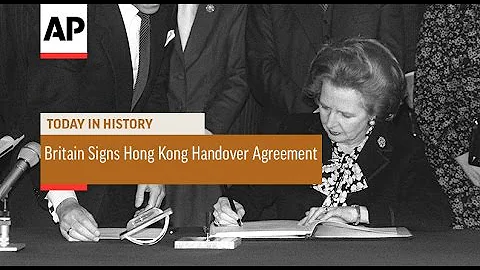
On December 19, 1984, the leaders of China and the UK formally signed the "Joint Statement on the Hong Kong Question", and the agreement was formally established: Hong Kong regains sovereignty. In this regard, China's international status and influence have once again reached a new level.
China has always maintained friendly exchanges with other countries in the image of peace and friendship. At the same time, it has carried out economic trade with other countries with an open and fraternity mentality. China will never infringe on the territory of other countries, but it also opposes all separatists who create conflicts.
In July 1988, Comrade Geng Biao was awarded the First Class Red Star Medal of Merit by the Chinese People's Liberation Army. Even after he retired, he still cared about the country's economic and military construction, and wrote to the party many times with valuable suggestions on reforms.
On June 23, 2000, "Dare to tell the truth, reflect the real situation, and be a good ambassador" - Geng Biao left us forever at the age of 91.
.