BEIJING, September 16 (TiPost) -- If someone gives you 2 million yuan (about US$300,000) and asks you to choose a supercar for yourself, you probably eye luxury supercars like German Porsche, Italian Ferrari, Italian Lamborghini, and British Aston Martin. At worst, it would be second-tier sports cars like Mercedes-AMG GT, BMW Z, and Audi R. It's not that Chinese sports cars are not chosen, but that Chinese sports cars are still not seen on the market.
But as of October 9 it was the past.
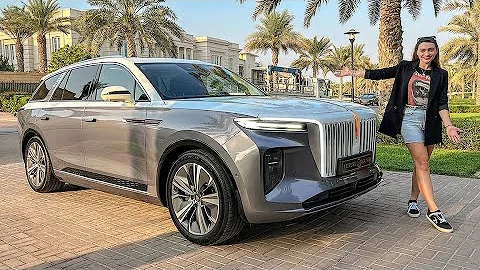
Last Monday, Hyper, the high-end luxury brand under GAC Aion, officially launched a million-yuan pure electric supercar called Hyper SSR. The new car has three versions: the regular version, the Sprint high-speed version, and the Ultimate track version, with prices of 1.286 million yuan, 1.386 million yuan, and 1.686 million yuan respectively.
Unlike other domestic brands that mainly show off their muscles when releasing supercars a few years ago, Hyper SSR has truly achieved mass production, and the first batch of owners actually received their supercars at the launch event.
The launch of Hyper SSR is also a microcosm of many Chinese brands entering the million-yuan new energy supercar market this year. Earlier, from the popular Nezha GT, MG Cyberster and other civilian pure electric supercars, to the million-yuan domestic electric supercars like JiKe 001 FR and Yangwang U9, they were launched one after another
Supercars are the pinnacle of the automotive industry pyramid, and their requirements for technology and brand have reached the extreme. In the era of fuel-powered cars, Chinese brands have not had any successful precedents in the supercar market. So, is it the right time for Chinese brands to enter the new energy supercar market en masse?
A Two-Decade Dream
When Chinese people start making supercars themselves, we need to look back to the end of 2003 when the Geely Beauty Leopard, known as the "first Chinese sports car," was launched with a starting price of 129,900 yuan. In the following years, various types of domestically produced sports cars such as Zhonghua Kuba, Geely China Dragon, and BYD S8 were successively launched.
The common characteristic of these domestic sports cars is that their appearance borrows classic elements from foreign sports cars, such as the resemblance between the Geely Beauty Leopard and the Toyota Supra. Although they are designed like sports cars, the core power units do not match the sports car's specifications. The power is generally weak, such as the 1.3L engine equipped in the Geely Beauty Leopard, which only has an output power of 83KW and a 0-100km/h acceleration time of 12.5 seconds.
As expected, the ultimate fate of these early domestic sports cars is to be discontinued. The reasons for their failure are also easy to understand. Because in the era of fuel-powered cars, domestic brands cannot replicate the core technologies of high-end supercars, even if they can copy the appearance.
In the final analysis, the fundamental reason for the failure is the lack of core technology. Therefore, on the night of the launch of the Hyper SSR, Gu Huinan, the General Manager of GAC Aion and the person in charge of the Hyper brand, answered the question of why Chinese brands cannot produce "decent" supercars in the era of fuel-powered cars, saying, "It is mainly due to the technical barriers in body production processes and new materials. In addition, Chinese car companies lack design experience in high-power powertrains. A series of difficulties have kept Chinese supercars in a state of difficult birth."
However, in the era of new energy, the positions of domestic and foreign brands have instantly reversed. This time, Chinese brands have become the ones with core technology, while foreign brands have become the followers of Chinese brands 20 years ago. The investment of Volkswagen in Xiaopeng Motors is the best example. Thanks to this advantage, Chinese brands, with their core technology in electrification, have finally brought the dream of supercars that started 20 years ago into reality.
Looking at it now, the electric supercars produced by Chinese brands are becoming more and more authentic.
In the era of fuel-powered cars, Chinese brands were unable to break through the powertrain technology, which is the core technology of supercars. As a result, our early supercars only had the appearance of supercars without the soul of supercars, such as extreme speed and acceleration. However, in the era of electrification, these seemingly insurmountable bottlenecks have been easily resolved.
Take Hyper SSR as an example. It uses a combination of a front single motor and a rear dual motor, supplemented by a 2-speed gearbox. The total power of the system is 1225 horsepower, and the total torque is 1230N·m. This powertrain can achieve a 0-100km/h acceleration in as fast as 1.9 seconds and a top speed of 251km/h. The powertrain has reached the level of multi-million-dollar supercars.
As a comparison, the fastest supercar in the world is the Koenigsegg Jesko Absolut, which uses a twin-turbo V-8 engine with a basic horsepower of 1,280 horsepower. It can achieve a theoretical top speed of 330-350 miles per hour (531-563 kilometers per hour) and a 0-60 mph acceleration of 2.6 seconds. However, the Koenigsegg Jesko Absolut has a price tag of up to $2.8 million, equivalent to about 20.46 million RMB.
In addition, with the improvement of China's original design capabilities, the previously criticized "copycat" car designs have become a thing of the past. Electric sports cars such as the Hyper SSR, Jike FR, and BYD U9 all showcase their own brand's design language, without a trace of other sports cars.
Chinese brands have solved many previously challenging problems in the development of electric supercars. According to Gu Huinan, during the development of the Hyper SSR, due to the high acceleration and top speed, supercars have extremely high requirements for tires and brake pads. However, this technology is controlled by a few foreign companies and is not easily accessible to Chinese brands. In this case, the Hyper R&D team collaborated with the C919 large aircraft team and spent several months developing solutions to overcome these challenges. In the end, they independently developed racing-specific hot-melt tires and aviation-grade long-fiber carbon-ceramic brake discs, which were applied for the first time in a supercar.
Xiao Yong, Deputy General Manager of GAC Aion and Hyper brand ambassador, also revealed during media communication that when choosing a tire supplier for the Hyper SSR, they initially did not consider self-development. They approached two major global brands, but they politely said, "We cannot provide support for you. Wish you success." The implication was that they did not believe GAC Aion could produce a sports car.
In addition to these major suppliers not being interested, Xiao Yong also revealed that, just like a fighter jet needs a test pilot, the first pure electric supercar also needs a lot of experimental challenges to push the limits and continuously adjust parameters. At that time, they also approached some established supercar manufacturers, such as Ferrari and Lamborghini's test drivers, but they were directly rejected. They thought, "Your car is not in mass production yet, so is there any safety guarantee? We dare not come and test it." Xiao Yong said.
Finally, some well-known Chinese racing drivers joined in to help the Hyper SSR with extreme challenges. In Xiao Yong's view, this is a kind of sentiment. To be honest, Chinese supercars are not solely produced by GAC Aion. In addition to the support from the supply chain, there are also these numerous racing drivers turned test drivers.
It can be seen that the overall improvement of the supply chain capability in the Chinese industrial sector has played an important role in the emergence of domestic supercars. However, although domestic brands now have the ability to produce electric supercars in large quantities, they generally face a difficult problem - who will buy them? After all, although these domestic supercars are not in the million-dollar range, they are still priced at the million-dollar level. It is not a simple matter for Chinese consumers to buy a domestically produced electric supercar that costs over a million.
Can supercar makers reach the wallets of Chinese consumers?
"Being difficult" does not mean "being impossible."
Overall, the biggest opportunity for Chinese supercars to "open" the wallets of Chinese consumers is the upward momentum given by the current wave of electrification. There was a time when Chinese brands could only compete in the 100,000-yuan low-priced car market, with models like the Haval H6, Geely Emgrand, and Changan Eado witnessing the era when Chinese brands were competing against each other. But times have changed. With the opportunities brought by electrification technology, Chinese brands have established themselves in various price segments, gradually breaking into the mid-to-high-end market that was once dominated by joint venture brands and luxury brands.
For example, in the 100,000-yuan small car market, the former champions were Japanese models like the Toyota Yaris and Honda Fit, but now the dominant forces have become domestic brands like BYD Dolphin and Seagull; in the 100,000-150,000-yuan market, the Nissan Sylphy and Volkswagen Lavida used to dominate the sales charts, but now they have been surpassed by the BYD Qin PLUS DM-i; in the 200,000-yuan and above market, the previous champions were the three Japanese models - Toyota Camry, Honda Accord, and Nissan Teana, as well as the two Volkswagen models - Passat and Magotan, but now domestic brands like BYD Han can also compete with them.
In the luxury car market above 300,000 yuan, it used to be the world of foreign luxury brands like BBA (Mercedes-Benz, BMW, Audi), but now a number of Chinese brands have gradually gained a foothold in this market. For example, domestic new forces like Li Xiang, NIO, and Xpeng are regulars in the top ten sales rankings in the high-end market above 300,000 yuan.
According to the data from the China Association of Automobile Manufacturers, the market share of Chinese brands is currently in a rapid growth stage. The cumulative sales of Chinese brand passenger cars reached 8.48 million units in the first 8 months of this year, a year-on-year increase of 21.2%, and the market share increased by 6.5 percentage points to 54.2%. Especially in the market of new energy passenger cars where Chinese brands dominate, the sales of new energy D-segment cars priced above 500,000 RMB increased the most, reaching 18.2 times. This indicates that Chinese brands have achieved a dual improvement in quantity and quality with the help of this wave of electrification.
Chinese brands have now firmly established their presence in every segment of the market priced between 100,000 and 500,000 RMB. The next market to conquer is the million-level supercar market dominated by foreign ultra-luxury brands. With the experience of successfully entering the mid-to-high-end market, Chinese brands will have the opportunity to enter the million-level luxury car market.
Opportunities exist, but whether they can truly succeed in entering the market, everyone can imagine the difficulties behind it.
As Xiao Yong said, "We may have opened up a path in an uncharted territory, because the supercar is a breakthrough for the Chinese automotive industry from 0 to 1, and a pure electric supercar is even more so from 0 to 1 in the world."
It is well known that going from 0 to 1 is not easy. It is not easy to create a supercar, and it is even more difficult to sell it. How to make more users understand and accept domestic supercars?
In the past, supercars and supercar culture were all "imported goods". Xiao Yong said that in addition to the product, it is also about culture. To promote supercar culture, Hyper will establish the Hyper SSR Peak Club, organize track experiences, form an official team, and participate in international events.
All of this is aimed at allowing users to have better access to and understanding of the strength of domestic sports cars. However, culture, as a form of soft power, is not achieved overnight, but requires continuous infiltration and influence.
Mass production to prove "I can do it too"?
However, even in an era where Chinese brands can enter the million-level supercar industry, how many Chinese brands can withstand the "no limit to burning money" business model in the supercar market?
Many people think that a supercar that costs millions of RMB must be very profitable for the brand behind it. But the reality is quite the opposite. Some ultra-luxury brands known for manufacturing supercars have been in a state of deficit for years. For example, Aston Martin, in which Geely has invested, had an operating loss of 118 million pounds in the 2022 fiscal year. And in its 110-year history, it has experienced as many as 7 bankruptcies.
The main reason why making sports cars is not profitable is that expensive sports cars are a very niche market. It is well known that the profitability model of the automotive industry mainly relies on economies of scale. Obviously, sports cars go against the main profitability model of the automotive industry. Ferrari, known as the world's number one sports car brand, sold only 13,221 vehicles in 2022, highlighting the niche nature of the supercar market.
Therefore, most supercar brands in the world rely on large automotive groups for survival. Ferrari is backed by Fiat Group, Lamborghini is backed by Volkswagen Group, Porsche is also backed by Volkswagen Group, and Bugatti is also backed by Volkswagen Group. The advantage of supercar brands being backed by large groups is that it solves the high costs of research and development and manufacturing.
Compared with these supercar brands with a century of history and their financially strong large automotive groups, Chinese brands, which are still in the investment phase in the field of new energy, face a significant challenge in maintaining continuous investment in the supercar field.
Therefore, industry insiders believe that the current Chinese brand's layout of supercars is mainly to prove their ability to manufacture supercars, mainly to demonstrate their technological strength. And as the crown jewel of the automotive industry, supercars can endorse the high-end development of independent brands. Just like Zhang Kangkang, a senior researcher in the electric vehicle industry, said: "The Hyper SSR and Yangwang U9, these domestically produced electric supercars, their main significance at this stage is to demonstrate the advanced technology and manufacturing level of the brand." Gu Huinan also said: "The Hyper SSR can be mass-produced and put into production, we have proved that we have also mastered the technology of manufacturing supercars."
But the question that remains to be pondered is whether the Chinese dream of supercars has begun to become a reality. Will Chinese pure electric supercars, represented by the Hyper SSR, lead the development of supercars in the new energy era? Can Chinese supercars go global from now on?
(This article was first published on the TiPost App. Reporting by Wang Ruihao and editing by Zhang Min)