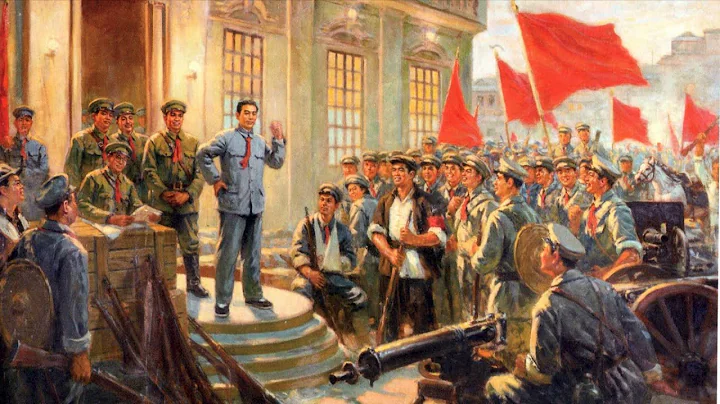
(Chairman Mao and Premier Zhou)
If you have seen everything that happened in 1956, you will understand.
today Suez Canal belongs to Egypt everyone knows.
But historically, this transportation hub connecting the three continents of Europe, Asia, and Africa belonged to Britain and France.
The income from transit fees alone makes Egypt extremely sad and angry.
The canals in the Egyptian territory have become cows for Westerners. How can this be tolerated?
Under this intolerable situation, Nasser , who became Egypt's prime minister in 1954, began to demand the recovery of sovereignty over the canal.
This situation made Britain and France very dissatisfied, and they secretly encouraged Israel to raid the Gaza Strip in Egypt in February 1955.
In order to resist the Israeli invasion, Nasser sent people to purchase arms from Britain, France and the United States.
This matter was caused by Britain and France. Of course they have no good intentions!
British Prime Minister Ayden After meeting the Egyptians : After saying that there were plenty, he just turned the Egyptians away.
Seeing an opportunity to add insult to injury, French Prime Minister Moller said : France can provide weapons, but Egypt needs to revise its policy towards France and talk about the Suez Canal issue.
This made Nasser angry and turned to the United States for help.
The United States also wanted to monopolize the Suez Canal. In the early years, it tried to win over Nasser, hoping to set up a "Middle East Defense Organization" to engage in Middle East version NATO , but was rejected by Nasser.
(Nasser)
When they saw that Nasser wanted weapons, the United States sneered repeatedly and made demands that Egypt could not accept.
Nasser was frustrated on three sides, and he was reminded of Premier Zhou who he met at the Bandung Conference : That amiable China, which appeals for third world unity, can you ask for help?
Nasser then made a request to New China to purchase arms.
But the People’s Republic of China was only five years old. It had just completed the to resist U.S. aggression and aid Korea , and it was powerless. Premier Zhou expressed frankly to Nasser, “New China has just been founded and is temporarily unable to meet Egypt’s arms import requirements.” He also suggested that the Egyptians ask the Soviet Union.
This suggestion allowed the Egyptians to see a turning point, and it also allowed the Soviet Union to see an opportunity.
(Khrushchev)
Yes, the United States is not in the right position, Britain and France have evil intentions, will the Soviet Union be better?
Things went smoothly indeed. Egypt reached a "cotton-for-weapons" agreement with the Soviet Union. Through the hands of Czechoslovakia, Egypt imported arms worth 400 million US dollars: including more than 300 tanks, 250 MiG-15 fighters and bombers, 100 self-propelled artillery pieces, and a large number of weapons and ammunition.
This made the United States panic. They were afraid that the Soviet Union would join forces with Egypt and affect their Middle East strategy, so they persuaded Nasser to give up purchasing Soviet arms.
Nasser did not agree to the American suggestion. Instead, he approached the friendly New China and asked for the establishment of diplomatic relations.
But the Egyptians were reluctant to break off diplomatic relations with the Taiwan authorities. This issue of principle made Premier Zhou decide to deal with Egypt's diplomacy by retreating instead of advancing.
In hindsight, it was wise to retreat in order to advance. As Egypt's relations with Western powers and Israel became tense, in May 1956 Egypt announced that it would sever diplomatic relations with Taiwan and instead establish diplomatic relations with New China, which also ushered in a breakthrough in China's Middle East diplomacy.
(Premier Zhou)
When the United States saw this, it was furious.
Just when they were planning revenge, Nasser came to the United States at this moment: he needed a loan to repair the Aswan Dam.
As Egypt's century project, the Aswan Dam has a total investment of US$1 billion, which is a huge cost. Egypt cannot afford it, so it came up with the idea of seeking a loan from the World Bank .
Seeing that Egypt is asking for help, the United Kingdom and the United States, which lead the World Bank, believe that this is a good opportunity to intervene in Egypt's affairs.
Britain and the United States both agreed to provide loans, but also imposed additional conditions.
That is: no purchase of Soviet weapons, financial supervision, and let Egypt make peace with Israel.
Nasser did not agree to these, and turned around to negotiate a loan with the Soviet Union.
Seeing Nasser's lack of food and salt, the Americans, who were afraid that Egypt would turn all Middle Eastern countries into allies of the Soviet Union, were confused. Is it a question whether to give or not to give?
(Today’s Dam)
After getting entangled, the Americans chose a showdown.
On July 19, 1956, when U.S. Secretary of State Dulles met with the Egyptian ambassador to the United States, he announced in a high profile that he would reject the loan. Western countries also followed suit and suspended financial assistance.
This situation prompted Nasser to warn Britain and the United States: You can never give orders to Egypt.
The situation took a turn for the worse, Nasser also did something that shocked the world on the afternoon of July 26, 1956.
That afternoon, facing 250,000 people in Tahrir Square in Alexandria, he swore: : The Suez Canal was built by the souls, heads, blood and bones of Egyptians. Today the canal is returned to Egypt, and we no longer need to go to Washington , London, Moscow to beg for money.
Egypt announced that it would take back sovereignty over the canal and use the canal transit fees to pay the cost of the Aswan Dam . Nasser also became an Egyptian hero and an Arab hero.
One stone stirred up a thousand waves. After the decision to take back the canal spread around the world, Britain and France were furious, and the United States was shocked.
As for China, Premier Zhou announced on August 4: China fully supports Egypt's nationalization of the Suez Canal. The Egyptian government has guaranteed the free navigation of the Suez Canal. If Britain and France still have doubts about this, they should seek a solution through consultation. Any armed intervention will definitely be opposed by the people of Asia, Africa and the world, and will definitely fail.
(Egyptians rejoice)
China’s strong support, Egyptians heard it! But will the Western powers be willing to do so? Of course not.
The United States, Britain and France subsequently issued a joint statement , "The purpose of confusing freedom of navigation with Egypt's nationalized canal is to maintain the privileges of Western powers in Egypt.
Britain and France believe that if the Suez Canal is lost, their colonial system will be destroyed. Overwhelm the danger.
Americans are also worried that Egypt's move will stimulate the Panama government to take back the Panama Canal
Therefore, British and French intervention has become inevitable!
British Prime Minister Eden and French Prime Minister Moller decided to send troops to Egypt, and asked the United States to join in when they were about to send troops. .
Although relations between Britain, France and the United States are good, the United States has other plans.
This plan is not to follow the actions of Britain and France, but only emphasizes the "international nature" of the Suez Canal and advocates handing over the canal to international co-management.
(Middle East Strategy)
Why do Americans think this way? I also thought of killing three birds with one stone!
First of all: It can cut off Egypt's attempt to take back the canal and suppress the renaissance of the Arab world.
Secondly: it can exclude and suppress the colonial forces of Britain and France in the Middle East.
Finally: The United States has been spying on the British and French colonies for a long time and will not dismantle them. Colonies, how to grow themselves? The ownership of the Suez Canal was the first step in dismantling the British and French colonial empires.
The United States’ plan to kill three birds with one stone has made all stakeholders angry.
Britain and France boycotted the United States, and Nasser even bluntly said : Is it possible to compromise between independence and non-independence?
So the country is not like the United States, but the Americans are not in a hurry.
instead continued to quarrel. When Britain and France asked about the United States' attitude towards sending troops to Egypt, the United States reassured Britain and France by acquiescing.
Seeing this, Britain and France immediately contacted Israel to attack.
has help from big countries, Of course, Israel couldn't ask for it, and the three parties hit it off, but they each had their own plans.
Britain and France hope to encourage Israel to attack, use Israel to take back the canal, and then take advantage of it in the name of mediation.
Israel’s idea is to let the British and French attacks take advantage of itself.
When the three countries were quarreling, the United States, which was watching the excitement, took action.
They changed their default attitude towards Britain and France and warned : Even if they successfully occupy the canal, Britain and France will fall into a frustrating guerrilla war . It will also cause Egypt to block the canal, destroy the Persian Gulf oil input line, and cause Europe to encounter severe oil shortages.
After saying this, the United States also reminded Britain and France: Don't expect the United States to support them in such risky actions.
From acquiescence to dissuasion, the US actions are very interesting!
(Egyptian Hero)
's way of fighting the fire, in addition to instigation, may also include playing hard to get , this is playing hard to get.
With the United States trying to get hold of it, Britain and France are preparing to attack, and the situation in Egypt is dangerous.
Seeing the delicate situation in Egypt, Chairman Mao reminded Nasser to pay attention to safety when he met with the Egyptian ambassador.
When Premier Zhou received the Egyptian Ambassador to China Raghab on the evening of September 19, he also expressed the attitude of : "The Chinese people cannot turn a blind eye to any action that infringes on Egypt's sovereignty and carries out armed interference in Egypt."
The Soviet Union also warned Britain and France many times not to act rashly!
Who would have thought that Britain and France are hot-headed.
Despite warnings from numerous major powers, Israel directed Israel to launch an attack on October 29, 1956, occupying the entire Sinai Peninsula.
The British and French forces, cooperating with the Israeli army, also attacked the important Suez Canal townPort Said on November 5.
The situation in Egypt is turbulent and has shocked the world.
Seeing that the situation is getting worse, the Americans who are committed to internationalizing the canal issue have resorted to double-dealing tactics again.
US President Eisenhower called Eden (Britain) and Moller (France) and said : Do not use force against Egypt and give the United Nations a chance to deal with the Suez Canal crisis.
The United States then proposed in the United Nations: requiring Israel and Egypt to stop fighting, requiring Israel to withdraw to the lines specified in the truce agreement, and also requiring UN member states to exercise restraint and not to intervene.
(Split of Great Powers)
The monolithic Western powers had open conflicts on this matter.
Britain and France used their veto power for the first time to reject the US proposal. The Soviet Union took a look and made a proposal similar to called , but it was also rejected by Britain and France. After
rejected the proposal one after another, the United Nations did not withdraw.
The resolute attitude of Britain and France made the United States, which had long hoped to pull chestnuts out of the fire, say with ulterior motives at the UN General Assembly meeting on November 1 of the same year: The United States feels that it cannot agree with the actions of these three countries (Britain, France, and Israel), although we have close relations and profound friendship with them, and we admire and respect them. And two of those countries are still our oldest, most trusted and most reliable allies. After
finished speaking, he put forward his own six-point plan!
The implication of these words is : Britain and France are disobedient and will destroy the United States' plan to dominate the Middle East. Now I give you a chance to choose and accept the six-point plan.
First: All parties to the war immediately cease fire and stop transporting troops and weapons into the area;
Second: All armed forces withdraw to the boundaries specified by the truce (the 1949 Arab-Israeli Truce Line) and stop attacking activities;
Third: United Nations member states will no longer import military supplies into the war zone.
Fourth: After the ceasefire, reopen the Suez Canal in steps.
Fifth: Report on resolution compliance by United Nations Secretary-General .
Sixth: The United Nations General Assembly continues to hold emergency meetings until resolutions are complied with. The
proposal did not involve the veto power of the five permanent members, so it passed smoothly.
passed, but the British and French refused to comply.
As for the Soviet Union, although it expressed its attitude of supporting Egypt, it did not take many actual actions.
Subsequently, he changed his attitude after seeing China's firm support and continuous pressure from the United States. In a note to Britain, France, and Israel on November 5, he said : The Soviet Union must not turn a blind eye to the invasion of Egypt by Britain, France, and Israel, and "is determined to use force to crush the aggressors and restore peace in the Middle East."
(Tough Khrushchev)
The Soviet Union’s uncharacteristically blatant threats worried the United States, which secretly controlled the situation.
They were afraid that the Soviet Union would take the opportunity to expand its influence in the Middle East.
said that the Soviet Union's proposal was unthinkable and violated the United Nations Charter . He also warned the Soviet Union that its opposition to any action in Egypt by force was "not just casual talk."
In this regard, the invasion of Egypt by Britain and France turned into a competition between the United States and the Soviet Union to expand their influence in the Middle East.
For the United States, curbing the Soviet Union's influence in the Middle East, weakening the sphere of influence of Britain and France in the Middle East, and establishing its own peaceful image are strategic goals.
For the Soviet Union, if it can support Egypt, make the Arab world a friend and partner, and successfully enter the Middle East, it will be a victory.
The last two major powers invariably aimed their struggle at Britain and France.
(The power of the US dollar)
The pressure from the United States is greater than the military threat from the Soviet Union.
The economic conditions of Britain and France depend on the current situation of the United States, which makes them avoid the enemy.
Even British Prime Minister Eden said that launching a war : may destroy the entire British economy, and the British situation is extremely dangerous.
There is data to prove this: Britain's dollar reserves began to decline after the crisis, falling by US$57 million in September, US$84 million in October, and another US$279 million in November as the oil panic intensified.
The financial predicament has made the UK dizzy and confused. It is actually looking for the International Monetary Fund to withdraw US dollars to replenish war funds. !
What does this mean? The answer is to ask the United States for help!
The International Monetary Fund is a specialized agency established by the United Nations. The participating member states all use US dollars in equal proportions for emergency needs. At critical moments, they can alleviate their difficulties by requesting short-term loans for 3 to 5 years.
But this requires a legitimate reason and a nod from Americans.
Asking for loans in the name of expanding military spending? The Americans rejected the loan request outright.
(gold reserve)
If you think about it, you will understand that the United States is the major shareholder of the International Monetary Fund, so of course it will not agree.
UK went to ask for help at this time, but of course he came back disappointed!
Although there is no loan, Britain and France still insist on their tough stance in Egypt.
This made the United States want to add insult to injury.
The United States understands that almost all the oil Europe needs comes from the Middle East (73%), half of which has to be transported through the Suez Canal. Because of the war, both Britain and France have fallen into an energy crisis . When winter comes, they also start to formulate an oil cooperation system. People in the country are panicked and anti-war voices are rising.
So the United States stepped up its run on the pound.
As the run continues, the UK's gold reserves continue to shrink, falling by 100 million pounds in one week, and Prime Minister Eden's position is unstable.
At this time, the Soviet Union's attitude became increasingly tougher, and the United States voted in favor of the troop withdrawal bill proposed by Asian and African countries.
The complete betrayal of the United States and adding insult to injury forced Eden to agree to a ceasefire, and expressed in a letter to the French Prime Minister: "We are in dire straits, we are in a dilemma, everyone is betrayed, and we can no longer support ourselves."
When France saw that Britain had withdrawn, it had no choice but to withdraw. As for Israel, it also withdrew its troops under the threat of the Soviet Union "Does it want to exist as a country?" .
The miserable Aiden and Moller were fired from power soon after.
(Sad British and French politicians)
The canal crisis has settled.
The most interesting thing about this is that China, the United States, and the Soviet Union unanimously opposed the British and French invasion of Egypt.
Nasser also became an Egyptian hero and the leading Arab brother because of his outstanding performance in the crisis, backed by the United States, the Soviet Union, and China!
So what is the truth about this conflict?
Why does the United States, the number one imperialist country, want Britain and France?
Chairman Mao’s words are profound.: This thief has never been caught. In 1956, we caught the British and French in the Suez Canal. At that time, the United States pretended to be a good person, and it pretended to be peace-loving.(Said when meeting military delegations from the Soviet Union, Eastern European countries and Mongolia on October 2, 1958)
I read this sentence today and it is still shocking.
Because didn’t the United States do the same thing during the Russia-Ukraine conflict? They sell arms, instigate war, pretend to be good people, expand the war, and then make all their own profits in the war.
Americans used to pretend to be good people, and they still do now, but their intentions are more sinister than then?