The world's cars are rapidly becoming electrified. On the other hand, due to the rise in resources and energy issues, the issues of new energy vehicles have also emerged. As an automobile industry country, how does Japan view this new energy vehicle trend?

■ Train prices continue to rise
Tesla When model 3 was switched to production in China in early 2021, it sold for 4.29 million yen. However, the price continued to rise slightly after that. By December 2022, the price had risen to 5.964 million yen. It actually increased by 1.67 million yen in less than 2 years.
The same is true in the United States. The model 3 I bought for $34,990 in 2019 is now $48,190. The price has increased by approximately 1.8 million yen.
The electric truck "F-150 lightning pro" that Ford launched in April 2022 for about US$40,000 only increased to US$56,000 in October half a year later, a price increase of about 40%.
Wuling Hongguang Mini EV, the best-selling electric car in China that has become a topic due to its "500,000 yen EV", has also increased from 28,800 yuan when it was first launched to 32,800 yuan.
■Surge in demand for lithium
The main reason for these price increases is the sharp increase in battery costs.
As various car manufacturers are working on large-scale production of electric cars, manufacturing costs should drop significantly through mass production. However, the price of lithium, which is indispensable in the manufacture of lithium batteries, has skyrocketed this year. .
The price per ton in 2020 was less than 40,000 yuan, rising to 90,000 yuan in the first half of 2021, 500,000 yuan in May 2022, and 600,000 yuan in November.
Lithium has been buried for nearly 200 years. Although there is no need to worry about depletion, the demand for lithium-ion batteries so far is mainly from smartphones and PCs. It would be strange if trams became popular all of a sudden.
Tesla model S is equipped with a 100kwh battery, which is equivalent to 33,000 smartphones.
Sales of plug-in vehicles (BEV and PHEV) in the first half of 2022 reached 4.3 million units, an increase of 62% over the previous year. The demand for such large lithium-ion batteries has increased explosively in recent years.
■ Buried in South America, production is focused on China
Even if demand increases, production will not simply increase. The places where lithium can be mined are limited. The estimated reserves in the world are distributed in Bolivia , Argentina, Chile and other South American countries. However, most lithium in South America is produced by evaporating water from salt lakes, so it is difficult to significantly increase production in the short term. Environmental damage around the salt lake also makes it more difficult to increase production.
Australia and China produce lithium by extracting it from lithium ore, but the refining process is almost entirely done in China. Because a lot of harmful waste is produced during the refining process, it is concentrated in China where environmental restrictions are relatively loose.
■The price gap between gasoline cars and EVs continues to widen...
Moreover, production of either method requires a large amount of energy, and the fuel currently used is fossil fuel. The purpose of EV is to reduce carbon dioxide emissions, so if a large amount of fossil fuels are used in its core battery manufacturing, it will put the cart before the horse. The energy originally used for manufacturing must also be replaced by carbon-free or neutral energy, but the cost and time spent for this are considerable.
In this way, as long as EVs continue to increase, the price of lithium-ion batteries will continue to rise, and as a result, the price of BEV will also continue to rise.
The current price of BEV is much higher than that of gasoline vehicles and hybrid vehicles, so the price difference will further widen.
■Sales growth supported by subsidies
Although global BEV sales have increased, most of them are in China, while growth in Europe, which is promoting BEVization, is slow. Data from January to October 2022 show that China’s plug-in car sales increased by 113%, while Europe only increased by 9%.
Until 2021, Germany has provided a huge BEV subsidy of 9,000 euros per unit. The subsidy will be reduced to 6,000 euros in 2022, which will also have an impact on Germany. The
grant is scheduled to be reduced to €4,500 in 2023 and to €3,000 in 2024. As sales increase, the amount of subsidy per vehicle has to be reduced.
As mentioned earlier, as vehicle prices are also rising, the threshold for users to purchase BEVs is getting higher and higher.As a result, it is difficult to expect BEV sales growth.
■ The spread of BEV is the dream of "rich countries"
The purpose of BEV is to reduce global carbon dioxide. If even wealthy Europe cannot popularize it, then in other regions, such as Asia and Africa, the possibility of high-cost BEV popularization is almost zero. Isn’t it natural? Moreover, BEVization is not just about selling BEVs. It also requires very expensive social factors such as building charging infrastructure and increasing power generation (and also achieving carbon-free power generation/carbon-neutral power generation).
Some wealthy and environmentally conscious European countries, as well as China, may be able to achieve this, but this is only a part of the world. It is estimated that many countries will continue to have to rely on fossil fuels. Isn't this natural?
China is the leader in the battery field
The popularity of BEVs in China has been amazing in recent years, and this is implemented as a national policy. China is a producer of lithium, accounting for about 10% of world reserves. China will also be more advantageous than other countries in the development of lithium mines. In addition, as mentioned earlier, the purification technology of lithium ore is currently the most advanced in China.
CATL occupies 34% of the world's EV lithium-ion battery market share, becoming the absolute leading No. 1 manufacturer. China's second-ranked BYD also surpassed Panasonic 's market share of 12% with a market share of 12%. Chinese manufacturers have a combined market share of 56%.
CATL provides batteries not only to Chinese companies, but also to major automobile companies in the world. The batteries of Tesla model 3 and model Y currently sold in Japan are all produced by CATL, and the batteries of Nissan Aria are also produced by CATL. Its price competitiveness is overwhelming, and it will be difficult for Japanese, European and American manufacturers to catch up even if they work hard from now on.
■The world's largest plug-in car manufacturer is China's BYD
Not only batteries, BEV production momentum in China is also increasing. In the first half of 2022, BYD's plug-in car production increased by 320% compared with last year, showing an amazing growth momentum (data refer to the above-mentioned CleanTechnica and other websites). Tesla also increased by 46%, but was overtaken by BYD. BYD is now the world's largest plug-in car manufacturer.
Judging from the figures in October 2022, BYD's plug-in car sales were 217,219 units, of which 103,157 were BEVs. Even if it is limited to BEVs, it far exceeds Tesla's 82,210 units.
The quality of BYD's products has also been greatly improved in a short period of time. In China, Tesla's product power has declined relatively, resulting in poor sales.
BYD has begun to enter the world market, led by Japan, and its competitiveness as a BEV can be said to have reached a very high level.
The more BEV is promoted, the better it will be for China...
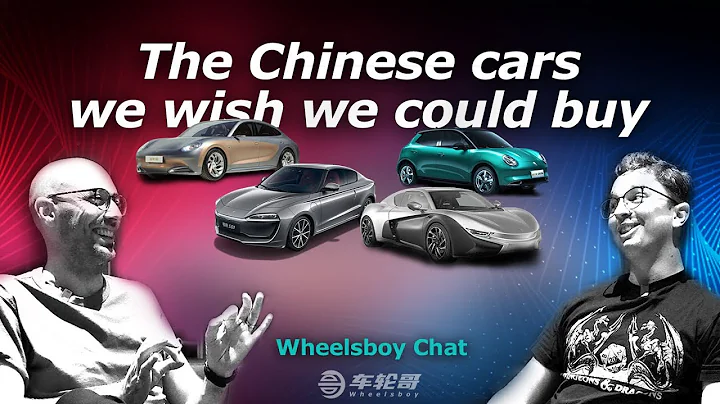
In this way, China has established an overwhelming position in the world of BEV. It is difficult for Japanese, European and American manufacturers to produce cheap BEVs, and it is not surprising that BEVs in the popular price range other than high-end BEVs are being made in China.
Toyota also cooperates with BYD in terms of BEV (it has to cooperate). The model recently launched in China (bZ3) is a model jointly developed with BYD. The more BEV is promoted, the better it will be for China.
As mentioned before, BEV prices may increase in the short term, but it is difficult to expect prices to decrease. If you want to buy a cheap BEV, you can only choose a Chinese car, and this situation is beginning to appear.