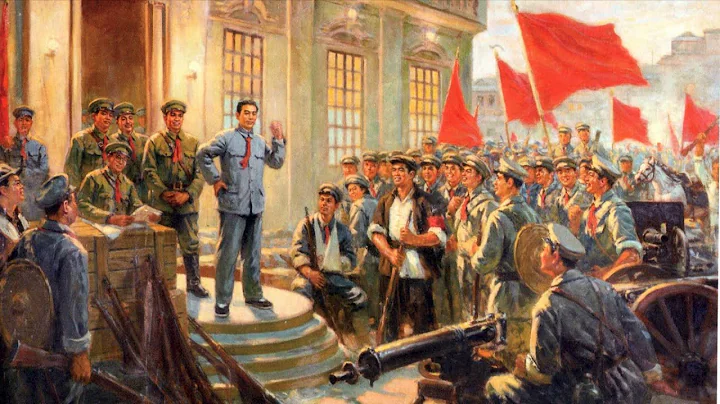
I want to ask which dynasty is the most elegant in Chinese history? I believe that the name of Ming Dynasty will come to many people's minds. The Ming Dynasty has many domineering labels, such as the emperor guarding the country, the king dying in the country, such as not being in harmony with each other, not being a minister, and not paying tribute.
Although the military strength of the Ming Dynasty was not as good as that of the Yuan and Qing dynasties, the capabilities of the Ming army cannot be ignored. However, such a tough dynasty was forced to voluntarily give up its territory when fighting Burma in the Wanli year.
During the Jiajing Wanli period, the emerging power Toungoo dynasty launched a large-scale attack on the Yunnan region of our country in order to expand its power and plunder more resources. In order to safeguard its sovereignty, the rulers of the Ming Dynasty launched a war in the West Antarctic.
However, while the war was in full swing, the Ming court gave up part of the land and gave it to the enemy.
This incident has caused a lot of speculation and criticism. If Emperor Wanli insisted on continuing to fight with Burma, the Ming Dynasty might not necessarily lose this war. So why did the Ming Dynasty take the initiative to give up its territory? Is it really because the Ming Dynasty is not strong enough?

Wanli stills
The Ming-Burma War had many twists and turns
The founding emperor of the Ming Dynasty Zhu Yuanzhang was one of the few emperors in Chinese history who was truly a commoner. With a military background, he paid great attention to the country's national defense.
1381, which is the fourteenth year of Hongwu , Zhu Yuanzhang sent general Muying to the Yunnan area to clean up the Mongolian forces. Since then, Muying has been named the Guizhou Duke and guarded Yunnan for generations.
A few years later, in order to further strengthen its control over Yunnan, the imperial court also established six Xuanweisi in western and southern Yunnan.
When the Ming Dynasty was first founded, Zhu Yuanzhang adopted the basic national policy of expansion, which greatly expanded the territory of the Ming Dynasty. However, after the situation stabilized, subsequent rulers changed from the original expansion strategy to a contraction strategy, and changed the national policy of using foreign troops to a national policy of focusing on domestic affairs and focusing on foreign affairs.
Zhu Yuanzhang
Many years later, Emperor Chengzu of the Ming Dynasty Zhu Di launched the Jingnan and became the new emperor of the Ming Dynasty. After he ascended the throne, he went on many personal expeditions, expanded the territory, and created a situation where thousands of countries came to dynasty..
His frequent use of troops not only brought stability to the border areas, but also brought huge losses to the country. Therefore, after his descendants Ming Renzong and Ming Xuanzong came to power, they chose to rest with the people and stopped fighting.
After the death of Ming Xuanzong, Ming Yingzong embarked on the road of personal conquest in order to restore the glory of his ancestors. However, because he was not experienced in the world and did not know the art of war, he was unfortunately captured by the enemy during his journey north, causing Beijing city to almost fall into the hands of the enemy. Since then, the Ming Dynasty has focused its national defense on defending Kyoto.
During the Jiajing and Wanli years, Myanmar in the south developed a force that cannot be ignored. In 1531 AD, Mang Yingti ascended the throne in the southwest region, became the king of Taungoo and led Myanmar on the road to unification.
In 1539, Mang Yingti successfully captured Bago City and established it as the new capital of the Dongyu Kingdom. A few years later, with the help of his cronies, he defeated the King of Ava and the local army, and was crowned the king of Myanmar.
Mang Yingti
Mang Yingti, who had gone through countless hardships and achieved great things, should have been diligent in political affairs, but because he indulged in pleasure after he ascended the throne, Myanmar fell into civil strife.
At this time of turmoil, Mang Yinglong took advantage of the trend and became the new ruler of Myanmar, and absorbed part of the territory of Thailand, Laos and China's Yunnan, and greatly developed Myanmar's national power with the people. Later, his son Mang Yingli took over the real power from his hands and started a war with the Ming Dynasty.
When Mang Yingli took over, Myanmar had grown into a new country whose economic and military strength could not be ignored. In the eleventh year of Wanli, Mang Yingli led the Burmese army and captured many cities in Yunnan one after another, and took away a large amount of property from Yunnan.
The Burmese people were extremely cruel. After capturing the city, they burned, killed, and looted the people in the villages in the city, which brought extremely serious disasters to the local people. At this critical moment of life and death, the Ming Dynasty court sent Deng Zilong and others to the front line to start the Ming-Burma War against foreign humiliation.
Deng Zilong
It can be seen from the record at that time that the strength of the Ming Dynasty army cannot be underestimated. After Deng Zilong arrived at the front line, he successively recaptured many cities such as Wandian and Gengma, and surrendered many Burmese generals.
In the twelfth year of Wanli, the Burmese army once again invaded Yunnan. The Ming army once again faced the enemy head-on, driving the Toungoo dynasty out of our territory, and executed the traitor Yue Feng who had rebelled against the country and defected to Burma. This played a strong deterrent effect on other chieftains on the Yunnan border, but this did not curb the expansion ambitions of the Burmese.
In the thirteenth year of Wanli, the Burmese army came back and expanded to Yunnan again, encroaching on a lot of land. However, this time, the Ming Dynasty did not face the enemy head-on. Instead, it took the initiative to make peace with Burma and gave many cities to Burma, which restored normal relations between the two countries.
Judging from the comprehensive strength of the Burmese army and the Ming army, if Emperor Wanli insisted on fighting, the Ming army would actually have a great chance of winning. So why did Wanli take the initiative to cede territory? This is related to the national conditions at that time.
Wanli stills
Special national conditions to avoid war
One reason is that the situation in Yunnan is relatively special. The chieftains near Yunnan have neither accepted Chinese culture nor identified with the Ming Dynasty court.
Before the Ming-Burma War, they were only nominally under the jurisdiction of the Ming Dynasty. Therefore, even if Wanli could take back the territory, he was not sure of controlling the local chieftains. If the Toungoo dynasty made a comeback, these chieftains would most likely defect and rebel.
If the Wanli and Ming armies cannot get the support of the local chieftains, they will not be able to maintain their local rule. Even if they repel the Toungoo soldiers, they will not be able to eliminate the threats from Yunnan and Myanmar.
For the Ming Dynasty, which was facing internal and external troubles, it was not worthwhile to invest a lot of manpower and material resources in such a place.
Wanli stills
Because of this, the Ming Dynasty court ceded part of the land to Myanmar. This was actually not the first time that the rulers of the Ming Dynasty gave up land. When Ming Xuanzong was in power, he took the initiative to announce the withdrawal of the garrison in the Western Regions and gave up jurisdiction over the Western Regions. When Ming Yingzong was in power, he also ordered the withdrawal of Yunnan and gave up his rule over Yunnan.
The reason why the rulers of the Ming Dynasty took the initiative to give up land was mainly because of the path they took to focus on internal affairs while focusing on external affairs. For the people of the Ming Dynasty, instead of putting a lot of manpower and material resources in these unmanageable places, it would be better to put resources in more important places.
Second, the Ming Dynasty was in deep quagmire at that time and could not get out of the Korean War.
While the war in Yunnan in the southern region continued, the Ming Dynasty and Japan were also engaged in a war. During the Ming Dynasty, Japanese pirates frequently crossed the ocean and landed from the southeast region, harassing our border residents and plundering people's property, causing great losses to the Ming Dynasty.
Japanese pirates
Toyotomi Hideyoshi even sent troops to attack North Korea on the grounds that North Korea refused to attack the Ming Dynasty. North Korea and Japan were very different in strength at that time. After the Japanese army landed in North Korea, they were unstoppable. They quickly captured Pyongyang and forced the king to Pingyang Road .
Emperor Wanli knew very well that Japan was not doing this simply to capture North Korea, but to capture the Ming Dynasty, so Wanli immediately ordered the Ming army to go to North Korea to support the Korean war.
After the Korean War started, the Ming Dynasty sent a total of 120,000 people to fight the Japanese army. Although with the efforts of Zhang Juzheng, the chief minister of the cabinet, the Ming Dynasty's treasury realized revenue from previous losses, but the use of so many manpower and material resources to support the war in a short period of time still put a lot of pressure on the treasury.
At that time, the Ming Dynasty had focused all its efforts on the Korean Peninsula in the northeast, and could hardly spend money to support Yunnan. Therefore, giving up several cities to stabilize Burma was the best choice for the Ming Dynasty court.
Zhang Juzheng
When we break, we will lose our strength.
The third reason is closely related to the rise of Liaodong . During the Wanli period, the country was extremely unstable. After the Korean War started, Nurhachi from the northeast also frequently went south, hoping to get a piece of the Ming Dynasty's pie.
When the Korean War was in full swing, Nurhachi was in full swing, approaching the Great Wall , threatening the security of Kyoto.
Beijing was the military and political center of the Ming Dynasty and the foundation of the Ming Dynasty. Therefore, it was impossible for the imperial court to abandon the north and conquer Burma. For the Ming Dynasty, which had a huge territory, the Toungu Kingdom was just a tiny place. They believed that even if the Toungu Kingdom was allowed to develop, they would not be able to make any waves.
What's more, there are many ethnic minorities in the area, and it is extremely difficult to achieve Chineseization. Even if they get this land, there will inevitably be problems in maintenance and management. Therefore, the imperial court simply chose to withdraw from this quagmire and handed over part of the territory to Myanmar, solving the worries in the south.
Wanli stills
From a historical perspective, it was a very unwise behavior of the Ming Dynasty to give up many territories easily, but we should look at this issue in the context of the times.
This choice of the Ming Dynasty was undoubtedly a very correct one. Abandoning several cities not only stabilized the war situation in the southwest region, showed the image of the Ming Dynasty as a great power to many countries such as Myanmar, but also concentrated its national power in the northeastern region , preventing the Ming Dynasty from falling into the embarrassing situation of multi-front warfare and laying a solid foundation for the later victory of the Korean War.
Soon after, the Ming army won a complete victory in the Korean War, which severely dampened the Japanese spirit and once again confirmed the correctness of the previous policy.
It is a pity that Emperor Wanli gradually lost his fighting spirit in his later years, which caused the Ming Dynasty's national power to decline day by day. This once glorious country also slowly came to an end, leaving the Jurchen people in the east to become the new owners of this land.
Wanli
When we look at historical issues, we should not use a single perspective to judge the decisions of people at that time, but should use a more comprehensive and objective perspective to analyze historical events.
The Ming Dynasty voluntarily gave up part of Yunnan's territory during the Wanli Period, which was the inevitable result under a specific era. This approach of the Ming Dynasty also showed their overall concept.
References
The Sino-Burmese War from the end of Jiajing to Wanli in the Ming Dynasty
The Sino-Burmese War from the end of Jiajing to Wanli and its impact
"Southwestern Border Conflict in the Late Ming Dynasty - The Rise of the Toungoo Dynasty and the Wanli-Ming-Myanmar War"